The process of galaxy nucleus formation has been recorded for the first time. At the center of many galaxies, including the Milky Way, there is a dense and compact structure of stars rotating around the center—the so-called nuclear disk. These disks are a common phenomenon in the Universe, but previously no one had seen how such a disk forms so early in cosmic history.
Discovery Using the James Webb Telescope
Astronomers from the University of Durham in the UK have discovered the most distant nuclear disk ever observed. It was found in a galaxy that existed only 4.5 billion years after the Big Bang. The research results were published in the Monthly Notices of the Royal Astronomical Society.
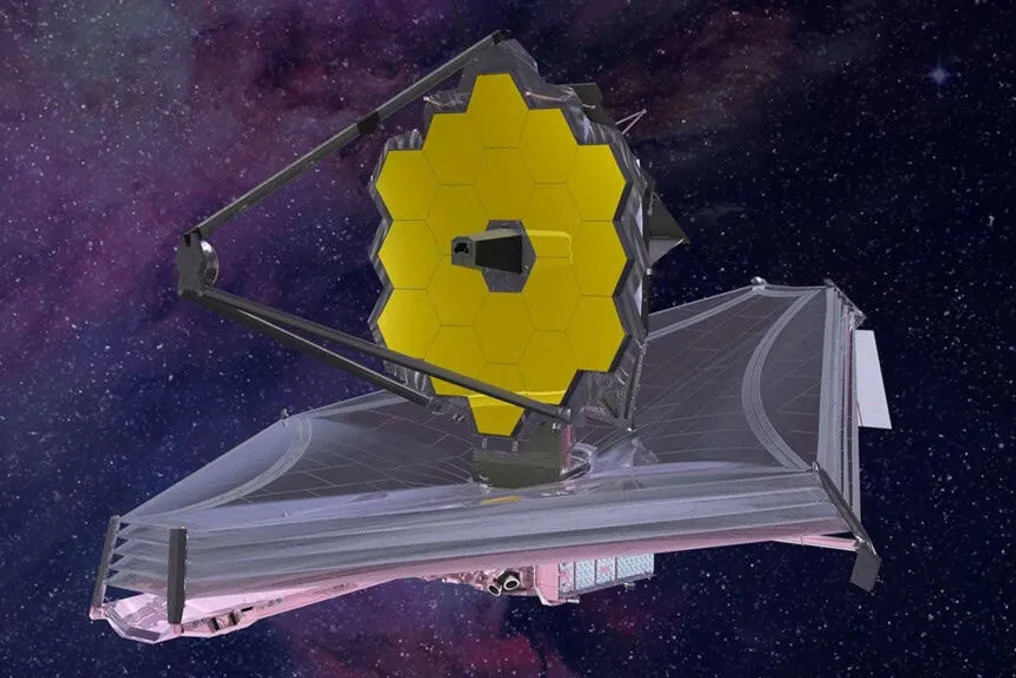
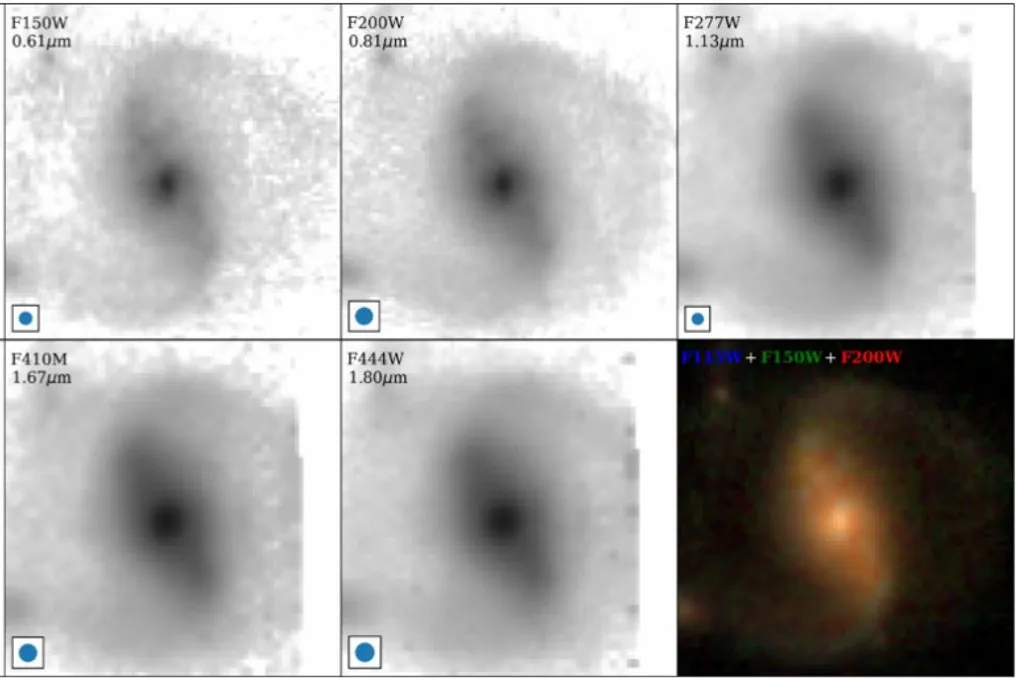
This discovery was made possible by the unprecedented sensitivity and resolution of the James Webb Space Telescope. By studying the galaxy CEERS-4031, researchers identified an active nuclear disk at its center, which continues to form new stars and grow. This disk has a radius of about one kiloparsec (approximately 3260 light-years) and possesses characteristics similar to nuclear disks in modern nearby galaxies: it is compact, rich in young stars, and shows clear signs of organized growth.
Disk Formation Mechanism
The formation of this disk did not happen spontaneously. Researchers determined that the cause was a stellar bar—an elongated structure of stars crossing the center of the galaxy, which is characteristic of spirals like the Milky Way. Such bars act as cosmic engines, directing gas and stars toward the center, thereby fueling the formation of new structures.
Although previous studies showed that stellar bars can form early in the Universe, none of them proved that they were already reshaping galaxies as early as demonstrated in this study. Zoe Le Conte, the lead author of the study, noted that this is a 'remarkable and unexpected discovery that will force astronomers to reconsider the understanding of galaxy evolution and the influence of stellar bars in the early Universe.'
Rapid Galaxy Maturation
This discovery calls into question established ideas about how galaxies evolve. The traditional model suggested that galaxies gradually acquired complex internal structures over billions of years. However, the results of this study show otherwise: galaxies did not reach their current appearance gradually, but matured rapidly, following evolutionary trajectories similar to modern galaxies much earlier than previously thought.
Le Conte added that 'the stunning images and innovative results from James Webb continue to show that mature galaxies exist much earlier than we previously thought.'
Connection to Black Holes
The significance of this discovery extends beyond just galaxy formation. Nuclear disks are considered reservoirs of gas that feed supermassive black holes at the centers of galaxies. The detection of such an ancient (and still active and growing) nuclear disk may help scientists understand how these black holes grew during a period of cosmic activity when the Universe formed stars and structures with much greater intensity than today.
The team plans follow-up observations to study the movement of stars and gas within the galaxy, which will be the next step in accurately confirming exactly how the disk formed and how effectively the bar moves matter to the center.