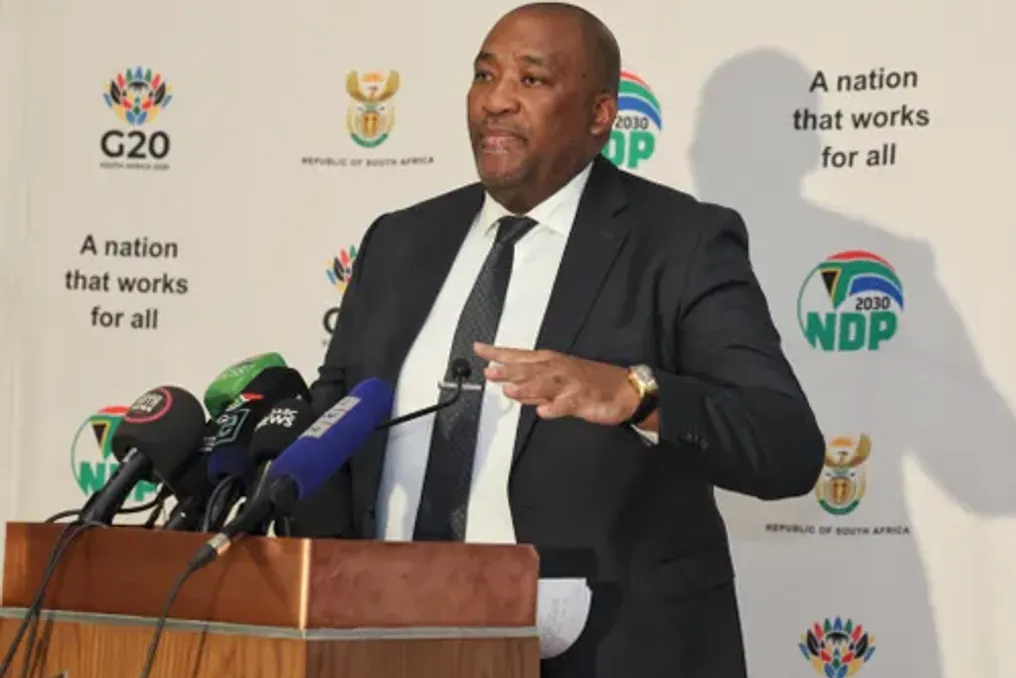
The Minister of Sport, Arts and Culture, Gaitan Mackenzie, defended the expenditures of the Department of Sport, Arts and Culture (DSAC) for South Africa's participation in the 2026 FIFA World Cup, refuting claims that the spending of approximately 31 million rand was unjustified or improper.
Explanation of Expenses
In a detailed statement, Mackenzie noted that this amount was openly disclosed in a parliamentary response, emphasizing that 'there is nothing to hide.' He clarified that the program involved 151 people traveling to Mexico and the United States, excluding service providers, and that part of the costs were covered by private sponsors. The final reconciliation of sponsor contributions is currently ongoing.
Detailing Program Funding
According to Mackenzie, 7.86 million rand was spent on the official delegation. These funds covered international travel, accommodation, local transport, travel insurance, daily allowances, and other approved expenses for state officials, logistics personnel, communications teams, protocol officers, and South African artists.
Furthermore, 6.71 million rand was allocated to the South Africa Legends Programme of 2010, which included a friendly match between the 2010 Bafana Bafana team and the 2010 Mexico Legends team. Another 3.36 million rand was directed towards official event venues in Atlanta and Monterrey, which, according to Mackenzie, served as workspaces for meetings with government leaders, investors, sponsors, football officials, and international partners.
3.01 million rand was allocated for 294 official tickets to FIFA matches in the three host cities for program participants and the delegation. The remaining 10 million rand went towards creating South Africa exhibition stands in Mexico, Atlanta, and Monterrey. These funds covered construction, branding, technical equipment, logistics, security, and cultural events showcasing South Africa's potential in tourism, arts, cuisine, and investment.
Minister's Stance and Accountability
Mackenzie asserted that all expenses complied with the department's mandate to promote South Africa through sport, art, and culture. He called on anyone who believes the money was improperly distributed, misappropriated, or spent, or who personally benefited from corruption, to provide relevant evidence. The Minister accused opposition parties of turning legitimate government spending into a scandal and stated that assumptions about him personally spending 31 million rand are false.
Mackenzie reported that his personal expenses amounted to 1,058,379.75 rand over a five-week period, including airfare, accommodation, and insurance. He added that he declined a daily allowance of 55,000 rand, used public transport whenever possible, and did not use state funds for his family's travel. He also mentioned that private partners, such as Brand South Africa, Coca-Cola, HONOR, Betway, Cell C, and Old School, funded the trips of happy fans, journalists, podcasters, and influencers, thereby reducing the financial burden on the state.
The Minister emphasized that the World Cup program included engagement with Mexican officials, stakeholders in investment and tourism, Formula 1 organizers, and cultural institutions, alongside activations and performances by South African fans in Mexico, Atlanta, and Monterrey. He assured that all expenses were approved in accordance with departmental procedures and fall under the Public Finance Management Act, Treasury regulations, and National Treasury cost containment measures. Every account, sponsor contribution, and payment undergoes a reconciliation process within a consolidated closing report to be presented upon completion.