Veteran coach Pitsso Mosimane confirmed that the South African Football Association (Safa) held discussions with him as part of planning the succession for the head coach position of the Bafana Bafana team.
Veteran coach Pitsso Mosimane confirmed that the South African Football Association (Safa) held discussions with him as part of planning the succession for the head coach position of the Bafana Bafana team.
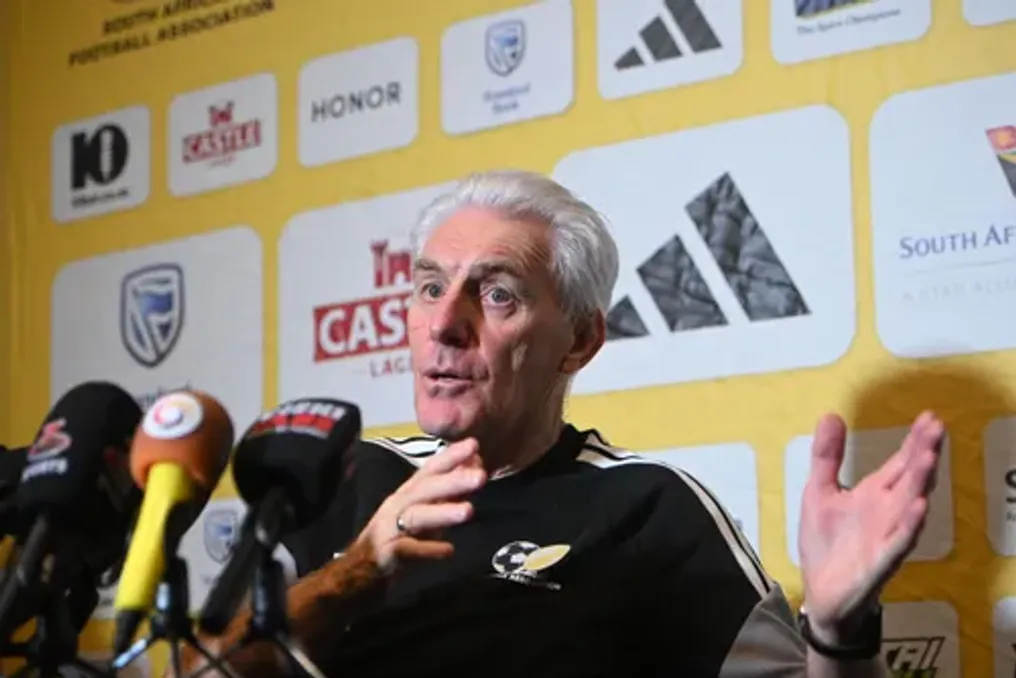
These statements from Mosimane came amid ongoing uncertainty about the future of current coach Hugo Broos, whose contract expires at the end of this month. Earlier, Broos stated in an interview in his home country, Belgium, that his tenure as Bafana's coach was over, despite leading South Africa to two consecutive Africa Cup of Nations tournaments and securing a historic spot in the FIFA World Cup 32nd round.
However, Safa quickly refuted reports of the Belgian's departure, insisting that he continues to hold the position of national coach. This week, there were reports of a possible one-year contract extension for Broos while the association searches for a long-term successor, although Safa also denied these claims.
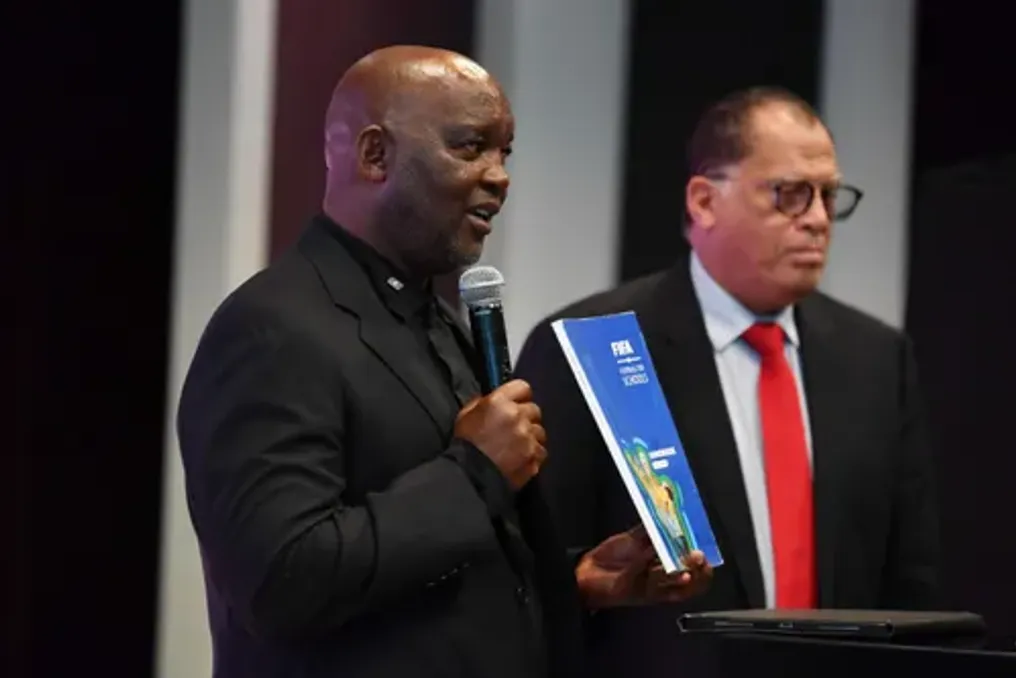
The conflicting reports left the future of the national team's coaching position unresolved. Speaking at the presentation of his Youth Football Directorate in Johannesburg on Thursday, Mosimane revealed that Safa approached several coaches to discuss the future direction of the national team's work.
Mosimane noted that the federation spoke with many about who could come in as part of the succession plan, asking questions about desires, plans, and how to take Bafana to a higher level. Acknowledging the successes achieved under Broos, he believes that South African football should aim for greater achievements rather than being satisfied with recent success.
Drawing on his own coaching experience, Mosimane argued that every achievement must serve as a springboard for the next. He cited his time at Sundowns, where the team won the Champions League, emphasizing that any stage and any level can be improved.
The four-time CAF Champions League winner also cautioned against overestimating Bafana's recent successes. He reminded that qualifying for the World Cup is not unprecedented, as Carlos Parreira also did, and winning AFCON has happened before, such as under Clive Barker. Mosimane concluded that after the encouraging performance at the World Cup, the team should set even higher goals, stating: 'We can do a little better. We beat Nigeria. We beat Ghana. So let's be realistic... We can be there. We were in the AFCON semi-finals, right? So anything is possible. We can raise the bar.'
There is significant confusion regarding the future of Hugo Broes in the Bafana Bafana squad, caused by contradictory statements from SAFA. The South African Football Association, known as SAFA, is a sports federation bearing a huge burden of responsibility for the development of mass sports in the country.
Perhaps the problem lies in the fact that SAFA's shoulders are not broad enough to handle the administrative burden of South African football. This raises questions about why the flagship of South African football—the men's national team Bafana Bafana—is in a state of uncertainty regarding coaching staff less than 60 days before the start of the 2027 Africa Cup of Nations (AFCON) qualifiers.
SAFA President Danny Jordan denied reports that Hugo Broes was offered a one-year contract. Jordan stated that the association would announce its decision regarding the next Bafana Bafana coach in due course and urged South Africans to remain patient.
The team, which recently participated in the World Cup, rekindled hopes of returning to glory by advancing through the group stage for the first time. Although 60 days is enough for any professional coach to familiarize themselves with the players, if Broes does not agree to an extension, his successor should be appointed immediately, given that the local league starts in a week.
However, SAFA leadership continues to make mistakes, demonstrating a lack of concern for deadlines. Recently, SAFA has been actively issuing public statements and criticizing the media regarding the position of the Bafana coach. This week, they released another statement: 'SAFA rejects reports of Coach Broes' contract extension.' This followed a previous statement: 'SAFA rejects reports of Coach Broes leaving Bafana.'
The conflict between these statements is obvious. Unlike organizations serious about football, such as the DFB (German Football Association), which quickly found and announced a coach like Jürgen Klopp, SAFA is engaged in unnecessary rumor debunking. SAFA hastily stopped reports of Broes' departure just to emphasize that his contract expires only at the end of July 2026.
Nevertheless, Broes has already announced plans to retire before participating in the 2026 World Cup with Bafana. The Belgian has slightly changed his stance, offering himself as a technical consultant rather than head coach. If SAFA wishes to keep Broes, they should discuss it with him: he either agrees or refuses, and then things can move forward. In any case, appointing or confirming the next Bafana coach is an urgent matter.
Decisiveness from SAFA is now required regarding who will take over from Broes so that Bafana can advance towards its goal—gold at AFCON 2027, as South Africans expect no less. Otherwise, there is a risk of returning to times of worry about whether they can qualify at all.
At the historic AFCON 2027 tournament, which will be held in the Cecafa region for the first time in five decades and will coincide with the 70th anniversary of the main African tournament, Bafana is competing in the qualifiers alongside Guinea, co-host Kenya, and Eritrea.
FIFA President Gianni Infantino is considering increasing the number of teams in the World Cup to 64 participants, despite previous discussions about a 48-team format. He informed the Swiss publication Bluewin that the decision to expand the men's tournament to 64 teams before the 2030 World Cup final will be subject to discussion after the current tournament concludes.
According to The Guardian, Infantino stated that this idea 'is undoubtedly an issue that will be reviewed and discussed' by the relevant FIFA committees. He justified this by saying that the World Cup should be held 'for the whole world,' not just for Europe and South America, emphasizing the principle of fairness.
The initial proposal to move to 64 teams was put forward by Uruguayan federation president Ignacio Alonso at a FIFA Council meeting in March 2025. This initiative was later supported by CONMEBOL president Alejandro Dominguez, who called it his 'dream.' Thus, this proposal originating from South America is now being considered by Infantino.
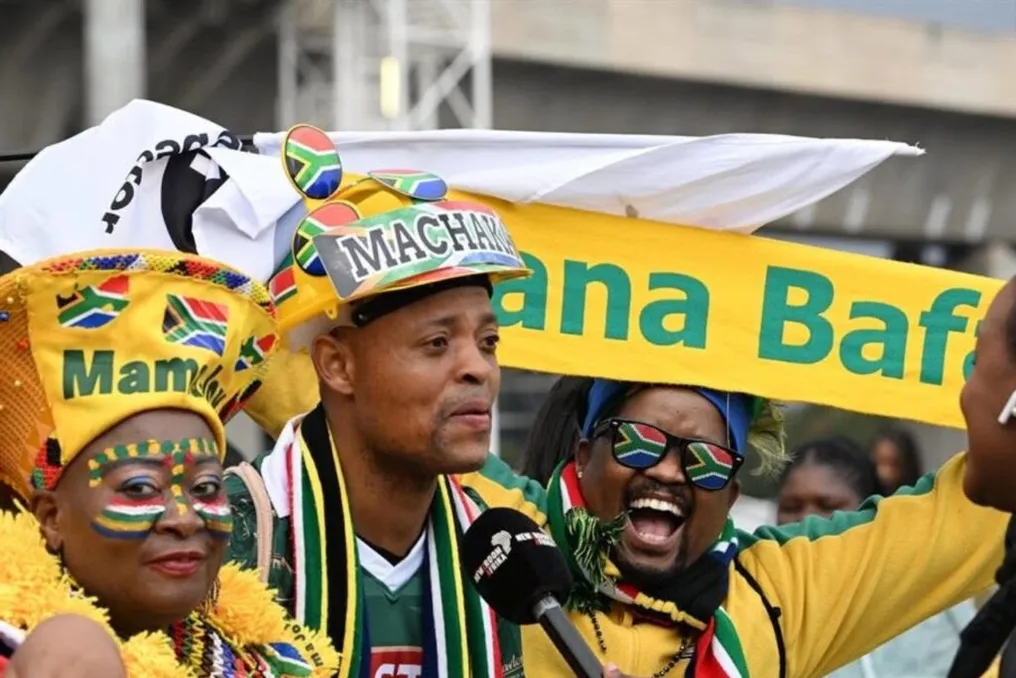
For Bafana fans, the discussion within the FIFA structure is of significant interest, as a larger number of countries means more opportunities to qualify for the tournament, even if it does not guarantee automatic participation for South Africa. Al Jazeera notes that the current tournament became the first men's World Cup with 48 teams, following the 32-team format used from 1998 to 2022. Infantino called the new format an 'enormous success,' noting that smaller nations have started playing a more significant role.
He quoted statistics, stating that 'nine out of ten African teams made it to the playoff stage,' compared to five African teams at the previous World Cup.
A potential transition to 64 teams will almost certainly require a new discussion on the distribution of spots among continents, although FIFA has not yet announced the format, slot division, voting date, or guarantees for Africa. One of the discussed options suggests 16 groups of four teams, with the top two advancing to a 32-match playoff stage. This format could increase the total number of tournament matches to 128, compared to 104 matches in the 48-team format.
The 2030 World Cup already has several features: the main host countries are Spain, Portugal, and Morocco, while matches will take place in Uruguay, Argentina, and Paraguay to commemorate the centenary of the first World Cup in Uruguay in 1930. Nevertheless, FIFA has not yet approved the 64-team plan, and the governing body has not set a deadline for the decision; any format change requires approval from the FIFA Council.
However, some leaders have expressed doubts: UEFA president Aleksander Čeferin called the proposal a 'bad idea,' and AFC president Sheikh Salman bin Ibrahim Al Khalifa warned that opening the doors too widely could lead to 'chaos.' CONCACAF president Victor Montagliani also commented, stating that the idea 'does not seem right' and could harm the 'broader football ecosystem.'