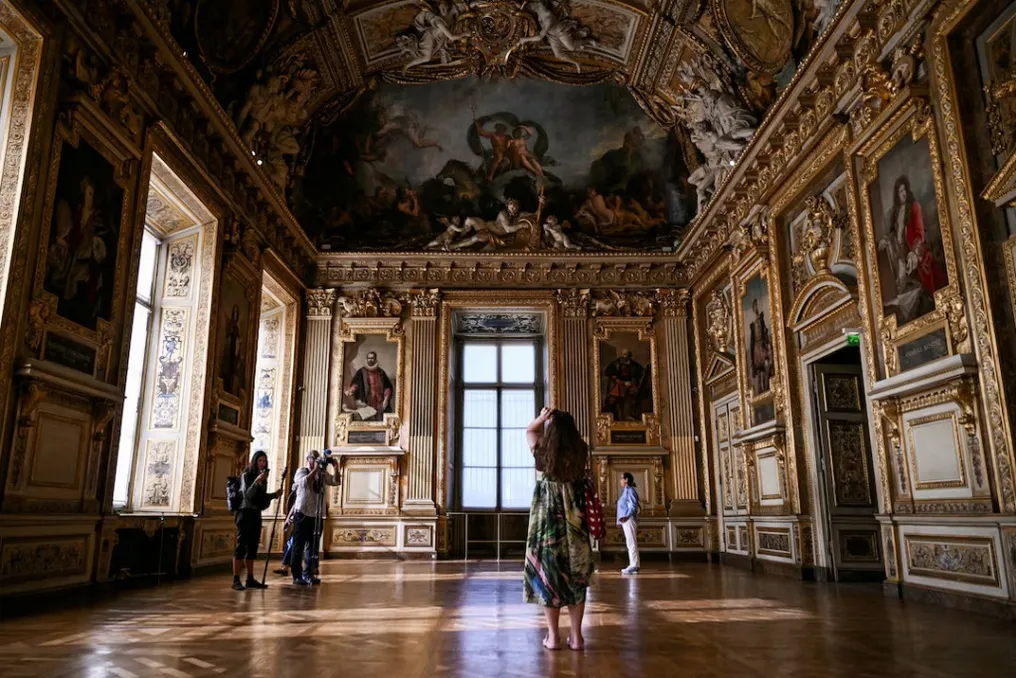
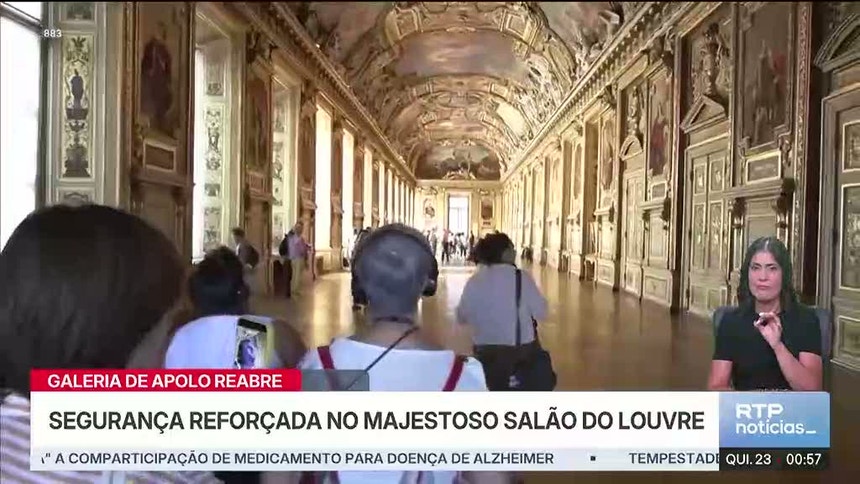
Nine months after the Louvre robbery incident, the Apollo Gallery has resumed operations. According to confirmations from the Louvre, this room, located in the museum's south wing, will no longer display its former valuable collections and artifacts.
Focus on Restoration and Security
The main focus will now be on restoring the wall paintings and sculptures to restore the appearance of one of the palace's most iconic rooms. Furthermore, enhanced security measures have been implemented, including the installation of grilles on the windows. These windows were the point of entry for the robbers on the morning of October 19, 2025, just half an hour after the museum opened.
Details of the Robbery
The robbery was carried out by four men who used motorcycles to approach the facade facing the Seine, and then a freight elevator to access the gallery level. There, they used a circular saw to cut through the exterior glass. The operation took about seven minutes and involved the theft of eight pieces of jewelry, such as necklaces, tiaras, reliquaries, and gemstone brooches. Among the stolen items was Empress Eugénie's crown, which was lost during the escape.
Consequences and New Plans
The total value of the stolen goods was estimated at 88 million euros, but the historical value of these items is priceless. In addition to the damage to national heritage, this crime triggered a serious image crisis, revealing critical flaws in the museum's security system, which is visited by about nine million people annually. The incident led to several other problems, including floods, staff strikes, and gallery closures due to the fragility of the old palace's beams, whose territory covers 30 hectares, including the Tuileries Gardens.
The newspaper Le Parisien reported on Monday that the stolen but not stolen items, including Empress Eugénie's crown, which are still undergoing restoration after the damage sustained in October, will be moved to a new, highly secure room inside the museum that has no windows.
Louvre Modernization Strategy
According to the current President of the Louvre, Christophe Leribois, the goal is to create a special hall that provides the best conditions for the preservation and security of exhibits. Following the attack, the Louvre accelerated the implementation of security measures, such as installing a mobile patrol inside the museum and improving the perimeter surveillance system. Nevertheless, Leribois himself warned in June, when he first addressed the Senate after replacing Laurence de Car in February, that modernizing security is a complex and lengthy process.
A long-term large-scale renovation project called 'Louvre Nouvelle Renaissance' (New Renaissance of the Louvre) has also been announced, as declared by French President Emmanuel Macron. This statement followed De Car sending a letter to the government warning about serious deficiencies in the museum's infrastructure, which are outdated due to age and inability to adapt to the consequences of climate change and the current number of visitors. The 'Louvre Nouvelle Renaissance' project includes, among other things, the opening of a new entrance on the east side of the vast complex and the creation of a new room for the most visited work, 'Mona Lisa', Leonardo da Vinci's Renaissance masterpiece.