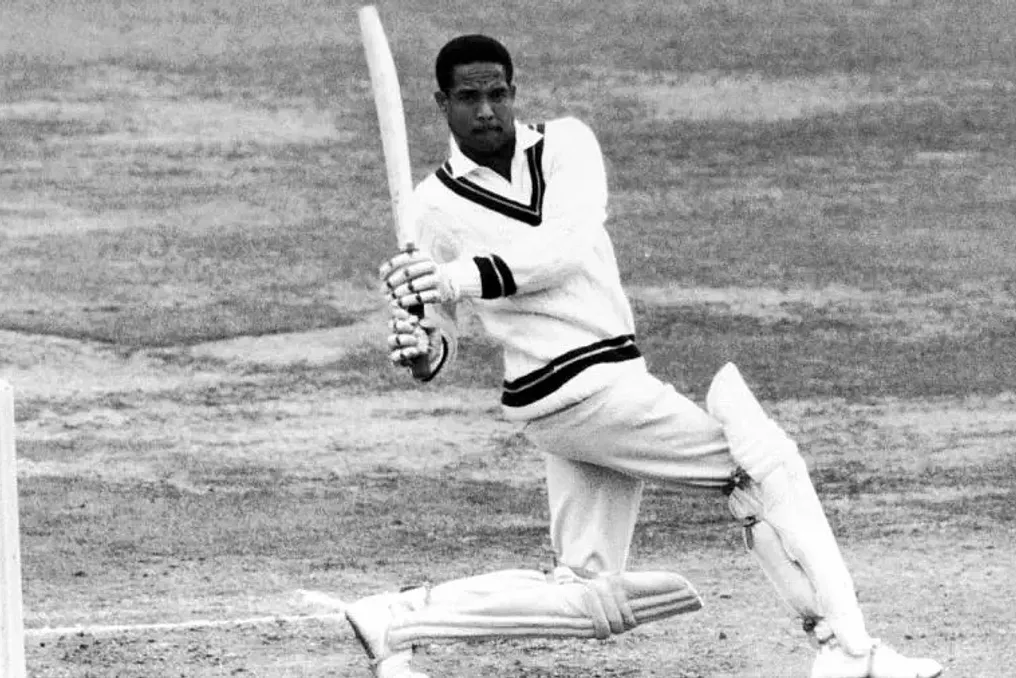
Farokh Engineer, a former Indian cricketer, recalls Garry Sobers, the West Indies icon, comparing him to the genius of Lionel Messi. However, unlike the football star, the West Indian legend is described as a 'typical Caribbean, cheerful guy.'
Memories of the 1972 Match
More than 54 years have passed since that incredible day of cricket in Melbourne, but for 88-year-old Farokh Engineer, it feels like it happened yesterday. Engineer had the opportunity to witness one of the greatest demonstrations in the history of cricket, albeit in an unofficial match. This was part of the 1972 series between Australia and the World XI, a team assembled from elite players from all countries playing Test matches.
The staging of this event became possible because Australia's tour of South Africa to hold a bilateral series was cancelled due to anti-apartheid protests in the African country. The cancellation of this series forced the Australian Cricket Board to look for alternatives, which led to a series of games between Australia and the best cricketers representing the World XI.
Sobers and the World XI Squad
No one was more significant than Sir Garfield Sobers, the legendary West Indian all-rounder who passed away last week at the age of 89. Sobers captained the World XI, which included stars such as Zahir Abbas, Sunil Gavaskar, Engineer, Bishan Singh Bedi, Clive Lloyd, and the Pollock brothers from South Africa, Graham and Peter.
The team, under the leadership of Ian Chappell, included the young fast bowler Dennis Lillee, who became one of the greatest fast bowlers of all time. Lillee was just beginning his international career when he led the Australian attack against the star-studded World XI. Sobers, on the other hand, was a veteran of 36 years, with 18 years of experience in Test cricket, and built his reputation as the only player in the game's history capable of bowling both fast and various types of left-arm spin, in addition to his batting genius.
Conflict and Triumph in Melbourne
While the Australian pace specialist was a rising star, Sobers was the greatest icon whose unique all-round talent had as huge an impact on the sport as Don Bradman's otherworldly average of 99.94. However, in the series, when the third Test match began in Melbourne after Australia easily won the second match, Sobers did not make an impression. He was dismissed by Lillee with a bouncer in a modest first innings total for the World XI, which amounted to 184 runs.
Perhaps the West Indian was in the twilight of his career, but the fact that a rookie fast bowler dismissed him affected his ego. When the Australians took the field, Sobers wanted to show Lillee that he could also bowl fast and short. Engineer, who was catching for the World XI at the time, recalls what Sobers told him when Lillee came out to bat as the finisher. 'Garry told me: 'Just step back a couple of paces. I'll show this kid what fast bowling is like.' And they just brought out the second new ball, and my God, he bowled four or five consecutive bouncers,' Engineer recounted in an interview with Khaleej Times.
'He almost decapitated Dennis Lillee. And he (Lillee) kept staring at me over the stumps, saying: 'What the hell is going on?' And I replied: 'How does it feel to be on the receiving end?' And then, of course, Garry outsmarted him.' Lillee was furious when he returned to the stands.
'When he walked into the Australian dressing room, he threw his bat and came into our dressing room, pointing at Garry: 'Hey you, I'll see you there when you come out to bat.' Garry replied: 'Well, you have the ball. I have the bat. We shall see.' This sparked the greatest innings battle ever played on Australian soil.'
The Legendary Innings Battle
In his incredible career, Sobers scored triple centuries and dominated attacks worldwide, accumulating over 8000 Test runs at a magnificent average of 57.78, including 26 hundreds. As the only bowler in cricket history who bowled fast and switched to spin depending on the pitch conditions, Sobers took 235 wickets at a very impressive average of 34.03, including six five-wicket hauls in 93 matches.
But on that day, what the left-handed wizard turned at the Melbourne Cricket Ground still delights cricket romantics. He scored a stunning 254 runs, pushing Lillee to the boundaries with drives, pulls, and hooks, leading to a convincing victory for the World XI by 96 runs.
Engineer noted: 'Garry usually batted at number seven, but that day he decided to come out earlier in the innings. I think he came out two places earlier. So he came out and destroyed Lillee.' He added: 'I was on the other end about half an hour as his partner, encouraging him between overs while he and Dennis exchanged words. It was wonderful cricket and a wonderful theatrical performance.'
The quality of Sobers' shots was so high that even the incomparable Bradman, who retired in 1948, stood up. Engineer stated: 'Bradman said it was the best innings battle he had seen (in Australia), and undoubtedly the best innings battle I have ever seen anywhere.' He continued: 'I never saw anyone hit a fast bowler like Lillee the way Garry did in that innings. He treated him like a schoolboy cricketer. That 254 was a stunning innings battle.'
The Human Side and Recognition
Beyond being a formidable opponent on the field, Sobers possessed a big heart. Engineer got to discover another side of the great cricketer when he played against him in 1967 in the India vs. West Indies match in Chennai. Facing the intimidating duo of Sobers, Wes Hall, and Charlie Griffith, Engineer, an aggressive batsman, dared to take a risk for the first time and scored a magnificent century.
The former wicketkeeper-batsman reported that achieving the century felt as good as receiving approval from Sobers. 'When I scored my fastest Test century against the West Indies, Garry was the first person to approach me. He hugged me, shook my hand, and said: 'Even though it was against us, it was one of the best innings battles I have ever seen anyone play against Wes Hall, Charlie Griffith, and me',' he recounted. 'Getting those words from Garry Sobers was probably the biggest compliment I ever received. He sincerely meant those words. We weren't friends then; we were just rivals. That's what made his words so special.'
Conclusion on Genius
Engineer believes that cricket will never see a genius like Sobers again, possessing a unique combination of fast and spin bowling, batting skills, and excellent fielding. 'He could do everything on the cricket field. Like Lionel Messi in football. But they were different people. Sobers was a typical Caribbean, cheerful guy. I think Messi is more meticulous and is a role model for the youth,' Engineer observed.
'Garry was different. He could go to a party late at night and score a magnificent Test century the next morning. In that sense, he was like George Best. George and I were neighbors in Manchester. I knew he would be partying all night, but the next day he would run past the best defenders and score incredible goals for Manchester United. Geniuses like Garry Sobers and George Best could afford to do such things. I certainly wouldn't advise young players to try to imitate them. They were exceptions.'
However, speaking strictly about cricket, was he truly the greatest of all time, as many experts suggest? 'Of course. He was the most complete cricketer I have ever seen. No one will replace him,' Engineer replied. 'People often talk about great batsmen or great bowlers, but Garry mastered everything. He could bowl fast, bowl spin, bowl Chinaman, field brilliantly, and then come out and play some of the greatest innings you have ever seen. The ability to excel simultaneously as a fast bowler, a spinner, a fantastic batsman, and a fantastic fielder—that four-in-one combination was extraordinary. That is why Garry Sobers was unique.'