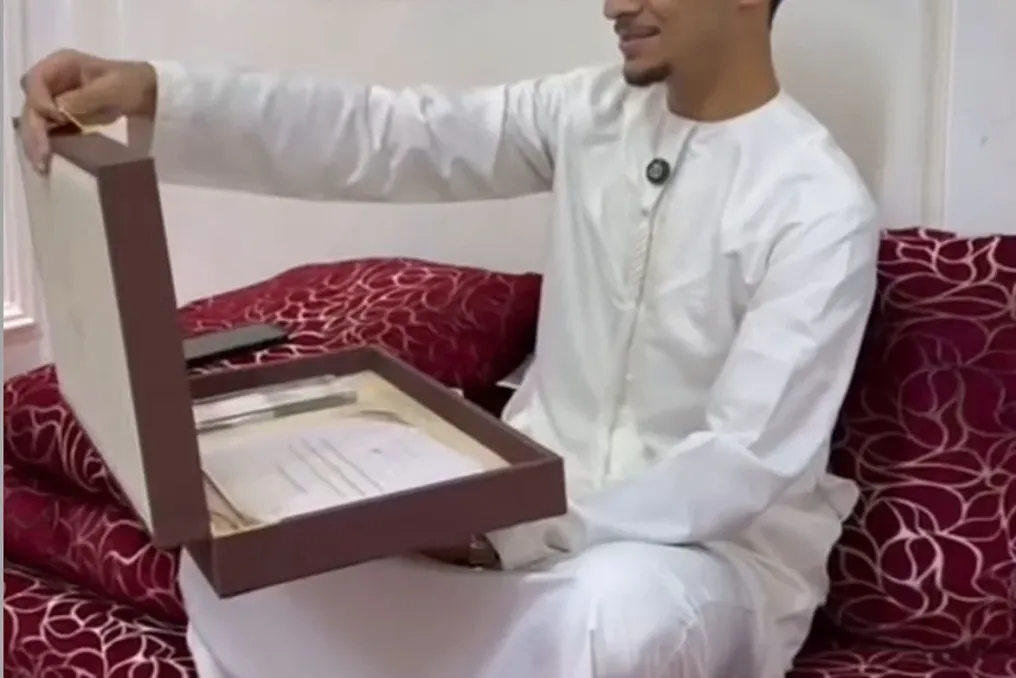
A teenager from Dubai, who became interested in economics while trying to understand the news, has become the first student to receive an individual gold medal for the United Arab Emirates at the International Economics Olympiad.
A teenager from Dubai, who became interested in economics while trying to understand the news, has become the first student to receive an individual gold medal for the United Arab Emirates at the International Economics Olympiad.
Ali-Mansour Valiev, a 17-year-old 12th-grade student at Dubai College, won against over 200 participants from 56 countries, securing gold at this year's competition. His success is the result of two years of preparation, participation in national qualifiers, and self-study.
Valiev noted that his interest in business and understanding world events arose long before economics became a school subject. He told Khaleej Times: 'I have always been interested in reading about business and understanding what is happening in the world. Most of that was related to the news. Economics gave me the tools to understand what is going on around me, how it affects communities, and how it applies to my own life.'
Valiev's journey to the Olympiad began in 10th grade when he joined the UAE preparation program after being selected from thousands of applicants. Over the next two years, he attended online training camps, took numerous qualifying exams, and ultimately made it into the UAE national team, which consisted of only five people.
The Olympiad tested students' knowledge in economics, finance, and business through three stages. These stages included a multiple-choice test, an essay analyzing real economic problems such as artificial intelligence and development, and a business case where participants acted as consultants, assessing the feasibility of establishing a new economic free zone in the UAE.
Valiev called the final consulting challenge the most difficult part of the competition. He shared that they had only one full day to prepare and worked from early morning until late at night to ensure their proposal was economically sound and considered all compromises.
Although official training camps laid the foundation, Valiev emphasized that most of his preparation was done independently. He admitted that the lessons were insufficient, and he had to take the initiative to study the material without external pressure. Since almost anything could appear at the Olympiad, he set himself the goal of researching topics that interested him, going far beyond the curriculum.
He mentioned sacrificing evenings for online training, but this experience taught him time management rather than leading to him abandoning everything else. Valiev noted that he learned to find a balance by waking up earlier, studying consistently, while still making time for himself.
Although he went to the Olympiad hoping to perform well, Valiev never expected to return with the country's first individual gold medal. The award ceremony was held online, and winners were announced by category. He recalled the moment he was named one of the last contenders for gold while sitting next to his mother. He described it as an amazing experience, as after two years of work, he felt all the effort had paid off.
Outside of his studies, Valiev founded EcoEducation—an initiative that teaches personal finance, sustainable development, and global citizenship to students from underprivileged backgrounds. Through online courses and local ambassadors, the project has reached over 10,000 learners. This activity began in Uzbekistan, where part of his family resides, after he noticed that many young people lacked access to educational opportunities available elsewhere.
His goal is to provide Central Asian students with the same opportunities he received in the UAE. Furthermore, he conducts research in the fields of economics, artificial intelligence, and public policy. Among his works are improving land-use planning in Central Asia and developing more accessible methods for screening Alzheimer's disease after observing healthcare issues in rural areas during visits to the region.
Planning his further education, Valiev hopes to attend a university in the UK or the US to study economics and computer science. He intends to combine both disciplines to develop practical solutions to real-world problems. As he said: 'My goal is to create tools and products that help people. I want to use what I have learned to make an impact.'
Sheikh Mohammed bin Rashid Al Maktoum, Vice President of the UAE, presented an unexpected gift in the form of a cash prize of AED 100,000 to the top 12th-grade students in the UAE. This gesture was aimed at recognizing the outstanding academic achievements demonstrated by the students during the secondary school examinations for the 2025–2026 period.
This surprise from Sheikh Mohammed, who is also the Prime Minister of the UAE and Ruler of Dubai, was presented on Saturday as a token of gratitude to the students who achieved the highest results across the country. The monetary award was given to the best graduates from public, private, and applied technology educational streams.
Among the national leaders in the public education system were recognized: Abeer Abdul Rahman Fayez Humaid Al Shamsi from Al Rashidiya Cycle 3 Girls School in Dubai (Elite Track); Adam Mohammed Awad Awad Ibrahim from Al Khatim Boys School in Abu Dhabi (Advanced Track); and Hessa Rashid Musbeh Abdul Rahman Al Ali Li from Al Mawaheb Girls School in Abu Dhabi (General Track).
In the private education sector, Ali Asim Hassan from Al Noor International Private School in Sharjah (Advanced Track) and Abdullah Yasser Abu Arabi from Al Falah Academy in Abu Dhabi (General Track) were awarded.
In the field of applied technologies, Rashid Ahmed Rashid Ali Al Dhanhani from Applied Technology Schools in Fujairah (Science Track); Sheikha Abdul Aziz Abdul Rahman Mohammed Al Hosani from Applied Technology Schools in Ajman (Advanced Track); and Mariam Said Hamad Al Hadfi Al Ketbi from Applied Technology Schools in Umm Al Quwain (General Track) were recognized.
This act of support brought joy to the students and their families, reflecting the UAE leadership's continuous commitment to supporting education, honoring excellence, and encouraging future generations toward academic success. This award followed public congratulations from Sheikh Mohammed, who praised the academic prowess and perseverance of high school students in his social media post on July 11.
Sheikh Mohammed stated: 'We congratulate our sons and daughters, the top graduates of the national General Secondary Education Certificate.' He added that he is proud of all of them and confident that they will be part of building the future of the Emirates. He emphasized that the country will continue to create the best environment for individual empowerment, and education will remain a vital national project, and children are its winning chance in the present and future.
He also noted that the UAE remains focused on creating an optimal environment for human empowerment through an outstanding and inspiring education system that strengthens the country's global competitiveness and equips youth with the knowledge, skills, and values necessary to shape the future.
Omar Abu Arabi, Abdullah Yasser Abu Arabi's uncle, expressed his gratitude to Sheikh Mohammed for the generous gesture on Instagram. He wrote that he gratefully thanks His Highness Sheikh Mohammed bin Rashid Al Maktoum for this generous recognition, noting that his unlimited support and visionary leadership always place the UAE and everyone who calls this country home at the center of priorities.
Furthermore, social media user abalobaidly shared reflections on this year's graduates' successes, noting that the class overcame exceptional difficulties throughout their school years. The user mentioned that this generation studied during the pandemic, witnessed global conflicts, and adapted between online and in-person learning, yet still succeeded thanks to 12 years of dedication, perseverance, and constant support from families and teachers.
Ali Asim Hassan's school, Al Noor International School in Sharjah, also acknowledged his achievement on Instagram, stating that the school continues its tradition of excellence by nurturing outstanding students who achieve the highest national rankings and new heights of success.
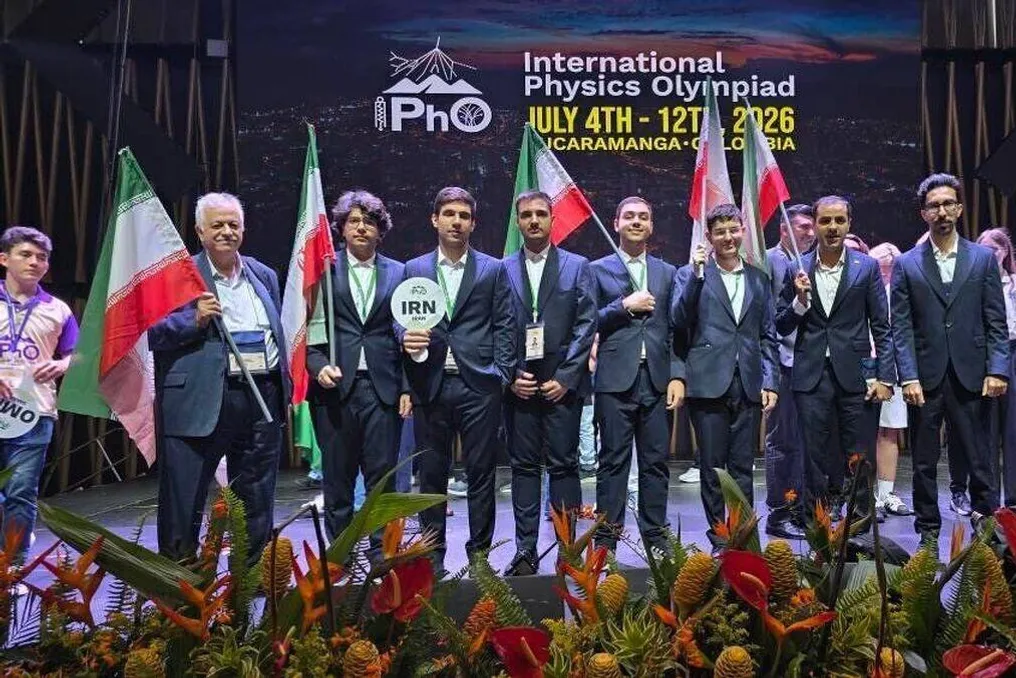
A team of five Iranian students demonstrated outstanding results at the 56th International Physics Olympiad (IPhO), winning three gold and two silver medals.
The event took place from July 4 to July 12 in Bucaramanga, Colombia, gathering over 400 participants from more than 90 countries. Among those awarded gold medals were Hirbod Fodaee, Kian Zarrabian, and Mohammad Mirmohammadi, while Amir-Sam Goharpay and Nima Kushki received silver medals.
The main goal of IPhO is to test knowledge, analytical skills, critical thinking, and problem-solving abilities in theoretical and experimental physics at the highest level. The competition includes two five-hour tests: the first is experimental, using provided equipment, and the second is theoretical, focusing on phenomenon modeling.
The team's performance was marked not only by medals: Zarrabian placed first in the experimental physics test, while a candidate from South Korea led in the theoretical test. Previously, at the 66th Olympiad in Australia in 2025, the Iranian team ranked 12th in the world, receiving two gold, three silver, and one bronze medal, an improvement from 19th place the previous year.
During the 2026 International Science Olympiad in Physics, which was held exclusively online from June 21 to June 30, 2026, the Iranian team achieved significant success, winning two gold, one silver, and one bronze medal. Hirbod Fodaee was recognized as the absolute winner, taking first place among all participants due to the best result in the Theoretical Exam, earning a gold medal and a national diamond. Amir-Sam Goharpay won the second gold medal, while Kian Zarrabian and Mohammad Mirmohammadi received silver and bronze medals, respectively.
Iran's successes in Olympiads extend beyond physics. At the 36th International Biology Olympiad (IBO 2025) in the Philippines, Iranian students won three gold and one silver medal, securing second place among 81 participating countries. This result surpassed Iran's third place at IBO 2024 in Kazakhstan.
This continuous stream of international achievements coincides with a rise in interest in scientific Olympiads domestically. According to Reza Hosseini, head of the Iranian Youth Club of Scientists, participation in national olympiads increased by 40% year-on-year, rising from 87,000 students in Iranian year 1403 (March 2024 – March 2025) to 121,000 in 1404 (March 2025 – March 2026). Hosseini noted that this figure is the highest in a decade and reflects the growing interest of Iranian students in STEM fields.
The Iranian team also demonstrated brilliant abilities at the Fourth International Summer Mathematics Camp (IMSC), held in Beijing, China, from June 17 to July 12. There, they won four gold and two silver medals, surpassing students from Poland and Brazil. The event gathered 58 teams from 46 countries and regions, including 41 international teams and 17 teams from China, with a total of over 500 students, teachers, and coaches.
Furthermore, four Iranian female students participated in the Open International Geography Olympiad (OpenGeo) 2026, winning four medals for the first time, including one silver and three bronze. Artina Heidari received a silver medal, while Setayesh Haknazari, Sana Karbalai Vali, and Gelia Hodabandelu received bronze. This achievement highlighted the comprehensive expertise of Iranian students in geography and is an important step toward preparation for the International Geography Olympiad (IGO).
The OpenGeo competition was organized by the Faculty of Geography, Lomonosov Moscow State University, the MSU high school, and the Primakov School. It was held online on June 20 and 21, and contestants from 27 countries participated. Participants were high school students aged 14 to 19, studying in secondary school or planning to graduate in 2026. The competition consisted of a Written Test with Answers (WRT) lasting 2.5 hours, a Practical and Cartographic Exercise (PME) for 2.5 hours, and a Multimedia Test (MMT) for one hour.