Two incidents involving dangerous snakes appearing in residential homes occurred in the city of Kota, Rajasthan, during the monsoon season. These cases demonstrate the threat snakes can pose inside houses.
Two incidents involving dangerous snakes appearing in residential homes occurred in the city of Kota, Rajasthan, during the monsoon season. These cases demonstrate the threat snakes can pose inside houses.
In the Newgaon Rodji area, at the home of Ful Singh Kushwaha, a venomous cobra measuring about one and a half meters entered late at night, around four o'clock. When family members woke up, they noticed the snake crawling near their feet. The snake quickly moved into the kitchen and hid behind a chapati stand next to the gas stove. The residents panicked but managed to ensure their safety and immediately notified snake catcher Govind Sharma.
Govind Sharma arrived at the scene and cautiously began searching for the cobra. The snake was soon found behind the stand. Maximum caution was observed during the rescue operation, and the venomous snake was safely captured. The Forest Department was informed about this incident, after which the snake was released into the wild.
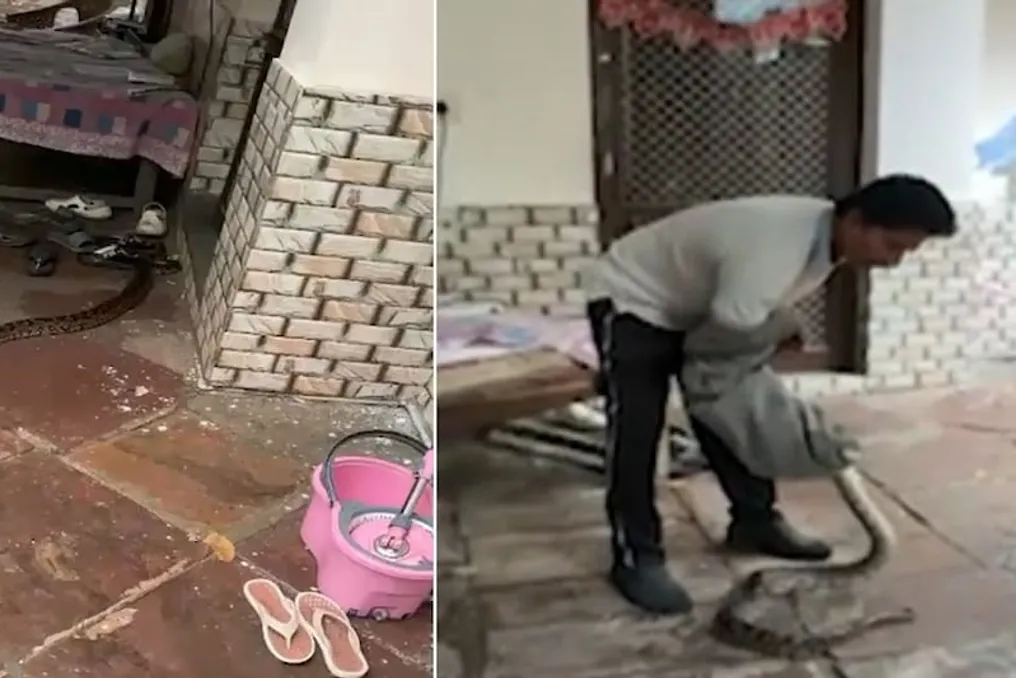
The second incident took place in Dadabadi Vistar Yojana. Early in the morning, around five-thirty, family members discovered a python measuring approximately eight feet inside the house. Seeing the snake, all five family members were terrified and left the house. Subsequently, snake catcher Govind Sharma was urgently called. He arrived at the scene and carried out the safe extraction of the python, after which he released it into the Ladpura forest. The head of the Forest Department, Bhavani Singh, was informed about this case.
Snake catcher Govind Sharma explained that during the rainy season, snakes and other wild animals migrate into populated areas in search of safe shelters because their natural burrows and habitats become flooded. During such periods, people should avoid panicking or attempting to kill the snake, but instead maintain a safe distance.
Wildlife experts advise immediately reporting to the Forest Department or a snake rescue team to have the snakes extracted without causing harm. Since the rains are continuing, specialists recommend preventing the accumulation of bushes, debris, and wooden stacks near homes. They also advise using a flashlight at night and remaining vigilant in open areas.
Although daily cleaning of household floors is a routine task, there are areas that often go unnoticed, such as bathroom shelves. People store various items on these shelves that accumulate over time, become rarely used, and eventually may expire.
When cleaning the bathroom, bottles or products that have been partially used or whose expiration date has passed are often found. Most people simply throw such items in the trash. However, some bathroom products, even after their expiration date, can find uses in various household chores, which helps reduce waste and simplify minor domestic tasks.
There are nine ways to use expired bathroom products:
Despite numerous useful applications, it is crucial to exercise caution when using expired products. You should avoid applying any expired goods directly to the skin or if there are wounds.
Seasonal rains in India, which traditionally serve as a vital source for agriculture and relief from summer heat, are having an unforeseen and dangerous impact on the country's urban waterways. A new study has shown that intense rainfall causes a sharp increase in antibiotic resistance genes in city rivers, turning these waters into an environment for the development of antimicrobial resistance (AMR) superbugs.
Scientists studying rivers in Dehradun found that during the monsoon season, the relative amount of genes allowing bacteria to resist common antibiotics increased by a thousand times compared to dry summer months. This process is primarily driven by the movement of untreated domestic and animal waste washed into river systems by heavy downpours.
The research, conducted by scientists from the Indian Institute of Technology (IIT) Roorkee, the Technical University of Dresden (Germany), and the Indian Institute of Technology (IIT-BHU) Varanasi, highlights a serious problem in the global fight against AMR, which the World Health Organization has termed a 'silent pandemic.' AMR occurs when microorganisms, such as bacteria, viruses, fungi, and parasites, mutate over time and stop responding to medications, including antibiotics, significantly complicating infection treatment and increasing the risk of severe illness.
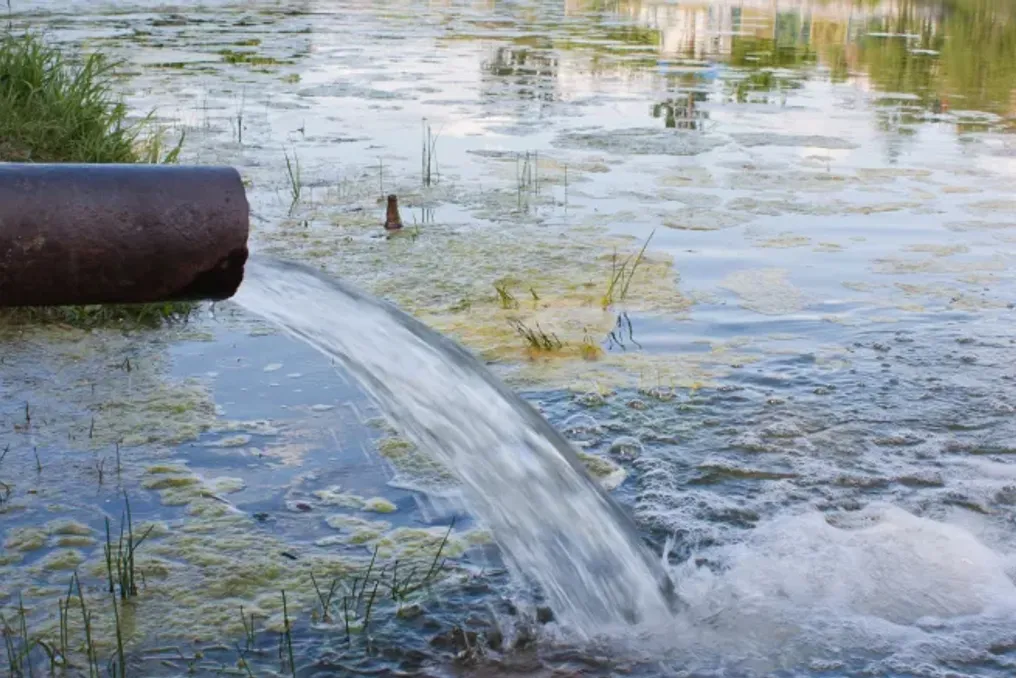
When heavy rain falls on densely populated urban areas where sewage and solid waste management is inadequate, pollutants already present in the water are not diluted. Instead, surface runoff acts as a powerful wash, transporting huge volumes of fecal matter from overflowing drains, informal settlements, and roadside dumps directly into the rivers. This influx of fecal contamination carries a high concentration of antibiotic-resistant bacteria, as well as the genetic instructions known as antibiotic resistance genes (ARGs) they contain.
To measure changes in ARGs, the research team collected water and sediment samples from the Bindal and Rispana rivers in Dehradun, Uttarakhand. Sampling was conducted during three different periods in 2019: the dry summer period, the monsoon season, and the post-monsoon winter. Quantitative Polymerase Chain Reaction (qPCR) molecular methods were used to search for specific marker genes. These included genes conferring resistance to sulfonamides, macrolides, and tetracyclines—three classes of antibiotics widely used in human and veterinary medicine. E. coli was also tracked as an indicator of fecal contamination, along with the specific gene intI1, a known indicator of human-induced pollution.
The data obtained demonstrated a consistent pattern: as the rains began, the levels of these resistance genes in the water rose sharply. Although scientists often expect that increased water volume in a river will lead to a dilution effect that reduces pollutant concentration, the opposite occurred here. The mobilization effect, or the washing of waste into the water, proved so strong that it completely overpowered any dilution effect. Interestingly, after the rains stopped, the levels of these genes in the flowing water decreased, but they remained at high levels in the bottom sediments. This indicates that bottom sediments serve as long-term reservoirs for antibiotic resistance genes.
Previous studies suggested that the main culprits behind AMR spread were point sources, such as pipes discharging wastewater from treatment plants. However, this study did not find a significant increase in resistance genes directly downstream from treatment facilities. This suggests that the real problem is not treated water, but diffuse pollution, including hundreds of small, uncontrolled leaks of sewage and garbage throughout the city. Furthermore, unlike previous theories that suggested heavy metals in the water might promote the selection of resistant bacteria, this study showed that fecal contamination was the dominant factor in the surge of resistance.
Health specialists recognize the monsoon period as a period of increased risk for AMR spread. This new scientific finding gives them a clear target for intervention. It suggests that the most effective way to protect the population is to focus efforts on controlling pollution sources, improving sewage systems, and managing waste before the rainy season begins. For communities where many people still use urban rivers for washing, irrigation, or domestic needs, this knowledge is crucial. Reducing the inflow of untreated waste into rivers may be the only way to ensure that the antibiotics we rely on today continue to save lives tomorrow.