Although daily cleaning of household floors is a routine task, there are areas that often go unnoticed, such as bathroom shelves. People store various items on these shelves that accumulate over time, become rarely used, and eventually may expire.
Although daily cleaning of household floors is a routine task, there are areas that often go unnoticed, such as bathroom shelves. People store various items on these shelves that accumulate over time, become rarely used, and eventually may expire.
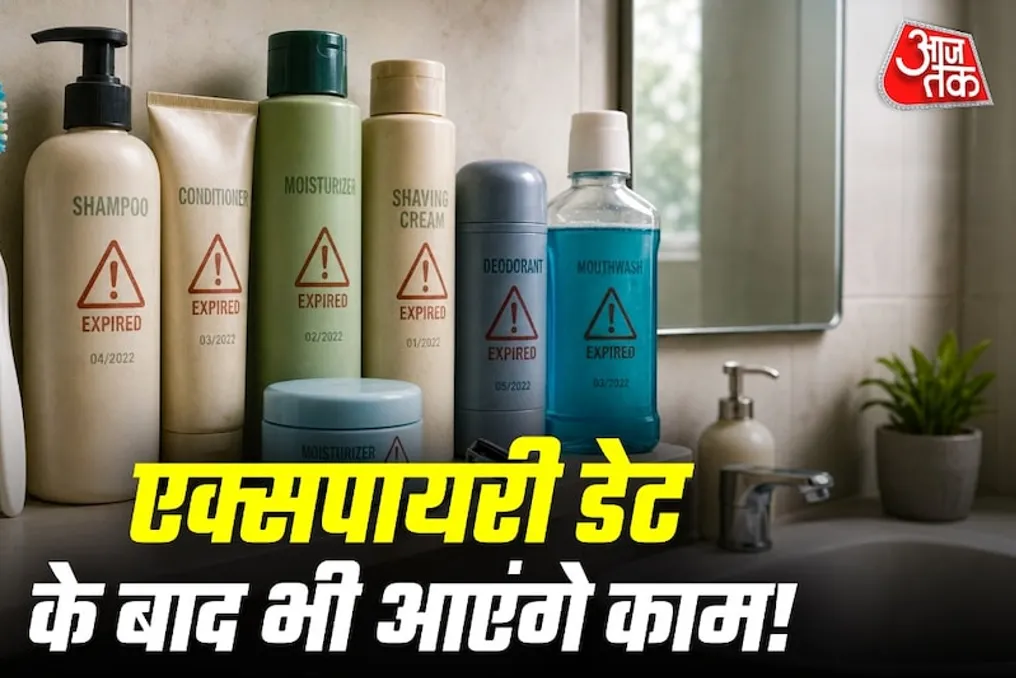
When cleaning the bathroom, bottles or products that have been partially used or whose expiration date has passed are often found. Most people simply throw such items in the trash. However, some bathroom products, even after their expiration date, can find uses in various household chores, which helps reduce waste and simplify minor domestic tasks.
There are nine ways to use expired bathroom products:
Despite numerous useful applications, it is crucial to exercise caution when using expired products. You should avoid applying any expired goods directly to the skin or if there are wounds.
The Egyptian Ministry of Agriculture and Irrigation has launched a unified national strategy for managing the population of animals living on the country's streets. This initiative involves implementing scientific and veterinary standards in all state institutions for the safe handling of stray animals.
By order of President Abdel Fattah El-Sisi, a special commission was established, including representatives from relevant ministries and state bodies. The task of this commission is to conduct a complete reorganization of veterinary policy and unify efforts to manage the animal world.
The core of the new strategy is the 'Trap-Neuter-Vaccinate-Return' (TNR) approach. According to this plan, stray dogs will be vaccinated against rabies, sterilized or neutered, and then returned to their natural habitats, which aligns with internationally recognized protocols for controlling stray populations.
The Ministry issued an order to immediately cease the use of indiscriminate control methods. The strategy strictly prohibits mass culling, the use of poisons, and unauthorized relocation of animals. Legal measures will be applied for violations.
The Ministry emphasized that this plan is consistent with Egypt's obligations under the Convention on Biological Diversity and aligns with the guidelines set by the World Organisation for Animal Health (WOAH).
All citizens, institutions, civil society organizations, and local authorities are mandated to strictly follow the new protocol. Making unilateral decisions outside the approved structure is prohibited. The Ministry warned that strict legal action will be taken against unauthorized practices or deliberate attempts to mislead the public, coordinated with regulatory and security services.
The initiative also includes the modernization of veterinary clinics, slaughterhouses, and diagnostic laboratories. Furthermore, legislative updates, digital transformation, and the creation of intelligent databases for crisis management are planned. The goal of the plan is to achieve a balance between protecting public health and preserving ecological integrity through continuous vaccination campaigns, sterilization programs, and science-based management.
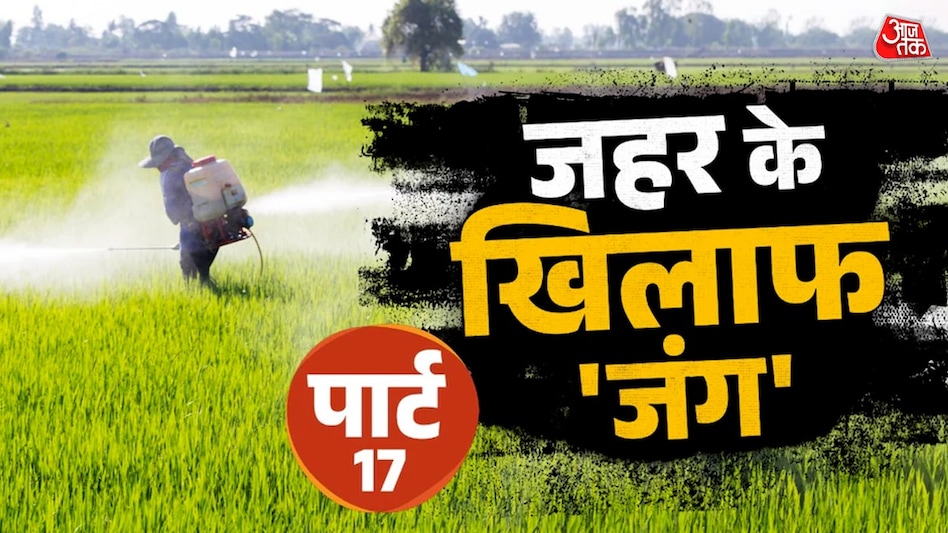
The Ministry of Agriculture has made an important policy decision aimed at stimulating organic farming and improving soil conditions in the country. A draft notification was issued banning the use of the most toxic herbicide, 'Paraquat dichloride,' across the entire country, which increased pressure on the agrochemical lobby.
Following this step, the focus of the agricultural sector and environmentalists has shifted to a potential ban on another major herbicide—'Glyphosate.' Simultaneously, there is a growing demand for greater policy transparency and the elimination of the influence of chemical corporations within government institutions and research centers.
After long waits, public protests, and the death of thousands of people, the Ministry's draft decree for 2026 effectively allowed a complete ban on the production, import, sale, and use of Paraquat. Agriculture Minister Shivaj Singh Chauhan sent a strong signal in an informal conversation with farmers: 'There is no excuse for putting any chemicals into the fields that are dangerous to human life and the environment. The health of the people comes first.'
His statement emphasized that the government will not back down from any pressure to implement the vision of 'chemically pure' agriculture put forward by Prime Minister Narendra Modi.
Similar to Paraquat, the necessity of banning Glyphosate is currently being actively discussed. The main concerns relate to the fact that the International Agency for Research on Cancer (IARC) of the World Health Organization (WHO) classified Glyphosate as a substance that causes cancer in humans (Group 2A). Numerous lawsuits against this chemical are being filed worldwide.
In more than 30 countries around the world, including Germany, France, Italy, the Netherlands, Vietnam, and Austria, Glyphosate is either completely banned or its use is strictly regulated. A natural question arises as to why such a chemical, recognized as harmful to health and the environment globally, continues to be sold in India.
The use of Glyphosate damages the country's reputation. In recent years, hundreds of batches of agricultural products exported from India to the European Union and other countries (such as basmati rice, tea, and spices) have been rejected due to the detection of Glyphosate residues. This has been a blow to both the international image and the agrarian economy of the country.
Agrochemical companies have largely neutralized the government's attempts to tighten control over Glyphosate. Previously, the government issued a directive limiting the uncontrolled use of this substance, establishing a rule that spraying must only be carried out by authorized pesticide operators (PCOs), not by the farmers themselves. The goal of this measure was to protect farmers and the population from direct contact with the poisonous substance.
However, dissatisfied agrochemical associations appealed to the High Court of Delhi. The companies argued that the necessary PCO infrastructure is absent in rural areas of India, making the proper procedure 'impractical' and leading to a sharp increase in costs for farmers. Thanks to strong lobbying and technical arguments, the High Court of Delhi stayed the notification. As a result, this important reformative step remained buried in legal disputes, and the illegal sale and spraying of this poison continued in the fields.
While the Prime Minister and the Agriculture Minister speak of the country's move towards chemically pure agriculture, the reality on the ground looks different. With every attempt by the government to introduce a ban on a deadly pesticide or herbicide, a powerful internal syndicate of the agrochemical lobby strives to weaken or postpone the decision.
According to sources, some agronomists are involved in this network. Prominent scientists from state agricultural universities and research institutes depend on funding from these companies. When the issue of banning any chemical arises, these scientists prepare 'sponsored research reports' claiming that 'this chemical is absolutely safe, and without it, the country's agricultural production will stop.'
These reports are used as a weapon to keep ban files suspended for years. Chemicals declared dangerous to humans in other countries are presented by Indian scientists as safe. They create technical complexities in political decisions, giving companies a delay. As soon as there is movement on a ban file, scientists inform company owners of every change. Using this confidential information, companies manage to sell off old stocks or launch a legal siege, achieving a 'stay' from the courts just before a final decision is made.
The biggest beneficiaries of this collusion are officials after retirement: high-ranking scientists and policy developers who retire from regulatory and research institutions are often hired by large agrochemical companies as consultants or board members under very favorable terms. Such examples are easily observed in the industry.
Actions taken against Paraquat serve as proof that even corporate lobbying and institutional obstacles cannot overcome the government's determination. According to sources in the Ministry of Agriculture, once the 30-day validity period of the Paraquat draft notification expires, control over Glyphosate will also be strengthened. It is clear that agrochemical companies will no longer be able to profit from the health of ordinary people.
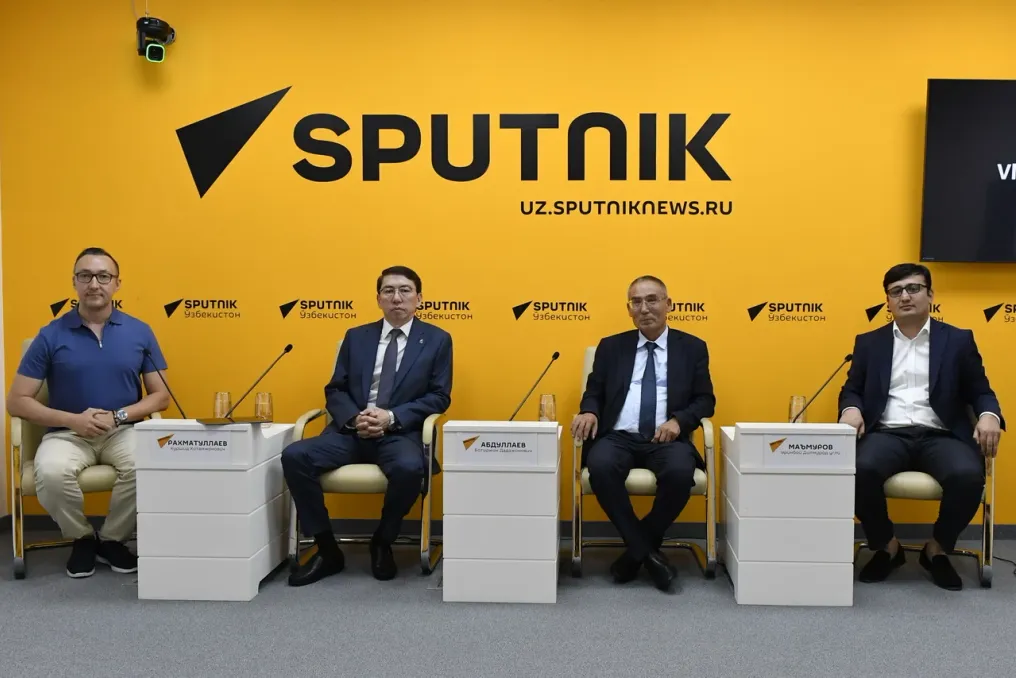
During a video conference held between Moscow and Tashkent, work began on Uzbekistan's National Strategy for Rational Water Use and Environmental Protection until 2050. The event took place at the Sputnik Uzbekistan multimedia press center under the title 'Uzbekistan's Water Strategy until 2050: Science, Technology, and International Cooperation.'
Representatives from both countries participated in the discussion. Participants from Uzbekistan included Khurshid Rahmatullaev, Deputy Chairman of the Board of JSC 'Uzsuvtaminot'; Botirjon Abdullaev, Professor and Head of the Department of Ecology and Water Resource Management at the Tashkent Institute of Irrigation and Agricultural Mechanical Engineering of the National Research University; and Urinboy Mamurov, Chief Specialist of the National Committee on Ecology and Climate Change of the Republic of Uzbekistan. Moscow was represented by Vladimir Quint, Academician and Head of the Department of Economic and Financial Strategy at Lomonosov Moscow State University.
The main subject of discussion was the formation of Uzbekistan's National Strategy for Rational Water Use and Nature Protection until 2050. Vladimir Quint noted that the work on this document is being carried out with the participation of Russian specialists who have been cooperating with Uzbekistan for many years. Previously, a team from Moscow State University participated in creating the drinking water supply strategy, which became the basis for establishing JSC 'Uzsuvtaminot', and also developed the industrial water use strategy for the Navoi Mining and Metallurgical Combine. This accumulated experience is now being applied in the creation of the new strategic document.
Quint emphasized that the central idea of the new strategy remains unchanged: human needs must be prioritized in all decisions. Therefore, the document combines issues of environmental protection and rational water resource management. A concept has already been prepared, containing 9 strategic directions and 43 priorities based on Uzbekistan's competitive advantages.
The expert also highlighted staff training as a key element. Textbooks from Moscow State University, 'Economic and Financial Strategy,' and the two-volume edition 'Concept of Strategizing' have been translated and published in Uzbek, allowing for the start of training specialists in strategizing at universities in Uzbekistan. The academic believes that a culture of rational water use should be formed from early childhood, and to achieve this, it is important to involve not only schools and universities but also local mahallas. Quint added that when children understand the need to save water, they begin to control its use at home, gradually integrating this habit into the culture of the entire family.
There is also consideration of an initiative to create an ecological and economic council in Uzbekistan, which will regularly assess the implementation of the water strategy and propose necessary adjustments. The practical implementation of the strategy is already accompanied by the introduction of new technologies. Khurshid Rahmatullaev, Deputy Chairman of the Board of JSC 'Uzsuvtaminot', reported that specialists are studying world experience, including Russian practices, when selecting technical solutions. According to Rahmatullaev, gallery water purification units are one of the most promising approaches for Uzbekistan's conditions, as they naturally purify water, require fewer chemical reagents, and are cheaper to build and operate.
In parallel, Uzbekistan continues to modernize its drinking water quality control laboratories. Currently, 85 such laboratories operate in the country, and it is planned to make testing results publicly available online. Thanks to this initiative, residents will be able to check the origin of local water and compliance with established quality standards on the internet, which, according to Rahmatullaev, will increase the transparency of the water supply system and public trust.