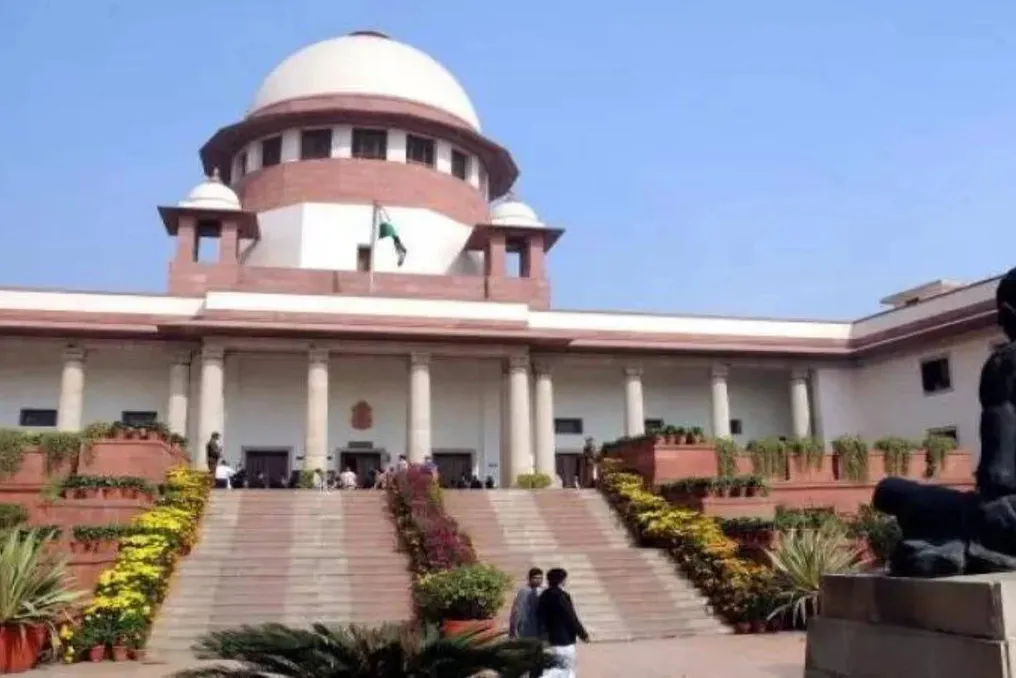
The Supreme Court (SC) has overturned a two-year blanket ban on constructing industrial facilities in the Taj Trapezium Zone (TTZ). This zone covers an area of 10,400 sq km, distributed across five districts in Uttar Pradesh (UP) and one district in Rajasthan. This decision aims to open up opportunities for job creation.
Arguments of the Parties and Petitions
The UP government, represented by General Advisor R. Venkataramani and Senior State Advisor Aishwarya Bati, stated before the bench, which included Chief Justice Surya Kant and judges Joymal Bagchi and V. Mohan, that industrial activity, especially if it involves non-polluting production, should not be completely halted.
The AG requested the court to modify the SC order dated October 14, 2024, which prohibited the construction of any industrial facilities in the TTZ without court permission. He noted that given the aspirations of youth and entrepreneurs, the court could show greater flexibility, especially if a pollution limit is set for each industry using electricity or natural gas.
Opposition and Expert Suggestions
Senior Advocate Aparna Bat opposed this petition, pointing out that the TTZ authority had issued arbitrary permits for glass manufacturing plants that did not comply with environmental standards. Senior Advocate and amicus curiae Liz Matthews proposed that the court consider 410 pending applications for the construction, expansion, or relocation of industrial enterprises in the TTZ by involving environmental experts from the Central Empowered Committee (CEC) and the National Environmental Engineering Research Institute (NEERI).
Court Order and Conditions
The bench accepted this proposal after lawyers stated that the authority agreed to any conditions for the protection of the environment and the Taj Mahal. It was decided that the TTZ authority's Industrial Assessment Technical Committee would involve one expert from CEC and one from NEERI to review the 410 applications. The court ruled: 'We grant the experts veto power. Applications will only be considered by the TTZ authority after two independent experts from CEC and NEERI agree on the non-polluting nature of the planned enterprise.'
Furthermore, it was added that if even one of the two experts disagrees, the proposal will be referred to the SC for a final decision. Even if the experts agree to the establishment of the enterprise, it will be sent to the SC for final approval if the amicus curiae deems the matter requires judicial review. Districts within the TTZ include Agra, Firozabad, Mathura, Hathras, Etah, and Bharatpur.