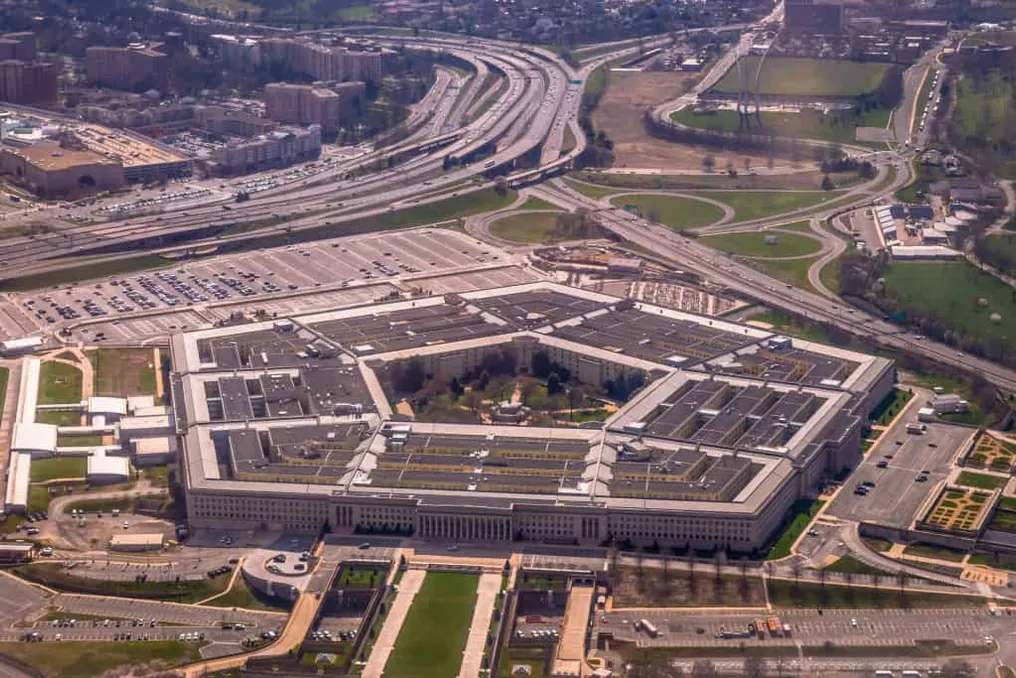
The United States Department of Defense announced on Thursday (23) a new contract with Oracle, which could reach US$ 7 billion (equivalent to R$ 35.7 billion). This agreement aims to unify the software licenses used in the Pentagon's internal data centers under a single contract.
Objective and Scope of the Agreement
This contract has an initial term of five years, with the possibility of extension for another five years. It is part of a Pentagon strategy focused on reducing expenses and eliminating fragmented technology purchases. The agreement, named Enterprise Software Agreement, was negotiated by the Navy Department and covers the use of Oracle software in local (on-premises) infrastructure.
The scope of the pact includes all Pentagon units, as well as the United States Coast Guard and the U.S. intelligence community. According to the Pentagon's Chief Information Officer (CIO), Kirsten Davies, standardizing these acquisitions should result in a minimum saving of US$ 441 million (R$ 2.2 billion) for taxpayers.
Continuity of Consolidation Initiatives
This new contract follows a similar initiative established in May with Microsoft. At that time, the Pentagon signed a five-year contract worth US$ 9.6 billion (R$ 49.4 billion) to centralize Microsoft licenses and other corporate programs that were scattered across various branches of the Armed Forces, the intelligence community, and the Coast Guard.
The Department of Defense clarifies that both contracts are part of a broader plan led by Kirsten Davies, aimed at decreasing repetitive spending on military software by replacing isolated contracts with single agreements covering the entire government structure.
Commercial Impact for Oracle
For Oracle, the new contract represents a significant advancement, especially since its shares had been facing investor pressure throughout the year. Shortly after the announcement, the company's shares rose approximately 3% in after-hours trading. The initial five-year period stipulates both perpetual and subscription licenses, in addition to including consulting and maintenance services related to the software provided by the company.
Market Challenges and Growth
Despite this contractual victory with the American government, Oracle's shares have fallen by 38% this year. Investors are concerned about the effect of artificial intelligence (AI) on the growth projections of traditional software companies. Additionally, Oracle has accumulated billions of dollars in debt to expand its AI-focused data center infrastructure.
In June, the company reported a 2% decline in its quarterly software revenue compared to the previous year, although its database system maintains wide usage by large corporations. In contrast, the cloud computing division's revenue grew by 47%, driven by demand for AI computing capacity from clients such as OpenAI and other users.
Political Connections and Spending Context
It is relevant to note the proximity between Oracle co-founder Larry Ellison and U.S. President Donald Trump. Ellison reportedly made a contribution of US$ 45 million (R$ 229.4 million) to a non-profit organization that supported Trump's presidential campaign in 2024. He was also one of the first guests at the White House during the president's second term, when he presented plans for building AI data centers for the Stargate project in the United States.
Trump endorsed Oracle's participation in the operation involving U.S. TikTok assets. Furthermore, in May, the Department of Defense formalized agreements with Oracle and other technology companies to implement AI solutions in classified government networks. The contract announcement occurs in the same week that Pete Hegseth, U.S. Secretary of Defense, estimated that the conflict against Iran, which began in February, has already generated a cost of US$ 37.5 billion (R$ 191.2 billion) for the country, reinforcing the context of Pentagon spending rationalization.