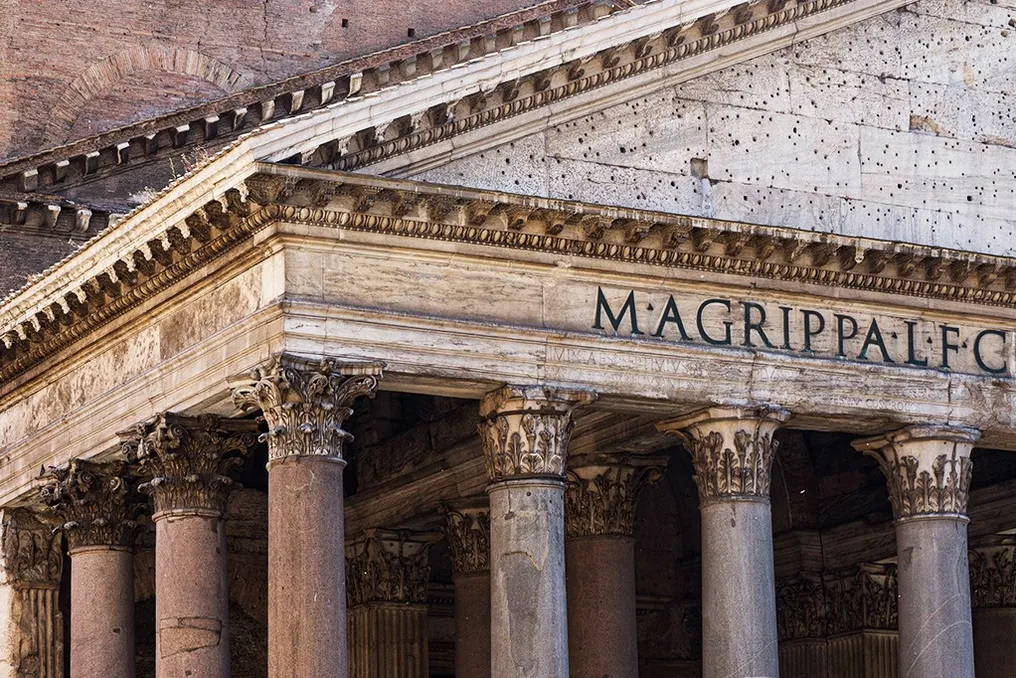
Scientists are striving to understand the secret of the exceptional durability of ancient structures, hoping to find ways to create more resilient building materials. In Italy today, one can see buildings, roads, and aqueducts constructed from concrete that have existed for about two thousand years. Often, Italians find ruins preserved among modern constructions, such as a Roman villa discovered by students in a public school in Rome.
Comparing Roman and Modern Concrete
The question arises: how does the concrete of the Roman Empire differ from modern concrete, which lasts less than a century? Why do many bridges and buildings erected only a few decades ago already show cracks and structural damage?
Initial Hypotheses on Durability
For a long time, scientists have tried to unravel the mysteries of Roman concrete's resistance. Initially, the main theory was a chemical process—the pozzolanic reaction. This reaction occurs between finely ground silica-containing materials (known as pozzolans), hydrated lime, and water, forming a mortar.
The Role of Seawater and Volcanic Ash
In Roman constructions, pozzolans were volcanic ash, and the mortar was mixed with gravel, stones, and saltwater. Seawater contributed to the formation of an even more unique mineral—tobermorite. This was the key point: upon contact with sea air, tobermorite self-healed, filling cracks and pores.
New Research and Hadrian's Latrine
However, new research suggests that something more might be behind the concrete's longevity. The work, published in the scientific journal Science Advances, resulted from a trip to Hadrian's Villa, located 17 kilometers from Rome. It is worth noting that Roman villas were not small rural settlements; the name refers to lavish estates that could serve as centers for small agricultural groups.
Hadrian's Villa contains a public latrine dating back 1900 years in its original condition. Paolo Monteiro, a co-author of the study and a civil engineer from the University of California, Berkeley, stated in an interview with Scientific American: 'No one restores the latrine. Therefore, the material remained untouched for 19 centuries, quietly conducting an experiment that no living person could start.'
Discovery of Calcite as a Binding Agent
The researchers took a concrete sample from under a toilet seat. The fragment was examined using various methods: under a powerful microscope, with X-ray tomography, and through chemical composition analysis. As expected, the sample showed signs that the pozzolanic reaction mixture—volcanic ash, lime, and water—had combined to form a material. Nevertheless, a more detailed examination of the pores and cracks revealed that calcite, a mineral composed of calcium, carbon, and oxygen, was the primary binding agent.
Calcite forms as a result of the reaction of the concrete's calcium compounds with atmospheric carbon dioxide. This mineral fills fine cracks and pores in the concrete, allowing old structures to strengthen and recover over time.
The Contribution of Carbonation to Strength
Monteiro noted in his statement: 'While the pozzolanic reaction is fundamentally important, our findings suggest that long-term carbonation also enhances the durability of concrete and may help seal cracks as it ages.' He also emphasized that tobermorite forms only upon contact with seawater, so these two explanations do not contradict each other but describe different types of Roman concrete. Tobermorite is found in structures exposed to the sea, such as ports and breakwaters, whereas calcite, the protagonist of the new research, is the main binding agent in land-based structures, like the analyzed latrine, located far from the coast. Thus, the Romans used different recipes depending on the structure's purpose.
Environmental Prospects and Warnings
Scientists hope that understanding the composition of Roman concrete will help modern specialists create concrete with a smaller environmental impact. Today, concrete is one of the most consumed materials globally, and its production accounts for about 8% of global carbon emissions. The UN predicts that half of the buildings existing in 2050 have not yet been built, making the development of less aggressive ecological methods urgent.
The study authors also caution that this carbonation process is extremely slow—it takes centuries, and one cannot assume that reproducing it will bring significant climate benefits within the service life of a modern building. The hope lies more in understanding the mechanisms of durability than in directly copying the speed of the Roman process. Monteiro concluded in his statement: 'This study demonstrates how studying ancient engineering techniques can lead to important discoveries. We hope that by uncovering Roman secrets to increasing concrete durability, we will one day achieve sustainable development of modern infrastructures.'