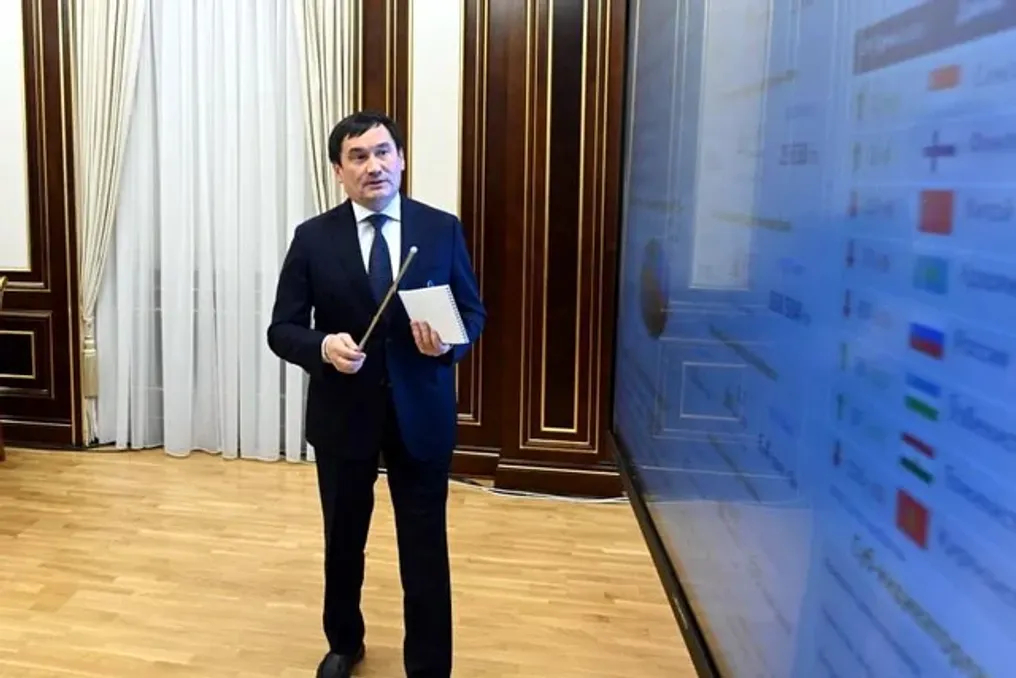
Uzbekistan's Minister of Transport, Ilhom Makhamov, stated in an interview with the channel Uzbekistan 24 TV that the operator of the new toll highway connecting Tashkent and Samarkand will only be appointed after construction is fully completed.
Uzbekistan's Minister of Transport, Ilhom Makhamov, stated in an interview with the channel Uzbekistan 24 TV that the operator of the new toll highway connecting Tashkent and Samarkand will only be appointed after construction is fully completed.
According to the minister, the implementation of this project will proceed in two stages. The first stage will be handled by the Chinese company China Overseas Engineering Construction (COVEC), which will be responsible for building and completing the highway. After the completion of the work, authorities plan to engage a separate partner for operating the road as a toll route.
Makhamov specified that after the new highway opens, drivers will retain the option to choose between the existing free road and the new toll route. It is expected that the travel time between Tashkent and Samarkand via the new route will be reduced from approximately five and a half hours to two hours.
Furthermore, the minister announced that after the Tashkent-Samarkand project is finished, Uzbekistan intends to build additional toll roads. These include the Tashkent-Bostanliq, Tashkent-Fergana, and Tashkent-Andijan routes. Reconstruction of existing roads and construction of new highways in several regions are also planned with the support of international financial institutions.
According to Makhamov, over the last ten years, funding for the road sector has increased eightfold compared to the previous twenty-seven years. He added that the new roads are being built using updated construction norms and standards developed jointly with partners from Turkey and the United States.
Sherzod Boltayev, head of the Roads Committee Department, noted that the new 282-kilometer highway will be equipped with services along the route, including vehicle maintenance stations. It will also feature an intelligent transport system that will promptly inform drivers about road incidents and other factors affecting traffic safety.
The highway will start near Tashkent International Airport, providing direct access to Gulistan, Jizzakh, and Samarkand. It is expected that at least 50% of the materials used in the project will be produced domestically. Construction of the six-lane toll highway, estimated to cost approximately 2.2 billion US dollars, began on July 22, 2026, with an opening scheduled for 2030. The project includes the construction of 92 bridges, 28 overpasses, and 60 tunnel passages.
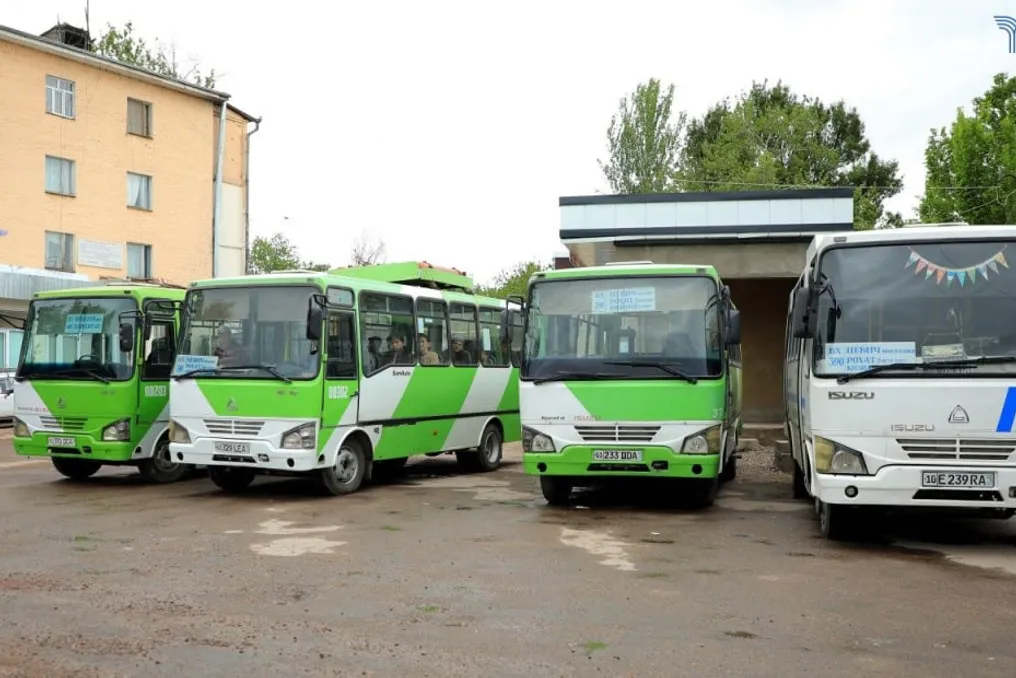
The fare for city buses and electric buses has changed in the Tashkent region of Uzbekistan. Now, a single trip costs 2,600 soums when paying with cash, whereas the price is 2,000 soums when using cashless payment.
The decision to change fares was made by the Kengash of regional deputies, who approved a differentiated payment system, various flexible fare plans, and new rules for transfers. When paying with a transport or bank card, a single ticket costs 2,000 soums, while cash payment is 30% more expensive, reaching 2,600 soums. A similar fee of 2,600 soums is also set for transporting one piece of luggage.
Passengers using transport cards can now use a special transfer system. The first trip within an hour will cost the standard 2,000 soums, and the second trip on a different bus will cost 1,000 soums. All subsequent transfers within this one-hour period will be free.
In addition to single tickets, flexible fare plans have been introduced in the region. A five-day pass for 22 trips is available for 34,000 soums, a ten-day pass for 44 trips is 68,000 soums, and a fifteen-day pass for 66 trips is 102,000 soums. There is also a twenty-day pass for 88 trips costing 135,000 soums and a monthly pass for 130 trips for 200,000 soums.
Unlimited options are also available: they cost 8,000 soums for one day and 51,000 soums for seven days. Long-term options include tickets for 90, 180, and 365 days at prices of 600,000, 1.2 million, and 2.4 million soums, respectively.
Preferential conditions are maintained for pensioners, students, and schoolchildren, providing a 50% discount from the base cost. For this group, a one-day unlimited pass costs 4,000 soums, a five-day pass for 22 trips is 17,000 soums, a ten-day pass for 44 trips is 34,000 soums, and a monthly pass for 130 trips is 100,000 soums. The annual unlimited pass for beneficiaries will cost 1.2 million soums.
Citizens entitled to completely free travel according to Uzbekistan legislation can receive a special card that provides 60 free rides monthly.
Regional authorities have also ordered the complete transition of city buses operating under gross contracts to a cashless payment system. To increase convenience for residents in towns such as Angren, Bekabad, Almalyk, Akhangaran, Nurafshan, Chirchik, and Yangiyule, information kiosks for topping up and purchasing transport cards will be gradually installed. This decision has already come into force.