Microsoft has taken the first steps in updating older interfaces present in Windows 11, beginning with the File Explorer Properties window, which now adopts a design aligned with the WinUI 3 structure.
Microsoft has taken the first steps in updating older interfaces present in Windows 11, beginning with the File Explorer Properties window, which now adopts a design aligned with the WinUI 3 structure.
This new version of the Properties window was identified in a Windows Insider testing build and illustrates Microsoft's effort to renew components with outdated appearances. The modernization of these interfaces is crucial not only for visual improvement but also to ensure the full functionality of features, such as the Windows 11 dark mode.
Regular Windows 11 users may notice that certain dialogs and windows do not match the standard operating system look. Microsoft had already promised to modernize these elements, and recently evidence has emerged that this promise is being fulfilled.
Although Windows 11 has a modern appearance, some of its components retain an old look because they were inherited from previous operating systems, some specifically dating back to Windows 95.
One example of this is the Control Panel, accessible through the Taskbar or Start Menu, whose interface remains very old. This occurs because Microsoft concentrates its modernization efforts on the Settings area, while the Control Panel is maintained as a legacy feature and therefore does not receive update priority.
Another notable case is when right-clicking any file in File Explorer and selecting Properties; the resulting window has a classic look, originating from Windows 95, with only minor adjustments over the years.
The renewal of Windows 11's legacy interfaces began to be observed this week, after the profile @phantomofearth, known for its unofficial predictions about Microsoft, discovered that the Properties windows are undergoing a visual overhaul.
This novelty was found in Windows 11 build 26300.8935, available in the Windows Insider testing program, specifically in the Experimental channel. It is evident that the new design follows the WinUI 3 standard of the operating system.
Although this advancement may seem modest, it represents a significant step, given that Microsoft had previously indicated its intention to modernize the remaining obsolete interfaces in Windows 11. The update to the Properties box signals the start of this work.
It is expected that other elements, such as the Run window and various other dialog boxes, will be modernized in the future. However, there is no defined deadline, as Microsoft needs to make these changes with extreme care to avoid performance degradation or software malfunctions.
It is essential that this change occurs, as it transcends mere aesthetics; it is a functional necessity, exemplified by the requirement that interface modernization allows the Windows 11 dark mode to function completely.
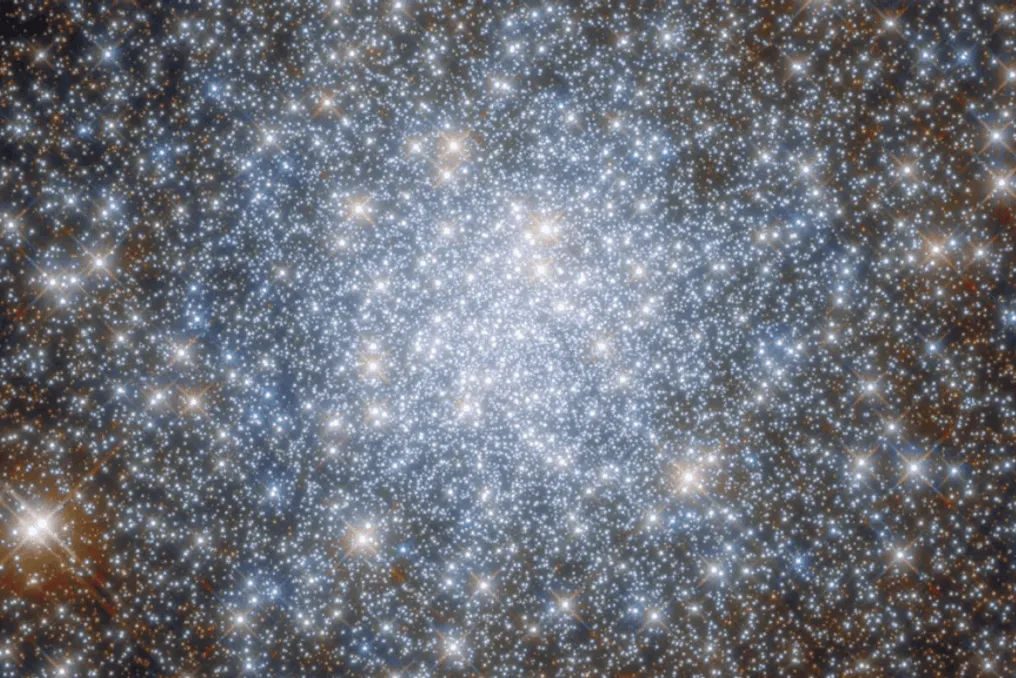
A new investigation offers a possible explanation for the enigma of the Little Red Dots, intriguing phenomena detected by the James Webb Space Telescope (JWST). Researchers propose that these objects did not simply disappear in the primordial universe, but rather evolved to become globular clusters, which are vast groupings of densely packed stars, like those found in the Milky Way.
The theory establishes an analogy with the evolution of terrestrial dinosaurs: just as many dinosaurs were not extinct but gave rise to current birds, the Little Red Dots could have survived, transforming into structures that persist in the contemporary universe.
The Little Red Dots began to attract astronomers' attention in 2022, when James Webb started detecting them in large numbers at a phase corresponding to approximately 600 million years after the Big Bang. The mystery lies in the fact that these bodies appear to disappear before the universe reaches about two billion years old.
Several theories have been raised about their nature, including the possibility of being 'black hole stars,' meaning black holes surrounded by extensive clouds of gas and dust. However, the current research points to another path: these objects could be globular clusters in a formation stage, possessing a supermassive star at their core.
This hypothetical type of star would have a mass between one and ten thousand times that of the Sun and a very short life, but it would be capable of generating an appearance similar to that of the Little Red Dots observed by the telescope. John Chisholm, lead researcher from the University of Texas in Austin (USA), stated that these objects may not just be a strange new population from JWST unrelated to the current universe, but rather that they may endure beyond the primitive universe, evolving into something more known.
Chisholm added that the Little Red Dots could be galaxies, involve black holes, or represent something even more unexpected, and that their work demonstrates that the formation of globular clusters with supermassive stars must be considered in this debate.
Globular clusters are typically located in large galaxies and manage to concentrate millions of ancient stars in extremely compact areas. The Milky Way, for example, contains at least 150 of these clusters. Although well-studied, their origin remains a topic of scientific discussion.
Danielle Berg, also from the University of Texas in Austin, mentioned that astronomers usually observe these clusters after billions of years of evolution. She explained that at this point, their massive stars have already gone extinct, their gas has dispersed, and dynamic processes have modified their masses and structures, making it difficult to reconstruct the initial conditions of their formation.
Scientists believe that the stars within globular clusters formed approximately at the same time, during the early stages of the universe, when the cosmos was mainly composed of hydrogen, helium, and small amounts of heavier elements, called metals by astronomers.
However, many of these stars exhibit a peculiar chemical composition. They show a high abundance of helium and elements such as nitrogen, sodium, and aluminum, while showing lower levels than expected of carbon, oxygen, and magnesium. Mike Boylan-Kolchin, a member of the team, indicated that this chemical signature points to extreme nuclear fusion conditions.
He specified that this particular pattern signals nuclear fusion at temperatures much higher than those found in the cores of common stars, even massive ones. A supermassive star is exactly the type of environment capable of generating this chemical combination.
According to the researchers' proposed model, these supermassive stars would emerge in environments of extremely high density during the formation of the first globular clusters, where stellar collisions and mergers would occur frequently. Despite their colossal size, they would have a lifespan of only about one million years, an infinitesimal period compared to the 4.6 billion years of the Sun's life.
Even with this short existence, these stars would be capable of producing the chemical elements necessary to justify the composition observed in globular clusters. After dying in supernova explosions, these elements would be released into space, being used in the creation of new generations of stars.
Chisholm concluded that this would also explain the disappearance of the Little Red Dots. In their model, the supermassive star that makes the object look like a Little Red Dot lives for a short time; after its death, the object may cease to resemble a Little Red Dot, even if the cluster itself persists for billions of years.
In addition to chemical analysis, the team identified other signs linking the Little Red Dots to globular clusters. The distribution of these objects in the early universe mirrors the distribution currently seen in globular clusters. Evolution models also suggest that the estimated masses of the Little Red Dots could naturally progress to reach the masses of existing globular clusters today.
An additional relevant factor is the timing of their appearance: the Little Red Dots appear about 600 million years after the Big Bang, coinciding with estimates for the beginning of globular cluster formation. Despite the evidence, the researchers warn that the hypothesis still lacks definitive confirmation. Boylan-Kolchin stated that although there is no conclusive proof that the Little Red Dots are globular clusters, this idea would explain several surprising and distinct observations. The study is in a preliminary version on the scientific repository arXiv, implying that its results have not yet undergone peer review.
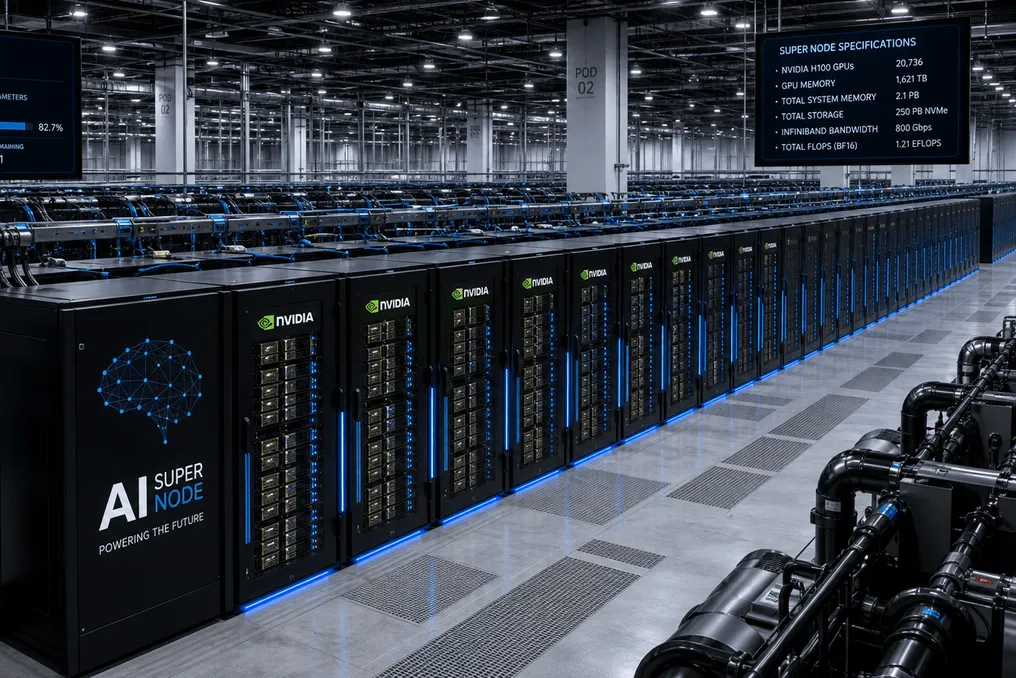
Computational power is becoming a critical resource as tech giants actively strive to create and deploy artificial intelligence supernodes. This frenzy is driven by competitions to increase model parameters, which creates unprecedented demand for infrastructure.
Companies, including Huawei, ZTE, H3C, and Sugon, are competing to build and deploy AI supernodes scalable from 1024 to 100 thousand GPUs. The increasing demands, driven by models like Kimi K3 and GLM-5, push computational capacity to its limits. Supernodes have replaced models as the central focus of the WAIC 2026 exhibition, as computational capability has become the main limiting factor in AI development. The shift from clusters with 8 cards to clusters of 100 thousand cards makes supernode capacity a direct competitive advantage; consequently, H3C demonstrated a 58% growth, and Inspur showed 41% growth over three weeks.
The most evident demand pressure is observed at the forefront of model development. GLM-5 models from Zhipu AI and Kimi K3 from Moonshot AI, boasting 2.8 trillion parameters, have been forced to raise prices and restrict subscriptions due to the enormous inference demand. Deploying the K3 model requires a supernode configuration with more than 64 GPUs, setting a minimum computational threshold for advanced models. In response, Zhipu acquired Zhongke Jiahe and built a domestic AI data center with a capacity of 1 GW, leading to a 37% rise in the company's stock in one day. The math of the situation is telling: industry participants report computation costs of approximately $0.80 per dollar of revenue from the model, yet every dollar of revenue corresponds to a multiple increase in valuation multipliers, making the scale of computation the primary lever for growth.
Existing achievements include the use of Huawei Ascend 950 with 1024 NPUs and deployed over 750 A384 sets, as well as ZTE OEX with 128 GPUs per rack and a cluster of 10 thousand. Sugon introduced Dawn 8000—the first domestic system with 100 thousand cards. H3C is building an AI factory capable of delivering 240–300 kW to a test point. Technological directions diverge: Huawei utilizes a proprietary full-stack model—from chip to interconnect and cooling—allowing for deep optimization across layers but requiring colossal R&D investment. ZTE and its partners prefer an open approach using multiple chips to avoid dependence on a single vendor and ensure flexibility for clients. Other players, such as Moore Threads, Pingtouge, and Baidu Kunlun, focus on specific cloud or vertical scenarios, paying close attention to inference efficiency and economic performance. The overarching challenge lies in maintaining system integrity across the architecture of chips, interconnect, software stack, and operational tools, as advantages gained in one area cannot compensate for systemic gaps.
Model parameters have not yet reached the 2.8 trillion mark; forecasts indicate reaching 10 trillion within two years. The consensus was clear: supernodes define the future. Companies that cannot secure computational power at the supernode scale will be structurally excluded from the AI frontier competition.
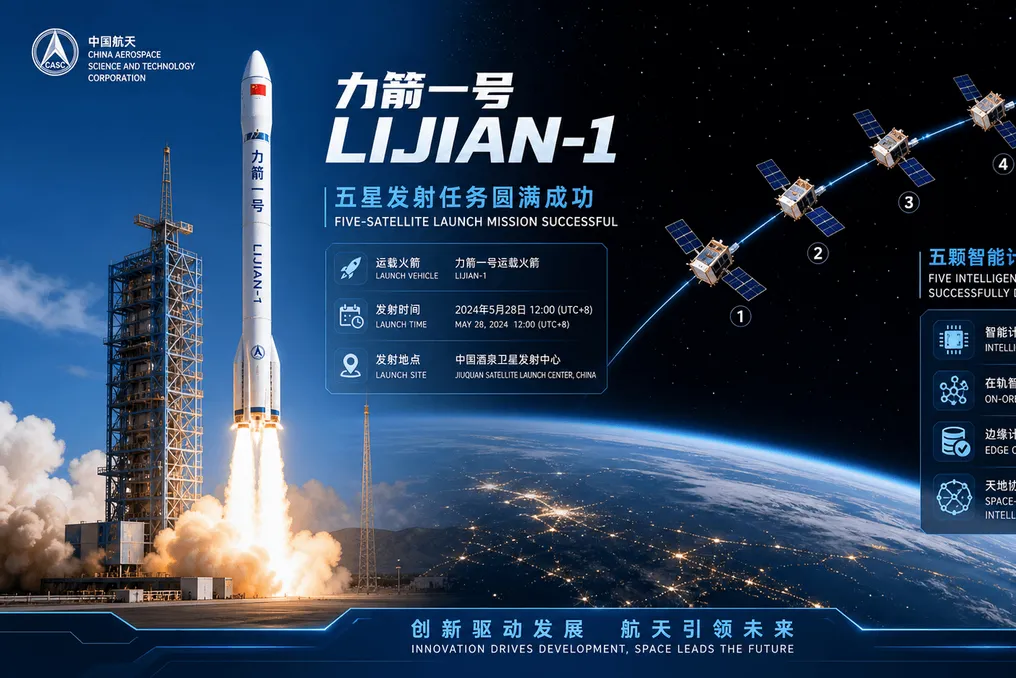
CAS Space conducted another launch of the Lijian-1 Y15 on July 24, during which five new satellites were placed into orbit. Thus, the total number of satellites delivered across 15 missions has reached 110, serving over 30 clients both domestically and internationally. CAS Space has established a stable monthly launch schedule.
The payload composition reflects the company's strategic emphasis on intelligent space computing. Among them is the Jitianxing A-04 satellite, which was jointly developed by Zhejiang Lab, Yunjian Information, MUSA GPU, and other partners. This satellite is equipped with a MUSA GPU-based computing payload, an onboard router, and a laser communication terminal. It is capable of deploying a large-scale model for autonomous state management, independent mission planning, instruction generation, and data processing directly on board.
Jitianxing A-04 embodies the concept of a three-part computing grouping, combining space computing, satellite interconnection, and orbital models. Furthermore, the Chenguang-1 satellite is designed to test new technologies for thermal mode control and space energy for in-space data centers. It carries commercial computing servers and a small remote sensing camera for conducting onboard computing experiments.
In the field of space situational awareness, the Gande-1 01 satellite has advanced—it is China's first commercial satellite for monitoring space debris. It was developed by Liangxi Aerospace Technology Group and Aotian Technology. The satellite is equipped with a wide-angle surveillance camera and a high-precision measurement camera, allowing for the effective detection of small pieces of space debris. It also utilizes several new propulsion systems to enable large-scale orbit correction, supporting multi-orbit observation experiments and debris approach missions.
The onboard AI computer executes star extraction and correlation positioning algorithms through autonomous mission planning for regular patrolling, emergency response, and rapid tracking. Additionally, the meteorological satellite Yinglong Fengguang-1 carries microwave and infrared payloads for weather forecasting and disaster warning. The Xiguang-2 03 satellite provides three-band infrared surveying suitable for marine, aviation, and network applications.
Chief designer Shi Xiaonin noted that the demand for satellite internet and space computing signals a transition to market-driven, scalable deployment. CAS Space employs pulsed manufacturing and modular satellite interfaces for rapid adaptation. Having completed 15 launches, CAS Space is among the most reliable commercial launch service providers globally.