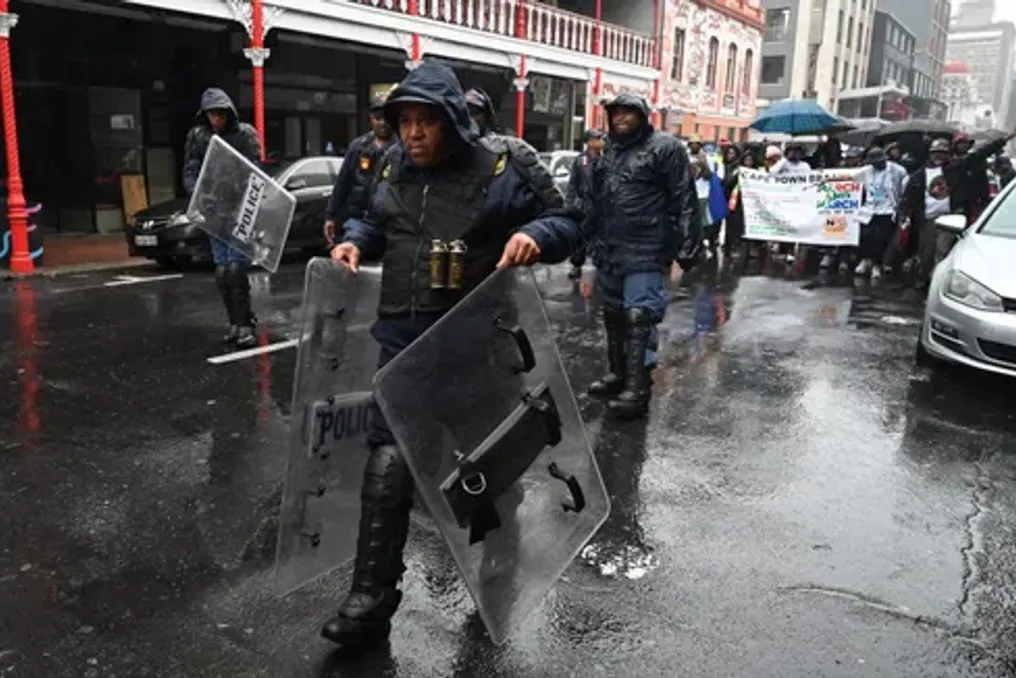
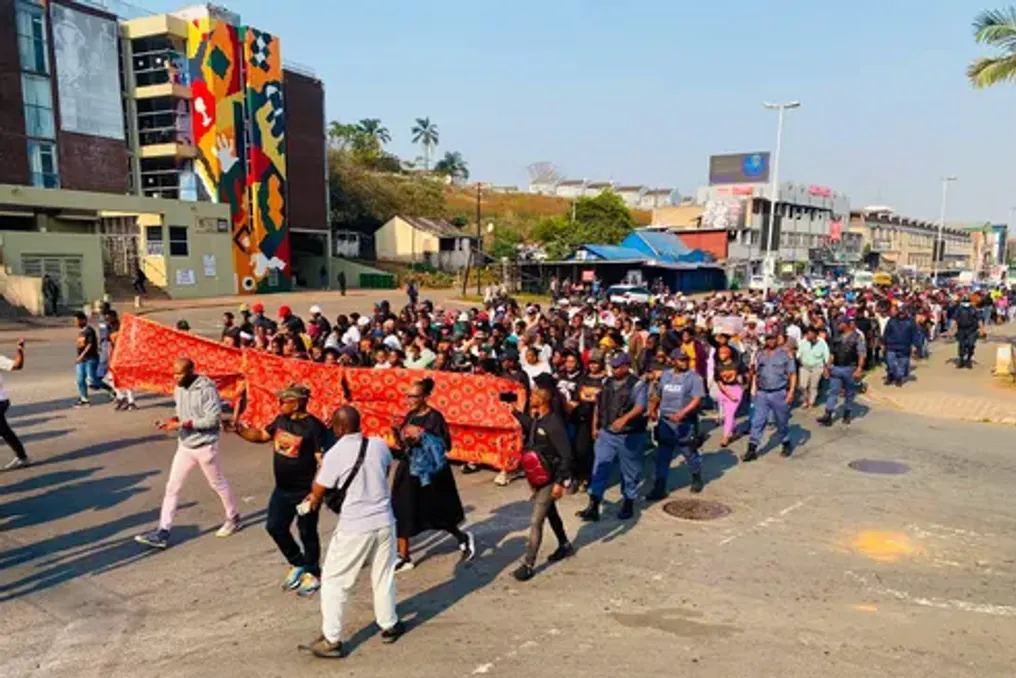
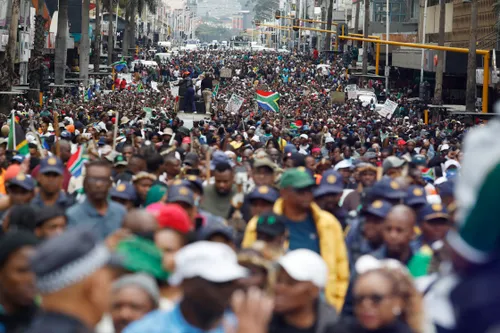
The leader of the March and March movement, Jasinta Ngobeze-Zuma, has announced the start of weekly protests against migrants across South Africa. These demonstrations are scheduled for Thursday and follow nationwide actions held on June 30th to draw attention to undocumented foreigners.
Scale of Protests and Arrests
More than twenty civil groups led by the March and March movement participated in protests across all nine provinces, demanding the deportation of illegal foreign nationals from South Africa. During law enforcement operations conducted parallel to the protests, over 900 people were detained. Police reported that the majority of those detained are undocumented foreigners, as well as individuals involved in robberies and other criminal activities.
Leader's Plans and Demands
Ngobeze-Zuma confirmed on Wednesday via social media that the main weekly demonstration will take place in Mthwalume on the South Coast of KwaZulu-Natal. Additionally, further actions are expected in Gauteng, including the areas of Mamelodi, Springs, Soweto, and Sophiatown. Speaking to protesters near the SAPS Point police station in Durban after thousands marched through the city on June 30th, Ngobeze-Zuma stated that the campaign will continue every week until the government responds to the movement's demands. She emphasized: 'As long as they are not gone, we will march every Thursday.'
Financial and Criminal Concerns
She also warned that if authorities continue to deploy a large number of police officers to monitor the demonstrations, it will lead to increased state expenditure. Ngobeze-Zuma suggested: 'We hope the government has a budget for another 600 million rand,' adding that the constant presence of illegal immigrants will require continuous security measures. Furthermore, Ngobeze-Zuma accused the open sale of drugs in some communities and stated that crime associated with illegal immigration remains a serious issue for the movement's supporters.
Official and Expert Reaction
Meanwhile, the police stated their readiness to control 'every situation' following the announcement of continued weekly protests until the government removes illegal immigrants from South Africa. The Chairperson of the National Joint Operational and Intelligence Structure (NatJoints), Lieutenant General Tebello Mosikili, noted that the authorities have taken note of the movement's intention to continue protests. She assured that the South African Police Service (SAPS), together with other law enforcement agencies, is ready to uphold law and order.
Mosikili reported that SAPS collaborates closely with various stakeholders, including the South African National Defence Force (SANDF), private security companies, and community structures within long-term operational programs. She mentioned a signed Memorandum of Understanding (MOU) called 'Eyes and Ears,' which includes work with private security companies. She stressed that the South African Police Service retains responsibility and constitutional mandate for maintaining law and order in the country, while any other law enforcement agencies act in its support and complement where necessary.
The senior police official acknowledged the plans of the March and March movement to continue protests, noting that the movement publicly announced its intention to hold marches over the next six months. Mosikili added that the authorities will continue to monitor every situation and support every citizen who wishes to exercise their rights in accordance with Sections 16 and 17 of the Constitution during demonstrations, processions, pickets, and other related events. She also clarified that the authorities will work with private security companies, the SANDF, and the Department of the Interior.
Immigration Expert's Suggestions
Immigration expert Dr. Gideon Chitinga proposed that the South African government engage both documented and undocumented immigrants in a structured dialogue. In his view, this would help better understand the reasons for migration and find opportunities for joint economic contribution from immigrants and South Africans. Chitinga also highlighted the need to address broader structural problems, including eliminating external factors driving irregular migration and improving the efficiency of institutions handling immigration in South Africa.
He emphasized that the government should consider significant factors, especially relations with neighboring countries from which many undocumented immigrants arrive. Chitinga stated that external migration factors must be viewed in a broader context that considers regional issues such as diplomatic relations, regional trade, and integration. He warned that the deterioration of these relations could significantly affect trade and ultimately harm the South African economy.
Chitinga concluded that the debate on immigration is shaped by two different issues: the excessive noise surrounding immigration and the interests behind the institutions leading these debates. He called for substantive interaction at the political level between immigration institutions, government departments, and civil society, including activists, academics, and think tanks. He reiterated the call for creating dialogue platforms with both groups of immigrants, as they better understand the situation in their areas and economic sectors, and can help identify ways to collaborate with the local population.