On the occasion of International Tiger Day, The Better India highlights the remarkable story of Zeenat, a young tigress whose disappearance from the Similipal sanctuary in Odisha triggered one of the longest wildlife tracking operations in India. After covering a distance of about 300 kilometers across Odisha, Jharkhand, and West Bengal, she was successfully calmed and returned to Similipal, where she was released again. Many feared that this ambitious conservation program would fail.
Success of the Population Augmentation Program
A year and a half later, Zeenat changed this picture. The same tigress, previously drawing attention as a 'fugitive,' is now raising four healthy cubs in Similipal. This marks the first major success for the Odisha tiger population augmentation program, which aims to strengthen the sanctuary's dwindling genetic diversity.
Tracking Operation
At the end of December 2024, wildlife headlines in eastern India followed one tigress as she traversed forests, crossed state borders, evaded tracking teams, and repeatedly disappeared into rugged hills before she could be calmed. For nearly three weeks, Zeenat, a young tigress transferred from Tadoba-Andhari sanctuary in Maharashtra to Similipal sanctuary in Odisha, became the most closely monitored big cat in the country. She was described as elusive, restless, and even a 'fugitive.'
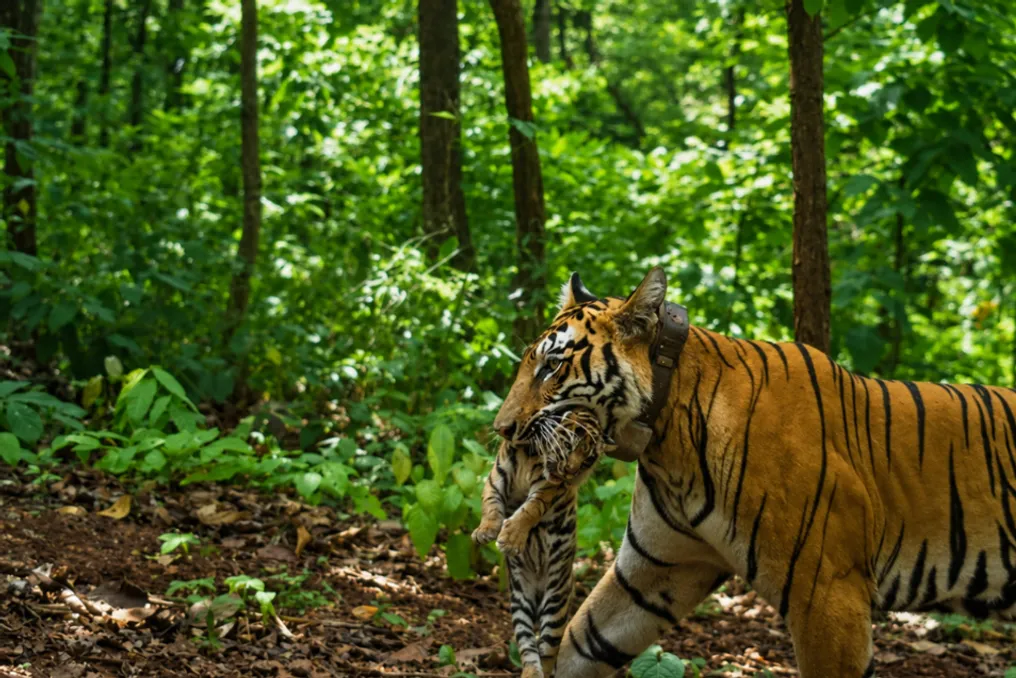
Today, after almost a year and a half, Zeenat moves freely in Similipal with four growing cubs. A recent image captured by a camera trap and published by the Odisha Forest Department shows a completely different picture than what dominated the news. The photo shows Zeenat gently carrying one of the cubs in her jaws through the forest.
Scientific Rationale and Goals
The tigress, who seemed so elusive, did exactly what conservation specialists hoped for: she settled in the area, found a mate, and began raising the next generation. For Similipal, her cubbing is the first significant achievement of the Odisha tiger population augmentation program, launched to improve the sanctuary's declining genetic diversity. With the birth of four cubs, the total number of cubs in the sanctuary increased from 12 to 16.
Looking back, Zeenat's journey no longer appears to be a failed translocation but has turned into a story of patience, instinct, and conservation efforts. When The Better India spoke with Dr. Ravikant S. Khobragade, senior wildlife veterinarian at Tadoba-Andhari sanctuary, who first fitted Zeenat with a radio collar before her transfer to Odisha, he offered an assessment that puts her journey in the right context. He noted: 'She was never a problematic tiger. She was simply looking for space.'
Similipal and the Genetics Problem
Similipal has long interested wildlife biologists. It is one of the few places in the world where pseudomelanistic tigers, widely known as black tigers, are found in unusually high numbers. Their striking appearance is due to a rare recessive genetic mutation that has become more common due to the long isolation of the population. By 2024, there were 27 tigers inhabiting Similipal, including 13 pseudomelanistic individuals.
Although black tigers attracted public attention, scientists expressed growing concern. A small, closely related population can reduce genetic diversity over time, making the long-term health of the species more vulnerable. To address this issue, the Odisha government launched a tiger population augmentation program in 2024. The plan involves introducing six genetically unrelated tigers—five females and one male—over five years from central Indian sanctuaries to strengthen Similipal's gene pool.
Zeenat's Journey and Capture Difficulties
The first tiger to arrive at the sanctuary was Jamuna, who reached Similipal on November 9, 2024. Zeenat followed her four days later. She was barely three years old. Like all translocated tigers, she first spent time in a soft release enclosure. This period allowed her to acclimatize to the unfamiliar terrain, prey species, and neighboring tigers before being released into the wild. However, shortly after entering the forest, Zeenat began moving outside the sanctuary boundaries. On December 7, 2024, she headed northwest, leaving Similipal behind. Her journey ultimately stretched nearly 300 kilometers across Odisha, Jharkhand, and West Bengal.
Thanks to the radio collar, forest officials could track her movements almost in real-time. What followed became one of the most complex wildlife tracking operations in recent years. Zeenat crossed the Subarnarekha River in Jharkhand, passed through the Chaibasa forests, and briefly stopped in the Chakulia area. Despite moving through landscapes where humans and wildlife often intersect, she mostly avoided villages. She hunted wild prey, rested in forested areas, and continued moving through connected habitats.
Challenges in West Bengal
As she moved west, forest departments from Odisha, Jharkhand, and West Bengal coordinated round-the-clock efforts to track her movements. For several days, the young tigress outpaced everyone. She kept everyone on edge. By the time Zeenat entered the hilly forests of Jargama in West Bengal around December 20, 2024, tracking her became much more difficult. Belpahari and Kankrajjhore differ greatly from the flatter forests where capture teams usually operate. Rocky slopes, dense vegetation, and poor visibility made every attempt to approach her a challenging task. Experienced teams, including specialists from Sundarbans, joined the operation. They understood tiger behavior. However, Zeenat seemed to understand them just as well. Every attempt to calm her failed. Sometimes the terrain did not allow for a clear shot. At other times, she simply outmaneuvered the teams, following signals from her radio collar. The longer the chase went on, the more cautious she became. Finally, after passing Jargama, Purulia, and entering Bankura, the operation narrowed down to the village of Gopalpur. On December 29, 2024, after several days of attempts, forest officials were finally able to calm her down.
Return and Motherhood
After being transported to Alipore Zoo in Kolkata for veterinary observation, she was moved back to Odisha. On January 1, 2025, Zeenat returned to Similipal, where she spent time in another soft release enclosure on Jamuna meadow before being released into the forest again. The operation concluded, but Zeenat's true story was just beginning. Dr. Khobragade, as the senior wildlife veterinarian at Tadoba-Andhari sanctuary, recalled that she was never a 'problematic tiger,' but simply looking for space. He explained that a tiger released into a new environment does not immediately claim territory; it first needs to understand the surroundings—where the prey is, where the water is, whether other tigers occupy the territory, and which areas are safe enough for raising cubs.
In May of this year, hope became reality: Zeenat gave birth to four healthy cubs. A camera trap later captured one of the most touching wildlife images of the year: Zeenat gently carrying one of the cubs in her jaws through the forest. For the tigress once called a 'fugitive,' this was an astonishing return to the beginning. She did everything conservation specialists hoped for—found a home, established territory, and began raising the next generation.
Significance for Similipal and the Future
Her cubs mean much more than just a breeding success. For years, scientists have warned that the isolated tiger population of Similipal needs greater genetic diversity for long-term health. Introducing unrelated tigers was intended to gradually strengthen future generations. Zeenat's cubbing is the first visible sign that the program is working. The birth of her cubs increased the number of cubs in Similipal from 12 to 16, giving conservationists renewed confidence in a project that initially raised as many questions as it did hopes.
However, the work is far from over. The Odisha Wildlife Department is now preparing the second phase of the population augmentation program. As originally planned, six tigers—five females and one male—will be introduced over five years, with Tadoba-Andhari sanctuary continuing to serve as an important source population. Zeenat's story reminds us that nature conservation is rarely simple; it requires complex decisions, scientific planning, veterinary expertise, inter-state coordination, and, most importantly, patience. She serves as an example of how the greatest success sometimes comes when we allow animals to follow their instincts.