The legendary ocean racing sailboat Voortrekker, which helped establish South Africa on the international sailing map sixty years ago, has completed its final voyage from the water, facing a critical race against time.
The legendary ocean racing sailboat Voortrekker, which helped establish South Africa on the international sailing map sixty years ago, has completed its final voyage from the water, facing a critical race against time.
This innovative ship with the iconic sail number SA 1 became the starting point for the development of the country's shipbuilding industry and inspired many sailors. Currently, the historic wooden yacht is located at the South African Naval Museum in Simon's Town and desperately needs large-scale renovation to preserve its outstanding heritage for future generations.
The history began in 1966 when prominent yachting figures founded the South African Ocean Racing Trust to organize ambitious national participation in the 1968 Transatlantic Observer Singlehanded Race (OSTAR). The design was entrusted to renowned Dutch designers van de Stadt, and the construction of the wooden laminated hull was commissioned to Thesen Industries from Knysna. The title sponsor, Dr. Anton Rupert from Rembrandt Group, linked his organization to the project and named the yacht Voortrekker.
Under the command of Bruce Darling, the yacht attracted public attention and demonstrated historical performance, finishing second and winning the overall handicap victory.
After its triumphant return to Cape Town in July 1968, Dr. Rupert made a significant gesture during a celebratory reception in Granger Bay. He announced that, as the yacht's owner, he was donating it to the South African Navy for use in sailing sports training. Subsequently, the ship was officially accepted by Admiral Hugo Biermann on behalf of the fleet.
Later, after being converted from its original ketch rig to a schooner, Voortrekker undertook several round-the-world voyages, seven races in the South Atlantic, and countless international regattas under the command of legendary captains such as Bertie Reid and John Martin. Its last major ocean race took place in 2009—a race from Cape Town to Salvador, where Marcello Burrix captained it with a young crew, securing an impressive fourth place in the handicap.
After six decades of continuous service, project organizers emphasize that 'the old lady is tired and needs preservation for the admiration, pride, and memory of all South Africans and sailing enthusiasts.'
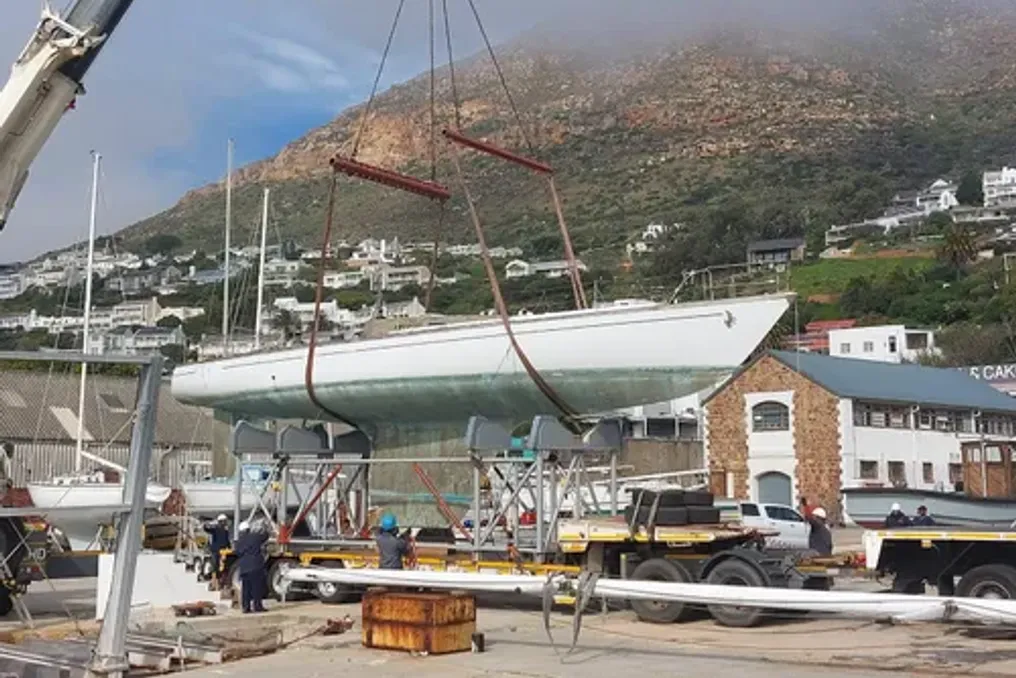
The first phase of the decommissioning plan was completed after safe transport onto a newly refurbished cradle in the museum's Submarine Annex next to the SAS Assegaai submarine.
However, Phases 2 and 3 require significant funding and material donations. These phases include restoring the exterior deck, repairing and repainting the hull and keel, installing a protective roof, and updating the interior for immersive public tours. Although the South African Navy and Dockyard provide labor free of charge, only Phase 2 requires about 100,000 Rand to complete. The project leader, Rear Admiral Hanno Teuteberg (retired), together with Captain John Martin (retired) and the Naval Heritage Trust, appeals to local and international donors for support of the initiative.
Approximately 3,200 years ago, the sudden collapse of several civilizations occurred in the Mediterranean, an event some attribute to enigmatic invaders.
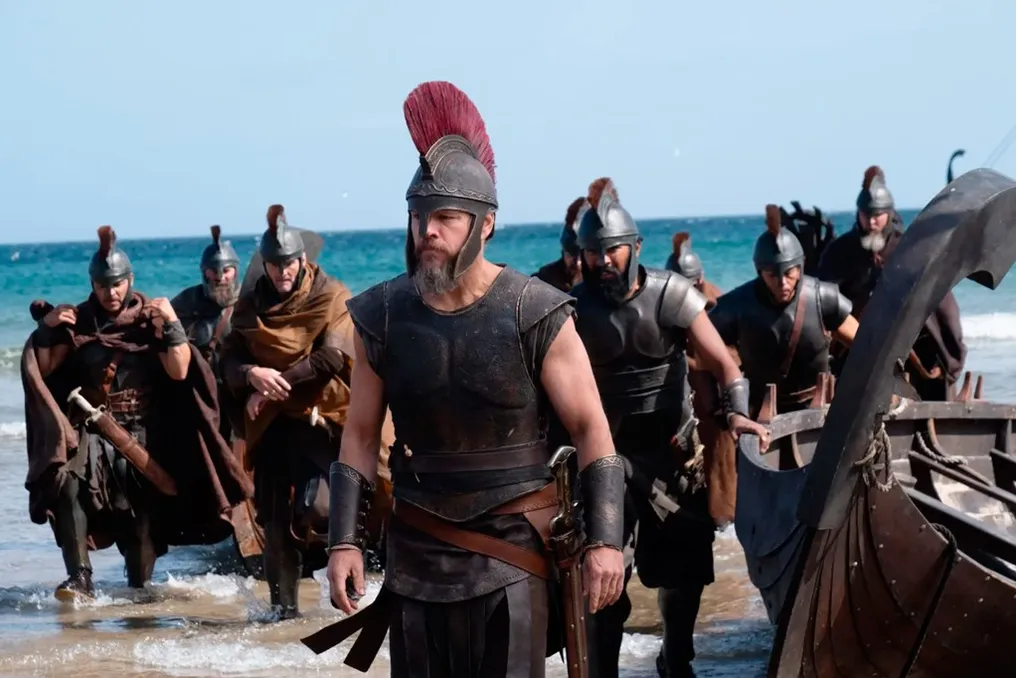
The new film The Odyssey, directed by Christopher Nolan and based on Homer's work, frequently mentions the dreaded 'Sea Peoples.' In the cinematic narrative, these invaders are presented as a mysterious threat arriving by sea, capable of devastating cities in the Mediterranean region, including Ithaca, home of Odysseus. The 'Sea Peoples' constitute a central element in Nolan's adaptation's final message, promoting reflection on the impacts of war on society.
The film also alludes to the notion of a 'collapsing civilization,' although this description may sound overly forced or anachronistic. This is because the movie clearly references a real historical event that occurred around the 12th century BCE, coinciding with the 'Bronze Age apocalypse.' Although the Trojan War is not historically confirmed, it is plausible that it was inspired by real conflicts of that era, whose narratives were preserved in oral tradition and later recorded in Homer's poems, The Odyssey and The Iliad, in the 8th century BCE.
After the supposed conflict, the Mediterranean area, which previously housed complex, powerful, and highly interconnected societies, plunged into an intense process of decline. The destruction or abandonment of cities, a sharp reduction in population, the fall or cessation of artistic and literary production in various locations, and the disappearance of trade networks were observed. In just a few decades, the way of life known by these populations came to an end.
One possible factor cited is the action of the 'Sea Peoples,' mysterious attackers from the ocean, who could have contributed to the destruction of empires through violence. However, the exact identity of these sailors remains unknown to this day. Nevertheless, historians have challenged this simplistic view in the last decade, suggesting that the collapse was the result of a complex, multifactorial process, and that the 'Sea Peoples' may have been more victims than aggressors.
The Bronze Age covers the historical period of Eurasia between approximately 3300 BCE and 1200 BCE, characterized by the use of bronze, an alloy composed of copper and tin, in making tools and weapons. During this period, the Mediterranean and the Near East were the stage for great civilizations. Egypt stood out as one of the largest regional powers, with its New Kingdom representing a peak of pharaonic power.
In central-east Turkey today, the Hittite Empire flourished, a military and economic power. In contemporary Greece, there were the Mycenaeans, considered 'proto-Greeks,' organized into independent kingdoms such as Ithaca, Mycenae, and Thebes, a civilization depicted in The Odyssey. On the island of Crete, Minoan society held dominance, while in Mesopotamia (modern Iraq), Babylon and Assyria were the main powers. There were also the Canaanites in the Levant region and the Cypriots on the island of Cyprus.
It is noteworthy that these civilizations maintained direct contact, functioning as a kind of 'mini-globalization,' sustained by extensive trade networks, diplomatic and political relations, military alliances, and marriages between royal families. However, in the 12th century BCE, this structure underwent a drastic change. Important civilizations, such as the Hittite Empire and the Mycenaean kingdoms, disappeared, while others declined, with deserted cities and the adoption of more modest lifestyles for long periods. The economic and political interconnection of these societies was widely dismantled, marking the collapse of the Bronze Age.
Historically, the 'Sea Peoples' were blamed for this event. Records indicate that attackers from the ocean invaded several kingdoms, resulting in massacres, looting, and urban destruction. The trail of chaos left by these enemies, whose identity was never certainly determined, contributed to the collapse. However, this perspective has been challenged by specialists in the last decade.
The best records on the subject come from Egypt, where pharaohs documented attacks by maritime enemies, which were eventually repelled. It is important to note that Egyptian records do not use the term 'Sea Peoples'; this concept was coined by 19th-century scholars. The original texts provide specific names for these invaders, such as Denyen, Peleset, Shekelesh, and Sherden.
Although the Egyptian names do not completely solve the mystery, there is a consensus that they were distinct peoples originating from various locations. The term 'Peleset' may correspond to the Philistines, mentioned in the Bible as adversaries of the Israelites, with the most accepted hypothesis being that they originated from Mycenaean or Cretan areas, migrating to the Mediterranean coast where Israel and Palestine are today. 'Sherden' may refer to Sardinia (Italy) and 'Shekelesh' to Sicily (Italy).
It appears that Egypt was invaded by groups originating from peripheral regions of the great Bronze Age empires. The pharaohs managed to ward off the threat, but these same peoples apparently caused damage to other Mediterranean societies, such as in Greece, Turkey, and the Levant, potentially leading to the end of some of them.
Currently, most experts agree that the collapse was a multifactorial phenomenon, and that the 'Sea Peoples' represented more of a consequence than the primary cause. Historian Eric Cline, a professor at George Washington University (USA) and author of '1177 BCE: The Year Civilization Collapsed,' supports this thesis.
Archaeological investigations have revealed evidence of severe drought, which may have lasted for years or decades, leading to a drastic decrease in food production and the spread of famine, causing mass deaths. Documents from different societies record this scarcity, including letters sent to Egyptian pharaohs by kings of other empires requesting grain to save their subjects. Egypt, being the largest economic power, provided assistance to other Mediterranean powers.
Agricultural failure may have forced populations from severely affected areas to migrate in search of more fertile land, constituting the 'Sea Peoples' who arrived in large maritime contingents. From this perspective, they resemble 'climate refugees' more than 'barbarian invaders,' although their arrival was met with conflict in most places, contributing to the violence of the time.
However, these incursions are not seen as the sole or main reason for the collapse. This interpretation considers the arrival of these peoples as a symptom of a complex framework. In addition to drought, famine, and invasions, epidemics and natural events, such as earthquakes, may also have contributed to this 'perfect storm' of factors, according to Eric Cline. Despite the collapse, humanity did not disappear; there was a profound reorganization. In the subsequent power vacuum, Phoenician civilization prospered as a prominent commercial and seafaring power in the region for centuries.
Instagram announced that it will no longer allow the publication of videos depicting the harassment or discomfort of unknown individuals in public spaces. This type of material, which has gained popularity on social media, often shows people being secretly filmed during situations such as approaches or pranks.
Adam Mosseri, head of Instagram, stated that content that exploits or harasses people, citing examples of pickup line videos, will be removed from the platform. He reinforced the commitment to actively combat the dissemination of videos where people are secretly filmed while engaging in harassment.
According to Business Insider, prank videos involving employees, such as cashiers and attendants, have become popular on both TikTok and Instagram Reels, often causing embarrassment or provocation. Another observed trend is the practice of approaching women in gyms or on the streets without them knowing they are being filmed.
Meta confirmed that two pages, each with over a million followers, were deactivated because these accounts violated the policy regarding the posting of harassment content captured using smart glasses. Despite this, the company did not specify the total number of videos already removed under this policy, nor did it detail the exact criteria for monitoring or what constitutes a violation of the rules.
Various models of Meta's smart glasses have an LED that signals when recording is active, serving as a warning to those nearby. However, various tactics have emerged to bypass this system, including tampering with, piercing, or covering the LED. Meta reported that it will implement an update that will deactivate the camera if any modification to the indicator LED is detected.
Due to the proliferation of these unwanted videos, some users have started labeling Meta devices as 'pervert glasses.' Preventing the circulation of this negative content is also seen as a way to safeguard the product's image. The misuse of the glasses has become a problem even for manufacturers who have not yet launched their products, such as Samsung, which detailed its smart glasses in partnership with Google and promised to proactively work to prevent the deactivation of recording indicator LEDs.
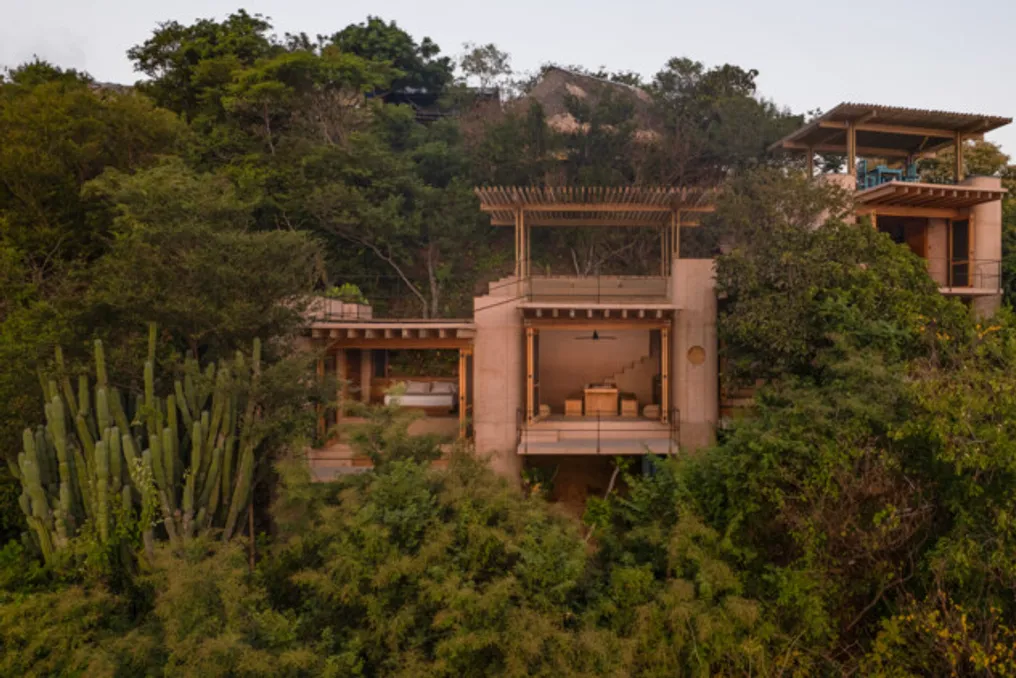
The Casa Dez Pés / Studio Font project is a solution for construction on challenging landscapes, based on the use of a repeating module that shifts by 50 cm in plan and 50 cm in cross-section. This allows the entire structure to harmonize with the existing vegetation and topography.
The building is located on rocky terrain with a slope of about 45°, at an altitude of 50 meters above Rinconcito beach in Mazunte, near Punta Cometa. Punta Cometa is a prominent rocky peninsula west of Mazunte, known for its open views of the Pacific Ocean. This site is the southernmost point of Oaxaca state and serves as a natural viewpoint with a 180-degree panorama combining the open sea, cliffs, and endless horizon, defining the project's territorial orientation.
The conceptual starting point for the house was to imitate the logic of Punta Cometa as a viewpoint meeting the sea. The architecture was reduced to the essentials: elevated roofs and slabs that function as living terraces, providing breeze passage and shade, as well as open spaces establishing a direct connection with the surrounding landscape.
The building's elevation allows for a design in direct contact with tree canopies, birds, ancient cacti, the sea, and the constant presence of Punta Cometa. The upper terraces accommodate the main life of the house, including an elevated pool overlooking both the ocean and the peninsula, as well as two pergolas and two sunbathing areas situated on different levels.
The central question was not what to build, but how to support these platforms on the cliff while avoiding invasive earthworks and large-scale excavation. Since the terrain is entirely rocky, heavy machinery is inapplicable, and all work is done manually. Consequently, the project uses a series of structural 'legs' that lift the slabs and rest point-wise on the ground, acting as isolated foundations.
These ten supports serve not only a load-bearing function. They also provide space for cabinets, showers, bathrooms, machinery, and storage, and help structure and divide various zones. In the tallest module, the supports are extended to accommodate two bedrooms and the main entrance, which is solved using floating stairs that seem to wrap around the existing rocks on the site.
Thanks to this strategy, the bedrooms are elevated, and the bed rests on a kind of pedestal, while the slab opens up, following the natural slope of the hillside. The project opens up to distant views as well as immediate vegetation, where the slope transforms into a vertical garden framing the architecture from the front and back.
As a result, the intervention minimally alters the landscape, preserving natural drainage and protecting the maximum possible number of existing trees. In three instances where trees could not be bypassed, they pass through the building, integrating directly into its spatial configuration.
Where the winding ridge of Punta Cometa meets the sea, the rock mass breaks down into rounded edges, eroded protrusions, and dense supports resistant to constant wave action. The project's structural columns replicate this formal state at the point where the architecture separates from the ground. Instead of solving these supports with straight sections and standard solutions, the project embraces the constructive complexity of curvature to match how the terrain meets the sea: without breaks, through forms capable of transmitting weight and stability via more organic geometries.
Unlike concrete walls and supports painted in the color of the terrain, wood plays a noticeable structural role in the large cantilevered roofs and pergolas. The roofs are made of a composite structure of lumber connected to a reinforced slab, allowing for large spans and creating deep shade on the living terraces. Compared to the mass and durability of concrete, wood in the pergolas lends a lighter and warmer feeling without losing structural capability.
Wood is also used in fixed furniture and blinds made of macuila—a dense and durable material suitable for local conditions of wind, salinity, and humidity. The builders' craftsmanship was critical to realizing these solutions. Walls are formed using hand-curved frames and ribbed formwork, allowing for enclosed curved corners with a continuous covering of resinous plywood. Instead of obvious textures or planks, the project chooses softness as a constructive and spatial criterion.
The development of the building was constantly adjusted according to local conditions. The working design was adapted in real-time as construction progressed, encountering stationary rocks, discrepancies in topographic surveys, cyclones, and storms, adjusting to the rhythms dictated by the place, climate, and local community.
Mazunte has an organized community that actively participates in caring for and managing its territory. The project was developed in close coordination with neighbors during both the approval stage and when determining infrastructure, layout, and execution of works. Construction relied on local networks for material supply and labor hiring, as well as direct purchases from residents of the immediate vicinity, integrating the house into the region's existing social and production processes.
The hydraulic infrastructure was solved by reusing an existing reservoir on the site and supplementing it with a biodigester for treating black and grey water. This system ensures biological waste decomposition and reduces the load on the immediate surroundings, avoiding traditional high-impact solutions. The strategy prioritizes adaptation and the use of what already exists over implementing additional systems.
The client summarizes the project experience, noting that what he likes most about the house is that he never remembers what it looks like. It is architecture that completely adapts to the terrain, supported by ten pillars and inhabited across multiple levels, until it dissolves into the natural complexity of the place.