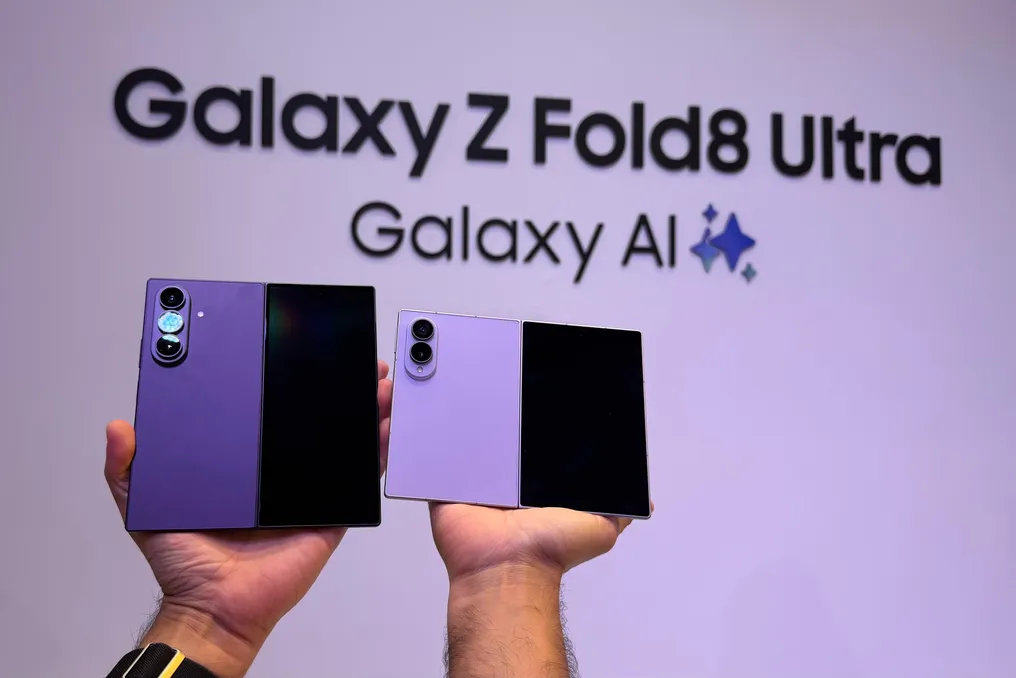
Samsung has made significant changes to its foldable device series with the introduction of the Galaxy Z Fold8 Ultra. The authors have begun testing this phone and are sharing their initial impressions, although a full review will take more time.
Samsung has made significant changes to its foldable device series with the introduction of the Galaxy Z Fold8 Ultra. The authors have begun testing this phone and are sharing their initial impressions, although a full review will take more time.
The smartphone's design immediately catches the eye. Compared to previous Fold models, it feels significantly thinner. According to Samsung data, the device thickness when unfolded is only 4.1 mm, and the weight is 215 grams. This makes it 1 mm thinner than the Galaxy Fold, which was 4.2 mm.
Despite its large size, the phone does not feel heavy in the hand. During use, the weight is distributed well, allowing for comfortable holding over long periods.
Samsung has paid close attention to the hinge and the display. The opening and closing experience has become smoother. The company has implemented new Flex Titanium technology, which increases the device's durability and reduces the visibility of the crease on the display. Although the crease could not be completely eliminated, it looks less noticeable at first glance and is only visible when changing the viewing angle.
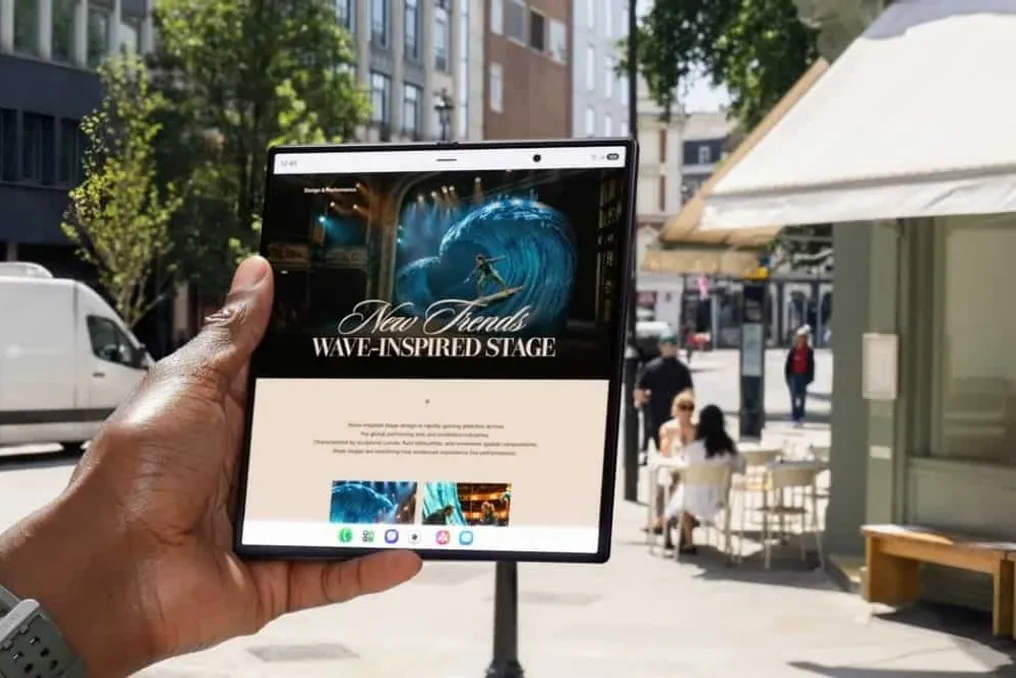
The device is equipped with a large 8-inch inner display. While watching videos and using applications, the screen appeared bright and clear. The large display noticeably simplifies multitasking. Samsung has optimized Galaxy AI features for the large screen, making the use of artificial intelligence functions more convenient.
One of the main strengths is the camera. The Galaxy Z Fold8 Ultra features a 200 MP main module and an additional 50 MP ultra-wide camera. Samsung claims that support for HDR, improved night shooting, and 8K video recording will be useful for content creators. Although the authors used the camera only briefly, they noted that the camera application runs faster and smoother than before.
To ensure performance, the smartphone uses the Snapdragon 8 Elite Gen 5 chipset, built on a 3nm architecture. The phone also includes a 5000 mAh battery, 45W fast charging support, and a new cooling system. No delays were observed during the presentation when opening applications, using the camera, or multitasking; however, true performance will only become clear after extended testing and gaming.
Artificial intelligence has become one of Samsung's key strengths. Galaxy AI now functions smarter, allowing simultaneous work across multiple applications using Gemini Intelligence. Features like Now Brief and Now Nudge provide the user with information and recommendations tailored to their needs. The large screen makes interacting with AI and viewing results more convenient.
Samsung has also emphasized privacy in One UI 9. The new AI Activity dashboard shows what tasks the AI performs for the user. Furthermore, Privacy Alerts and Knox Security systems ensure the protection of user data.
In the first moments of use, the Galaxy Z Fold8 Ultra is perceived as a device that brings not only a new design but also a new vision. It is designed for those who want to perform office work, edit photos and videos, and create content directly on their phone. A full review will determine its real power, but the initial experience suggests that Samsung aimed to provide the biggest upgrade in the Fold series.
Samsung has officially released its new foldable and flip smartphones. This year, the company introduced three models with rotating screens: the Galaxy Z Fold8 Ultra, Galaxy Z Fold8, and Galaxy Z Flip8. The top version costs up to 2.60 lakh rupees.
The Samsung Galaxy Z Fold 8 Ultra is available in three variants. The starting price is 1,99,999 rupees, while the most expensive model costs 2,59,999 rupees. This device is positioned as a versatile one, intended for users who read, watch videos, or play on their phone extensively. The company noted that the new Fold 8 Ultra features a slim design.
The Galaxy Z Fold 8 Ultra uses the Snapdragon 8 Elite Gen 5 chipset. It is equipped with a 5000 mAh battery and supports 45W fast charging. Samsung also mentioned a new dual-charging system, which ensures more stable and faster recharging. Additionally, the Galaxy Z Fold 8 and Flip 8 models were presented.
The rear camera system of the Galaxy Z Fold 8 Ultra includes a triple configuration. The main camera has a resolution of 200 megapixels and supports 2X optical zoom. It also includes a 50-megapixel wide-angle lens and a 10-megapixel telephoto lens. Furthermore, a 10-megapixel lens is located on the screen, and another 10-megapixel module is on the main display.
It is worth noting that a used car can be purchased in the market for 2.60 lakh rupees. There are numerous platforms and dealers dealing in used cars in the price range up to 2.60 lakh rupees.
Samsung unveiled the Galaxy Z Fold 8 Ultra model on Wednesday (22). This is the first foldable device from the company to incorporate the Ultra standard, previously restricted to the Galaxy S line. According to an official statement, the Z Fold 8 Ultra has a thickness of only 4.1 mm when open and weighs 215 g, making it the slimmest Z Fold ever released by the brand.
Along with the Z Fold 8 Ultra, the Galaxy Z Fold 8 and the Galaxy Z Flip 8 were also presented. All three devices are now available for pre-order in specific markets.
The Z Fold 8 Ultra features a triple camera system. Its main sensor boasts 200 MP, an f/1.7 aperture, and HDR support at maximum resolution, representing an improvement over previous versions. The ultra-wide camera has been upgraded to 50 MP and now includes autofocus, while the telephoto lens remains at 10 MP and offers 3x optical zoom.
In terms of video, the Ultra supports 8K recording using the APV codec, designed for professional editing workflows. Furthermore, the Cine LUT feature allows for the application of cinematic color profiles directly on the phone, eliminating the need for external post-production.
The main screen of this model measures 8 inches and features QXGA+ resolution, along with an adaptive refresh rate ranging from 1 to 120 Hz. The external (cover) screen is 6.5 inches, an increase from the previous generation, while maintaining the same refresh rate specifications.
Flex Titanium technology, present across the entire Z line, combines a titanium alloy film with a reinforced titanium plate. This combination aims to reduce the device's thickness without compromising its durability and minimizes crease visibility over time.
The Z Fold 8 Ultra is equipped with a 5,000 mAh battery and a new 45W dual-path charging system, which distributes energy more efficiently between its two cells. Samsung reports that this charging can reach 67% in approximately 30 minutes.
In terms of processing, it utilizes the Snapdragon 8 Elite Gen 5 Mobile Platform for Galaxy. The models offer options with 12 GB or 16 GB of RAM and internal storage capacity up to 1 TB. The operating system is based on Android 17 with the One UI 9 interface.
Galaxy AI has been optimized for the foldable format. The Now Brief feature provides personalized information on the home screen, and Now Nudge suggests future actions based on conversation context. Gemini Intelligence enables automations in over 40 applications and services via voice or text commands.
Additionally, Gemini Notebook allows consolidating notes, images, recordings, and documents into a permanent workspace, supporting drag-and-drop functionality in split-screen mode.
Device protection is guaranteed by multi-layered Samsung Knox, including Knox Vault, a physical component designed to resist tampering with sensitive data. The One UI 9 version introduces an AI assistant activity panel, allowing the user to review all automations executed in their name.
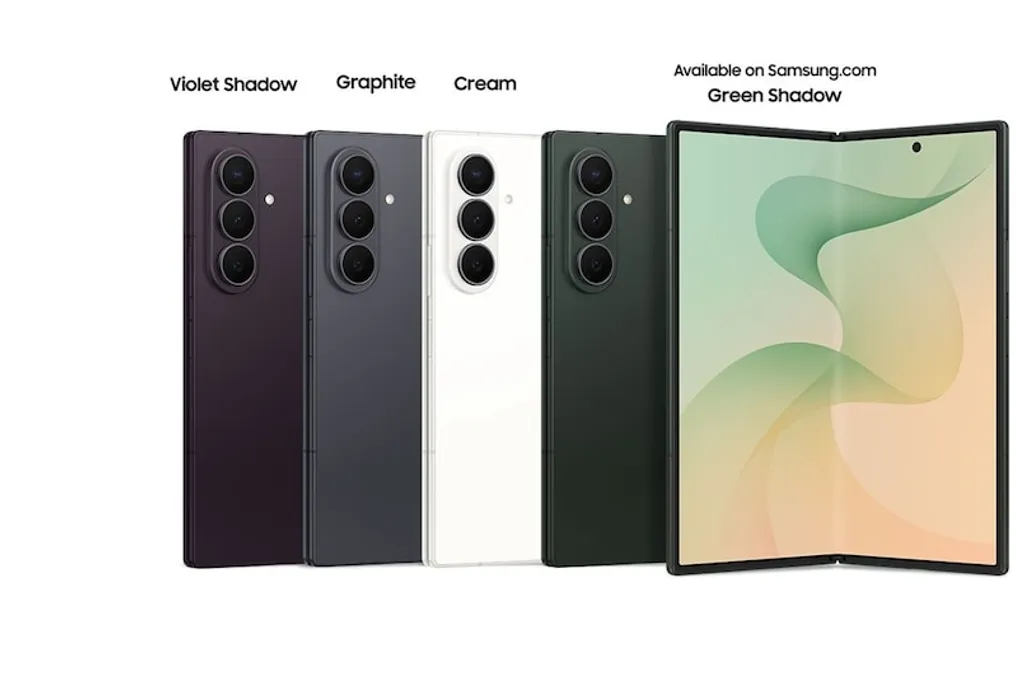
The Z Fold 8 Ultra is available in Graphite, Cream, and Violet Shadow tones, while Green Shadow is exclusive to purchases made on the Samsung.com website. All three models in the line come with six months of free Google AI Pro, which includes 5 TB of cloud storage.
The launch date and availability of the new Galaxy Z Fold 8 Ultra, Fold 8, and Flip 8 in Brazil will be announced at a later date.
Samsung has unveiled its latest Galaxy foldable smartphones as competition in this category intensifies, especially with the expected Apple entry into the market in September.
Samsung has long dominated the foldable phone market since the release of the first Galaxy Fold, accumulating significant experience before competitors like Apple emerged. According to available data, Apple's first foldable iPhone will feature a wider, book-like design, unlike the taller format used by Samsung.
On July 22, Samsung announced three new devices: the Galaxy Z Fold8 Ultra (a continuation of the current Fold series form factor), the Galaxy Z Fold8 (a new, more compact, book-like form factor), and the Galaxy Z Flip8. New Galaxy Watch Ultra and Galaxy Watch9 were also presented.
The flagship Z Fold8 Ultra is equipped with an 8-inch main display and a 6.5-inch external screen. When folded, the device is 8.9 mm thick and weighs 215 g, while when unfolded, it is 4.1 mm. It runs on Qualcomm's Snapdragon 8 Elite Gen 5 chip, supports up to 16 GB of RAM and 1 TB of storage. The camera includes a 200-megapixel main module, a 50-megapixel ultrawide lens, and a 10-megapixel telephoto lens with 3x zoom.
The 5,000 mAh battery charges to 67% in about half an hour using a 45W adapter (sold separately). The device comes with Android 17, One UI 9, Wi-Fi 7 support, and an IP48 water resistance rating.
The Fold8 model attracted particular attention due to its shorter design, which reportedly resembles what is expected from Apple's foldable iPhone in September. When journalists directly asked whether the similarity between Samsung's book design and the anticipated Apple design was coincidental, Justin Hume, Vice President of Mobile Experience for Samsung South Africa, noted that Apple's foldable product has not yet been released and remains a 'speculation.'
Zahir Kaji, Head of Mobile Experience for Products and Commerce at Samsung South Africa, stated that the Fold8 Ultra's design is not a reaction to competitors, and the company considers the book form factor of foldables to be becoming 'more common.' Samsung Display is a long-time supplier of OLED panels for Apple iPhones. When asked about the overlap of these trends, Kaji did not confirm whether this partnership extends to foldable displays.
Samsung reported an improvement in hinge durability thanks to a new magnetic mechanism and the use of 22 layers of titanium, including titanium integrated directly into the display layer. The company claims this reduces the visibility of the crease, although it does not eliminate it entirely.
Hume predicts that rising memory costs will soon lead to an approximate 30% increase in device prices across the industry, citing Apple's recent price hikes for MacBook and iPad laptops. Kaji mentioned that in South Africa, 97–98% of high-end devices are purchased on credit, and device financing schemes help expand access to this category.
He added that Samsung's Knox platform provides a basis for device financing agreements, allowing financing partners and networks to remotely lock the device in case of non-payment, which, he said, lowers the risk profile for lenders providing loans for expensive devices. Despite this, the starting prices for the new phones, which clearly show a trend toward increase due to memory chip shortages, are: Galaxy Z Flip8 (256 GB) at R26,999; Galaxy Z Fold8 (256 GB) at R40,999; Galaxy Z Fold8 (512 GB) at R45,999; and Galaxy Z Fold8 Ultra at R50,999.
In terms of sales structure, Kaji expects the foldable form factor to account for about 70–75% of total sales of Fold and Flip models in South Africa, with the Z Fold8 Ultra expected to make up 60–65% of Fold sales specifically.