Fiat celebrates 50 years in Brazil in 2026. The author of the article expresses great appreciation for the Italian brand, citing its early cars, such as the 1995 Mille ELX and the 2008 Mille Way, defending Fiat's ability to produce compact, affordable, and pleasant-to-drive vehicles.
Forgotten Fiat Models
Besides popular models, the text mentions conceptual Fiat cars launched in Brazil that did not receive the deserved recognition. The Tipo, which faced fire problems; the Marea, whose mechanics were considered too complex for the national market; and the Bravo, which, despite being beautiful and competent, arrived late in a declining category are cited.
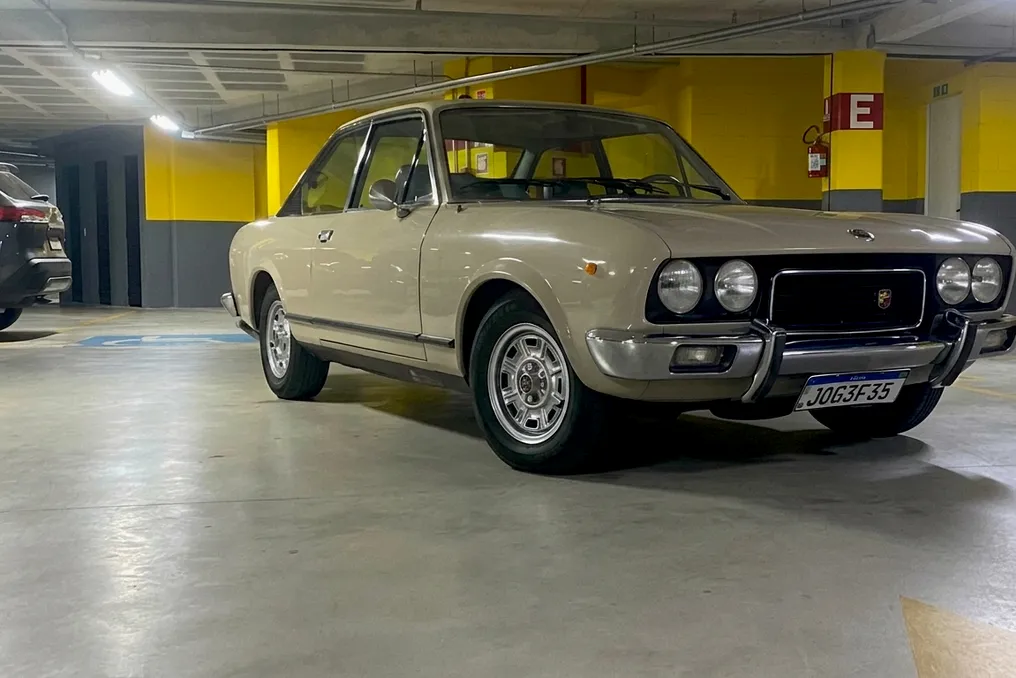
Although some argue that current Fiat models have lost their former charm in favor of commercial success, the focus of the article lies in the vast universe of notable cars produced by Fiat internationally. In allusion to the brand's fiftieth anniversary in the country, a specimen classified as 'Half-Lost Find' is highlighted: a third-generation Fiat 124 Sport Coupé, manufactured between 1972 and 1975, which represents the peak of Italian design and engineering before the brand arrived in Betim.
History and Evolution of the Fiat 124
The Fiat 124 was introduced in 1966 to succeed the Fiat 1300/1500 line, which, although reliable, was aging quickly. The goal of the 124 was to redefine the segment of Italian family sedans, surpassing the competition in terms of weight, efficiency, and dynamics.
One of the greatest innovations occurred in the chassis. Unlike its predecessor, which used semi-elliptical leaf springs on the rear axle—a robust configuration, but more geared towards utility use and with less roll control—the 124 implemented a rear suspension with coil springs, anchored by longitudinal arms and a Panhard rod. This more responsive rear end, combined with a light structure, rigid body, and four standard disc brakes (something unusual for a high-volume vehicle in the mid-60s), resulted in a safe, neutral, and enjoyable compact sedan to drive.
Platform and Variations of the 124
The architectural excellence of the 124 allowed it to evolve into a modular family of models. From the same chassis came the Familiare station wagon, the desired 124 Sport Spider convertible, designed by Pininfarina (which became legendary in the WRC with Abarth), and the 124 Sport Coupé, which offered the practicality of a four-door coupe with high engineering quality.
Globally, the sedan project was licensed to the Soviet Union in the early 70s, giving rise to the VAZ-2101/Zhiguli, precursor to the Lada Laika, which was widely used in Brazil in the 90s. Thus, the 124's base became one of the most durable platforms in automotive history, as the Laika remained in circulation in Russia until 2010 and in Egypt until 2015.
Details of the Fiat 124 Sport Coupé
Focusing on the coupé, the 124 Sport Coupé enhanced the sedan's base in both design and performance. While the Spider had its design commissioned externally, the Sport Coupé was conceived at the Fiat Style Center by Felice Mario Boano, the same designer responsible for the iconic Ferrari 250 GT Boano. Boano maintained the original wheelbase of the sedan (2.42 m), ensuring adequate space for four adults without compromising the sleek and sporty lines of the notchback coupé.
The model was launched in 1967, in the AC series, featuring simple headlights, a dashboard with wood imitation finish, and a 90 hp 1.4 engine. This engine was historic for being the first mass-produced global DOHC (double overhead camshaft) engine to use a rubber timing belt instead of a chain. Its taillights were identical to those used on expensive sports cars of the time, such as the Lamborghini Espada and the Iso Rivolta.
In 1969, with the BC phase, there was a front-end redesign with dual headlights and taillights again inspired by a Lamborghini (in this case, the Jarama). The dashboard became darker and sportier, including a tachometer reaching 9,000 rpm. Mechanically, the car received the 110 hp 1.6 engine, fueled by two dual-body carburetors, characterized by its square dimensions (80x80 mm) and strong propensity for high RPMs.
Third Generation and the Lampredi Engine
The maturity of the project was reached in 1972, with the third and final generation, the CC. In this phase, Fiat modernized the front end with new chrome details, installed vertical taillights, and increased the trunk depth for greater load capacity. Internally, the wood coverings were replaced by brushed aluminum and new materials.
The mechanical highlight was the coveted 1.8 engine (1,756 cm³) from the Lampredi family, developed by Aurelio Lampredi. This four-cylinder, double overhead cam engine with a dual-body carburetor and electric pump generated approximately 122 hp, providing substantial torque at medium revs that drastically altered the vehicle's behavior. When coupled with the five-speed manual gearbox and rear-wheel drive, the setup replicated the successful formula of icons like the Alfa Romeo Giulia GT and GTV of that period: lightness, powerful sound, and great presence.
The Specific Find and Sales Conditions
The specimen in question is a 1975 model, corresponding to the last year of production of the 124 Sport Coupé, and belongs to the desirable 1800 Climatizzata version. This means it left the factory equipped with air conditioning, which, according to the advertisement, is in perfect working order. Finding a 70s Italian sports classic with operational air conditioning in Brazil is considered an extremely rare occurrence.
Internally, the coupé maintains its four-seater functionality. The cabin has been carefully restored in the seats and door linings, but preserved the original factory trim on the front headrests, which are in excellent condition. Components such as the steering wheel, dashboard instruments, buttons, and turn signal key are original, maintaining the atmosphere and patina of the era.
Currently owned by Adriano Griecco, the car is advertised for R$ 105,000. This price is seen as quite advantageous in the current market for those looking for a European classic with rear-wheel drive and pure mechanical pedigree, being favorably compared to a similar condition Alfa GTV. Furthermore, the vehicle's documentation is impeccable, registered in the owner's name, without pending issues, and already possesses a Mercosul plate, eliminating bureaucratic concerns for the future buyer.