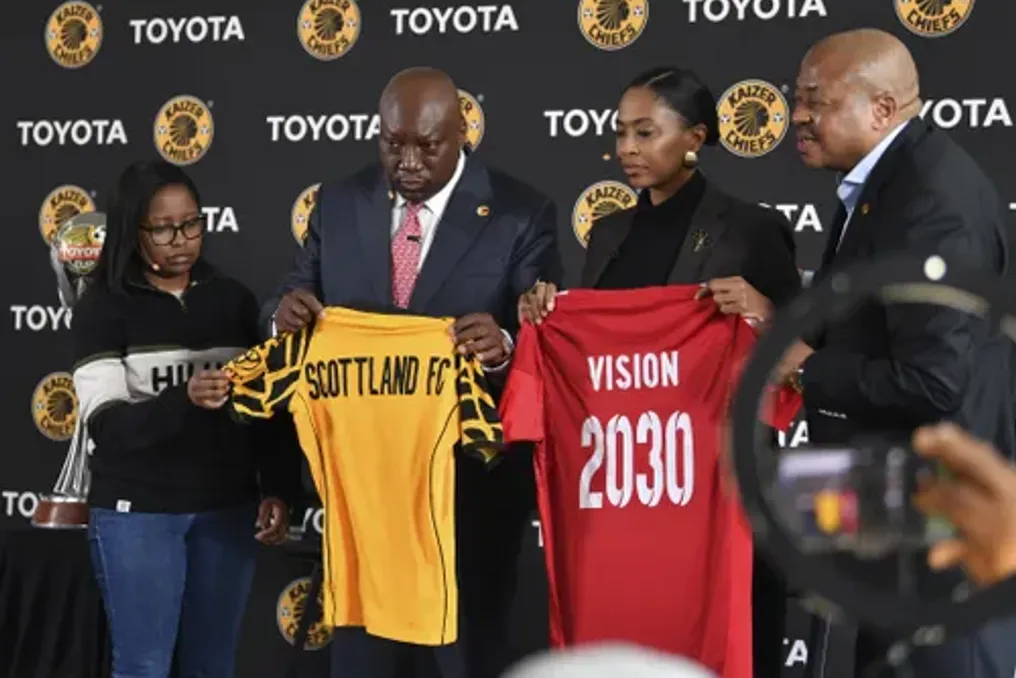
The Kaizer Chiefs team will play a key role in the grand opening of the fully renovated Bafookeng Royal Sports Stadium, participating in a match against Zimbabwean champions Scotland FC as part of the Toyota Cup on Sunday.
The Kaizer Chiefs team will play a key role in the grand opening of the fully renovated Bafookeng Royal Sports Stadium, participating in a match against Zimbabwean champions Scotland FC as part of the Toyota Cup on Sunday.
The Amakhosi team will be the main attraction of the third pre-season exhibition match at the Phokeng venue, located near Rustenburg. This match marks the return of football to the stadium, which hosted the FIFA World Cup in 2010, after a three-year hiatus.
The game is scheduled for 15:00 and will serve as the final preparatory match for Chiefs before the 2026/27 season, while also allowing fans to see the modernized facility for the first time.
The Bafookeng Royal Nation (RBN) has confirmed the completion of extensive renovation and maintenance work on the stadium, enabling the arena to host high-level sporting events again. The previous professional match at this venue took place in 2023 when Marumo Gallants hosted Tanzanian giants Young Africans in the CAF Confederation Cup.
Since then, the facility has undergone significant modernization aimed at improving safety standards and compliance with national and international requirements. In a statement published by RBN on Wednesday via their official Facebook page, it was announced that the Bafookeng Royal Nation Complex is ready to host sporting events once more.
The statement emphasized that 'the Bafookeng Royal Nation (RBN) is proud that the renovation of the Royal Sports Complex is complete, and the facility is ready to host world-class events in sports, recreation, and community.'
It was noted that to preserve heritage and maintain international standards, the complex underwent extensive modernization and restorative maintenance, including critical upgrades to fire safety, emergency response, and general security systems.
The official opening will be marked by a Toyota Cup match between Chiefs and Scotland FC. RBN added that 'the opening will be marked by the Toyota Cup on Sunday, July 26, 2026, when Kaizer Chiefs meet Zimbabwean champions Scotland FC in an exciting pre-season match.' The event will also include a friendly match between Kaizer Chiefs legends and Jozi Masters featuring several former football stars.
For Chiefs, this match is part of the preparation under head coach Fernando De Cruz, who aims to finalize the squad before the upcoming demanding campaign. The Toyota Cup match will provide Amakhosi with valuable physical conditioning and allow them to become the first major club to officially resume operations at the venue that hosted some of South Africa's most significant football moments.
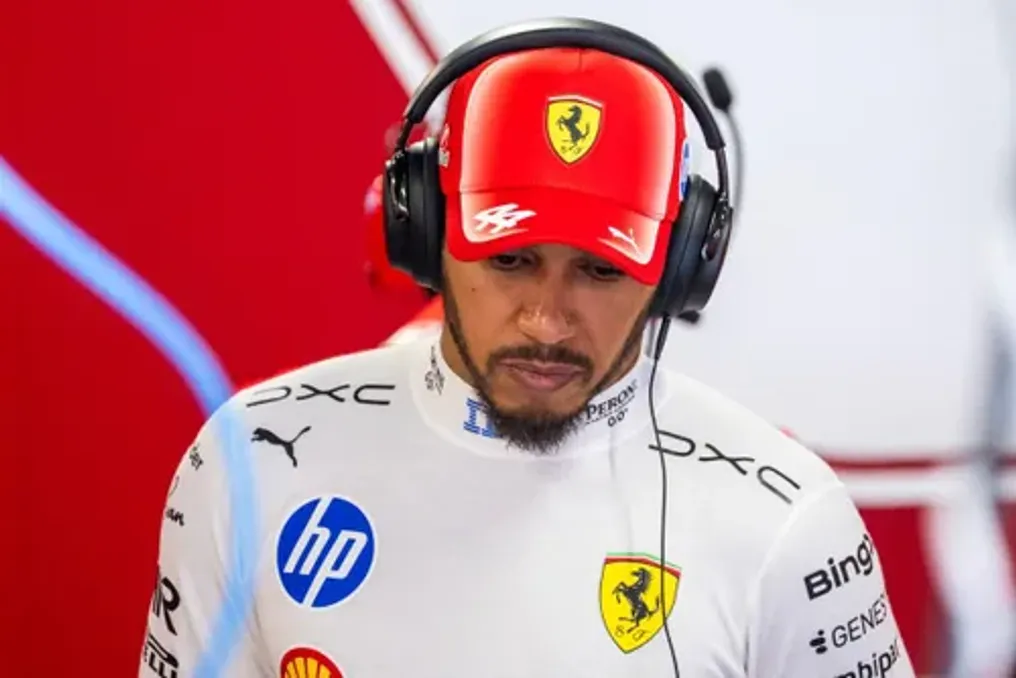
Lewis Hamilton secured a victory in the Ferrari grid sector, showing a dominant 1-2 position during the second session of free practice for the Hungarian Grand Prix on Friday. He overtook his teammate Charles Leclerc, setting the pace for the team.
The seven-time champion, who could potentially become the first driver to achieve 10 pole positions at this track, recorded the fastest lap time of 1:18.729, beating Leclerc by 0.148 seconds. Hamilton holds a career record of 104 pole positions and hopes to replicate his recent qualifying success achieved in Hungary in 2023. He is currently in second place in the drivers' championship, trailing Kimmi Antonelli by 45 points.
World Champion Lando Norris, who won at the Hungaroring last year, finished third for McLaren but was half a second behind Max Verstappen of Red Bull and George Russell of Mercedes. In the hot and dry day with gusts of wind, Isaac Hajar was sixth in the second Red Bull car, ahead of Liam Lawson from Racing Bulls, Oscar Piastri from the second McLaren, and Nico Hülkenberg from Audi.
Racing Bulls rookie Arvid Lindblad finished tenth, while Antonelli fought for thirteenth place in his Mercedes after previously missing the start because the team provided his car to its test and reserve driver. Two-time Aston Martin champion Fernando Alonso finished nineteenth in the heavily updated car, but his teammate Lance Stroll could not participate in the session due to a suspension failure in the first free practice. The team implemented nearly new cars, equipped with 16 updates for Stroll and Alonso, and an additional engine update is planned after the summer break.
Franco Colapinto set the first lap time, after which Leclerc, and then Hamilton took control for Ferrari. The British driver completed a lap in 1:19.648, while Antonelli was completing his first lap, taking eighth place. Later, Russell reported poor balance, noting that 'it feels awful, like the car is unbalanced,' when he finished fourth. Antonelli stated that 'I spun almost twice—what is happening?'
After 20 minutes, Hamilton improved his time to 1:19.585, overtaking Leclerc by a tenth, with Verstappen in third place ahead of Russell and Antonelli. The Dutchman noted issues with the seat. After 25 minutes, Norris switched to soft tyres and took first place with a time of 1:19.228, followed by Verstappen, trailing by two tenths. Then Colapinto spun and crashed at the last corner, leading to a red flag. The Argentine remained unharmed.
After six minutes, the session resumed when Antonelli struggled and spun in the chicane, while Leclerc and Hamilton regained the initiative, recording times of 1:18.877 and 1:18.914 respectively—overtaking Norris by 0.351 seconds in third position. Hamilton then improved his time to take first place with 15 minutes remaining, while frustrated Antonelli darted around and locked up the wheels at the second corner in a cloud of dust.
The esports competitive scene, much like traditional sports, features championships aimed at beginner teams, serving as a starting point for new talent.
Various amateur and semi-professional leagues exist to nurture this base. Among them, Liga GG stands out, having operated autonomously for six years. This organization was created with the goal of promoting the competitive base for both League of Legends and VALORANT, having already contributed to the formation of professionals who compete in more prestigious tournaments, such as the CBLOL.
Within the VALORANT competitive sphere, Liga GG promotes the VPL (Valorant Prime League). This tournament is structured to receive teams wishing to begin their careers in the competitive environment, featuring group stages, playoffs, and live broadcasts.
For those interested in entering the VALORANT competitive scene, Liga GG has opened registrations for the VPL Qualifier, an event that guarantees passage to the main division of the championship. The matches for this qualifier are scheduled for August 4, 5, 6, 11, 12, and 13. Upon conclusion of the competition, the 14 best-performing teams will secure a spot in the VPLA, which is the main division of the competition.
The final deadline for registration is July 31, at 12:00 PM. This presents an ideal opportunity for anyone interested in forming a team and experiencing the competitive scene.
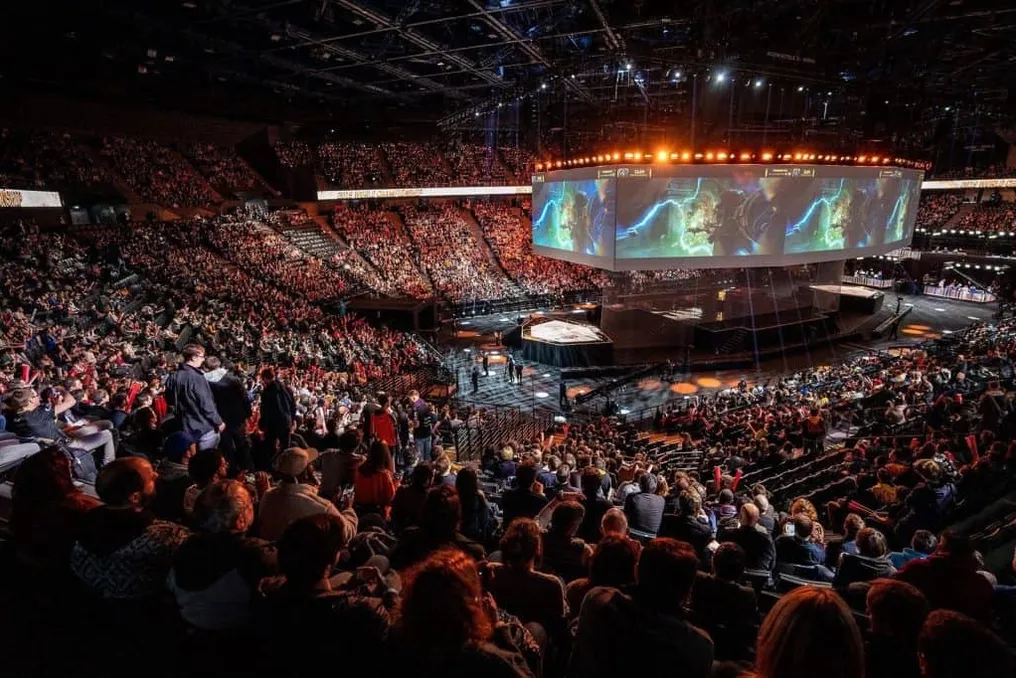
Electronic sports have established themselves as a robust professional market, characterized by audience, investment, and infrastructure. However, the operational mode of eSports presents significant distinctions compared to conventional sports, in addition to having its own specific characteristics. It is important to note that not every video game competition is automatically classified as an eSport.
In simple terms, eSports consist of video game competitions that follow well-defined rules, have an official format, and allow performance measurement through metrics such as scores, rankings, and match results. Just like traditional sports, electronic sports encompass various categories, which are macroscopically defined by the genres of the games. Currently, Strategy Games (MOBA), First Person Shooter Games (FPS), Fighting Games, Sports Games, and Battle Royale Games stand out.
Additionally, games are classified by themselves, citing examples such as League of Legends, Free Fire, and Street Fighter. For an electronic game competition to be considered an eSport, it is essential that there is a professional structure focused on the competitive aspect, ensuring a fair environment and competitive integrity. Other crucial elements include the popularity of the game, an established player base, and community engagement.
To understand the mechanics of an eSports championship, one must analyze the 'competitive logistics,' as this determines how championships, leagues, and other aspects of the scene are organized. There are two main methodologies: open circuits and franchised leagues.
In open circuits, the organization is delegated to independent operators from the game publisher. A common example is CS2, where groups such as ESL, Intel, and BLAST operate with support from Valve, the game distributor. On the other hand, franchised leagues are managed and centralized by the publisher itself. This is the model adopted by Riot, whose official tournaments are organized by the company, although they receive some assistance from partner organizations, mainly at regional levels.
These organizational formats also influence revenue distribution, determining who holds the broadcasting rights and receives sponsorships, whether endemic or non-endemic, in addition to being responsible for hiring talent and paying salaries.
eSports championships can be categorized into three levels: professional, semi-professional, and community. Professional competitions are those conducted directly by the publisher or licensed partners. Semi-professional tournaments serve as a transition to the professional level, being held by publishers themselves or by independent leagues or partner organizations. Community championships are autonomously organized by fans and players, although publishers, including Riot, occasionally support such events.
Despite variations between games, the architecture of tournaments and leagues tends to be standardized, typically divided into three stages: qualifiers, group stage, and playoffs. Additionally, there is segmentation by countries, regions, and world championships.
Qualifiers constitute the initial and elimination stages, open to any team or invited professional teams, depending on the tournament. The format can vary between single-elimination, double-elimination with re-entry tables, or group system. The Group Stage follows the qualifiers and often uses formats known as Round Robin, Swiss System, or GSL Format, with the dispute usually based on points accumulation. Finally, the Playoffs represent the final stage, usually in single or double format. A loss implies elimination or participation in the re-entry, while a victory in the final secures substantial prize money and/or a spot in a larger event.
National competitions elevate the most prominent teams to regional tournaments, which in turn grant access to the world championship. Some leagues do not have a specific national championship, leaving this responsibility to semi-professional tournaments, and each event occurs once or twice a year.
Electronic sports show notable figures. In audience, eSports reached 640.8 million viewers in 2025, according to Stalista data, representing an increase of approximately 47% compared to 2020. Regarding market value, estimates range between US$2.6 billion and US$5.34 billion, according to different analysts. Despite discrepancies, most agree that the market is in continuous expansion, potentially reaching US$12 billion by 2031, according to the Grand View Research group.
According to Mordor Intelligence, the main sources of revenue come from sponsorship and broadcasting rights. Media, advertising, and other sources account for 60.1%, while fees charged by the publisher and in-game sales correspond to 22%. Sponsorship contributes 39.9% of total revenue.
Unlike traditional sports, eSports have an owning entity: the publisher. This gives the publisher a more decisive role than sports federations, as it possesses the ability to modify game rules through updates, establish the official calendar, license tournaments, and control the ecosystem's brand.
This power is entirely linked to the company's vision and plans. It can drastically transform the scene by adjusting game balance, changing, adding, or removing maps and game modes. Furthermore, in fully online games, such as League of Legends and Dota 2, the publisher has the power to ban players or terminate the entire competitive scene by discontinuing the service. Historically, this autonomy is the main cause of conflict between eSports and traditional sports. However, there are companies, such as Valve, that exercise less invasive influence, limiting themselves to the highest levels of championships, contrasting with Riot's approach, which centralizes almost the entire competitive scene of its titles.