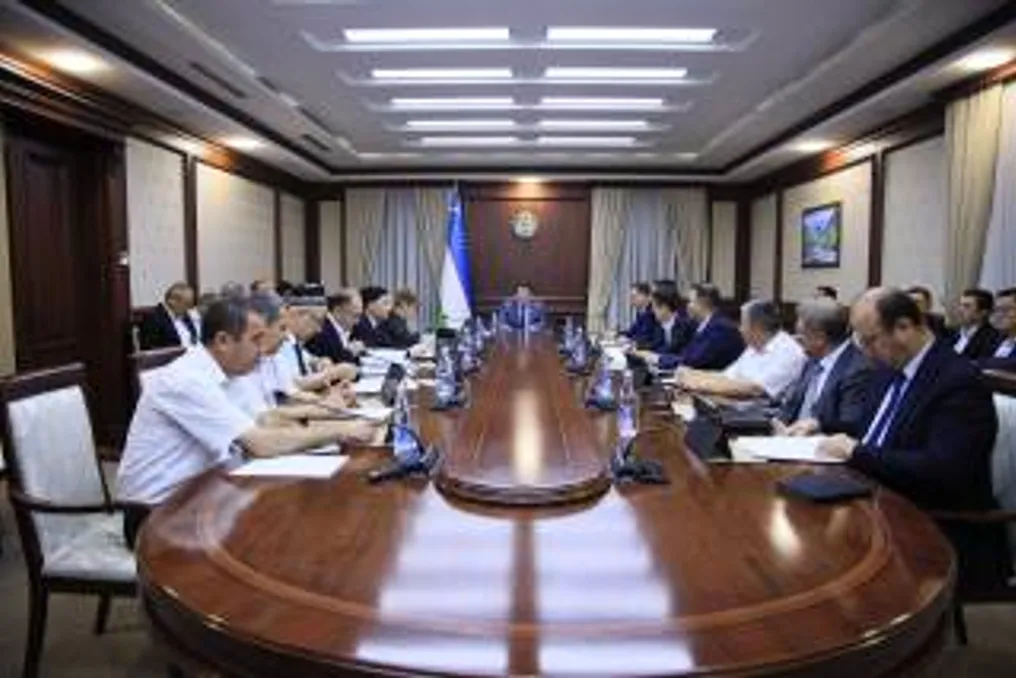
The Senate Committee on Agrarian, Water Management, and Ecology initially reviewed draft laws aimed at improving state control in the veterinary sector, rational use of water resources, and more reliable protection of consumer rights.
The Senate Committee on Agrarian, Water Management, and Ecology initially reviewed draft laws aimed at improving state control in the veterinary sector, rational use of water resources, and more reliable protection of consumer rights.
Specifically, the draft law 'On Amendments and Additions to the Law of the Republic of Uzbekistan 'On Veterinary Medicine' in Connection with Improving State Veterinary Supervision' aims to modernize the system of state veterinary control. This is being done to bring national legislation into compliance with the World Trade Organization's agreement on sanitary and phytosanitary measures, as well as international codes of the World Organisation for Animal Health.
This law strengthens norms related to ensuring product safety within the scope of veterinary supervision, prioritizing the prevention of animal diseases and the application of preventive measures before curative ones.
Furthermore, the law 'On Amendments and Additions to Certain Legislative Acts of the Republic of Uzbekistan' provides for holding accountable individuals directly responsible for violating rules on water accounting and the use of water management facilities and hydraulic structures, including state water body registration.
It is proposed to increase penalties for violating rules on the use of drinking water supply networks, as well as to establish enhanced liability measures for repeated offenses.
The law 'On Amendments and Additions to the Code of the Republic of Uzbekistan on Administrative Responsibility' provides for tightening liability measures for selling food products whose expiration date has passed, as well as for selling such products without indicating the date of production and expiration date.
According to senators, the adoption of these laws will strengthen consumer rights protection, ensure the circulation of safe food products, and prevent situations that could harm human health. Following the meeting, the Committee made appropriate decisions on the issues considered.
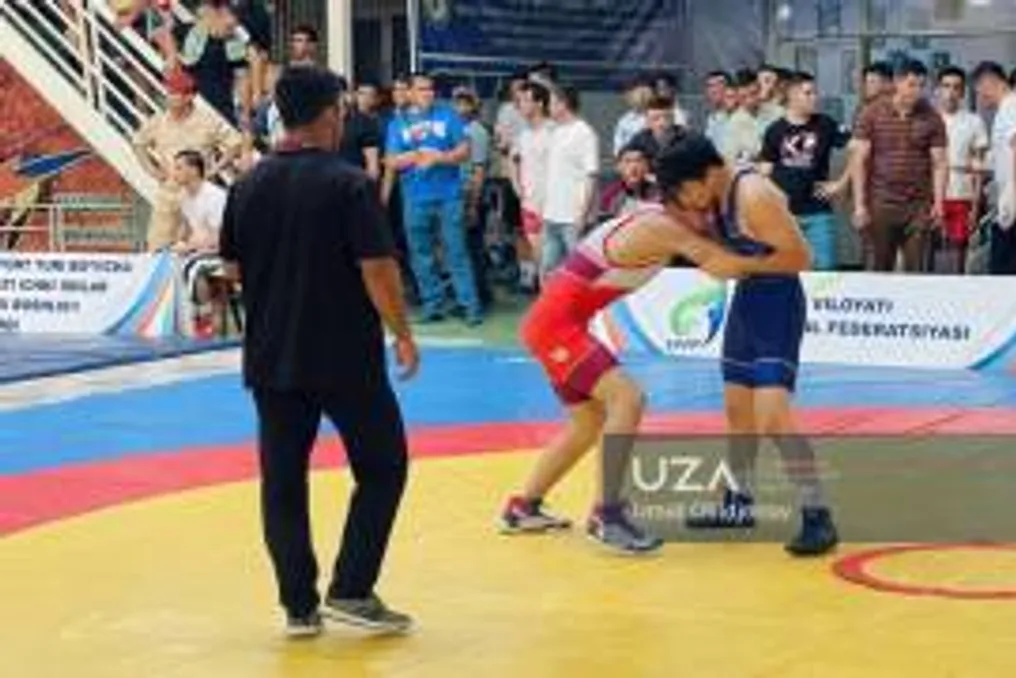
As part of the National Guard championship in sports combat, a high-level competition program was organized at the Directorate of the National Guard of the Syrdarya Region. This event contributed to strengthening the physical fitness of servicemen, improving sporting skills, promoting a healthy lifestyle, and reinforcing an atmosphere of mutual solidarity and healthy competition among teams.
Servicemen from the Republic of Karakalpakstan, various regions, and special units participated in national combat competitions, demonstrating their mastery. The fights took place in a tense and fair atmosphere, where participants showed a high level of physical readiness, technical preparation, endurance, resilience, and a strong desire to win.
Each bout was conducted based on the principles of sports ethics, honesty, and mutual respect, which once again confirmed that the competition was held in a fair and dignified spirit. Furthermore, the fights highlighted the invaluable role of sports in enhancing the fighting spirit and professional skills of servicemen. The main goal of the tournament was to develop the physical capabilities of servicemen, widely promote a healthy lifestyle among them, increase interest in sports, and identify the strongest athletes.
Following the heated matches, the team of the National Guard Directorate for the Republic of Karakalpakstan took first place in the team standings. The 'Qalqon' brigade won second place, and the 'Sarboz' brigade team took third place. At the awards ceremony, diplomas, cups, and souvenirs were solemnly presented to the winners and prize-winners. Their achievements were recognized as a deserved result of dedication to sports, regular training, and strong will.
According to a message from the press service of the Agency for Technical Regulation, a ceremony was held to award winners of the International Union of Friendly States (IUFS) competition in Cholponota, Issyk-Kul region of the Kyrgyz Republic. The ceremony was dedicated to achievements in the field of quality of goods and services of Uzbekistan's enterprises.
Six enterprises from Uzbekistan participated in this prestigious competition. One enterprise was recognized as a laureate, and five were awarded diplomas. The competition is held every two years with the aim of developing quality management systems in IUFS countries, stimulating the production of competitive products and services, implementing international standards, and disseminating best practices.
This year, 27 enterprises from Belarus, Kazakhstan, the Kyrgyz Republic, Russia, Tajikistan, and Uzbekistan took part in the competition. Based on the evaluation results, 25 of them received the high title of laureate or diploma recipient of the IUFS award.
Among the participants from Uzbekistan, the enterprise 'SAM-FERRE', operating in the Urgut district of the Samarkand region, attracted special attention, being recognized as a laureate of the IUFS award for quality. Additionally, the joint-stock companies 'TOSHELECTROAPPARAT', 'KHANTEX-GROUP', 'ADM JIZZAKH', 'PROMEAT GROUP CORP', and the closed partnerships 'Ferghana France' were recognized as diploma recipients of the competition.
The delegation of the Agency for Technical Regulation of Uzbekistan, which participated in the ceremony, emphasized that the reforms being carried out in the country are aimed at the widespread implementation of international standards, improving quality infrastructure, organizing production processes in accordance with modern requirements, and increasing export volumes of products. Experts believe that the awards received by Uzbek enterprises indicate growing demands for the quality of goods and services in the country. This, in turn, contributes to enhancing the competitiveness of national producers in global markets, expanding export geography, and strengthening the authority of the 'Made in Uzbekistan' brand. This achievement is viewed as a practical result of systemic reforms in the field of quality and efforts to improve production culture in the country.
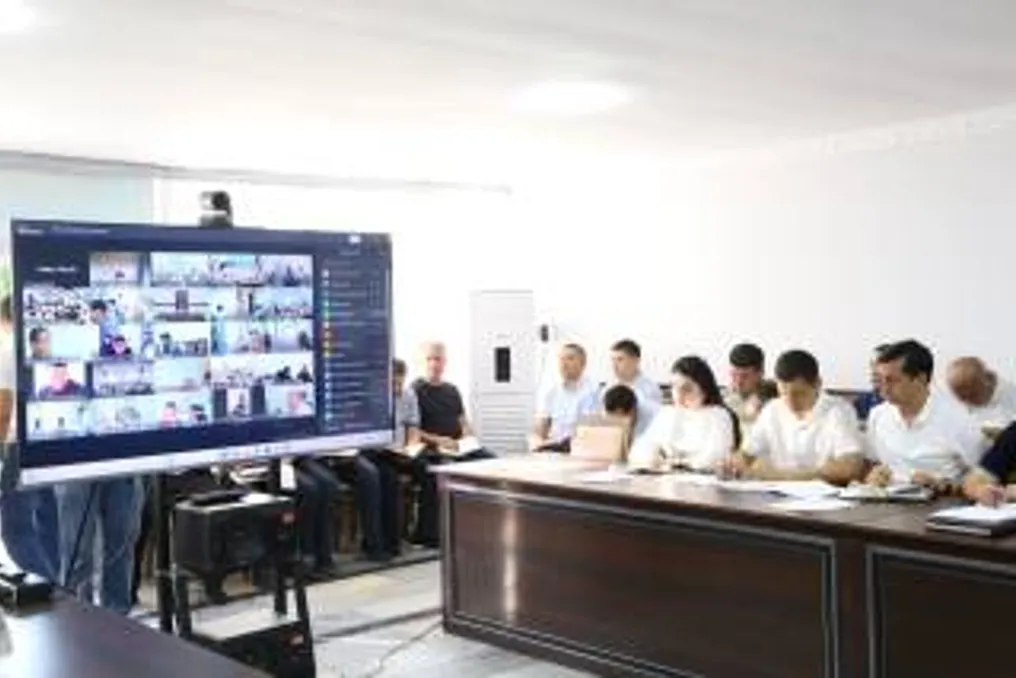
During an expanded meeting held in the Zhizhkha region, special attention was paid to the issue that the main criterion for evaluation should be public consent, not reporting. Although figures in reports may look attractive, creating the impression of timely completion of all tasks, the mere fact of recording completion in documents has no value if no changes occur in people's lives.
At the meeting chaired by the head of the region, Ulugbek Mustafayev, topics such as ensuring executive discipline, critical analysis of the fulfillment of Presidential and government assignments, and strengthening the personal responsibility of leaders were discussed. Deputy heads of the region, mayors, heads of district administrations, as well as heads of regional organizations and institutions participated in the event.
It was re-emphasized that executive discipline in state governance is not just a formality but a crucial factor in strengthening public trust. Since decisions made by the President and the Government must primarily serve to ensure the interests of the people, the development of territories, and the improvement of citizens' quality of life, every assignment must find its embodiment not only on paper but also in practice.
Regular monitoring of the fulfillment of assignments given by the head of state, the Presidential Administration, the Cabinet of Ministers, and the head of the region was carried out during the first half of the current year. During this period, only one delay in fulfilling an assignment was recorded, which on the one hand looks like a positive indicator. However, the meeting included an analysis of the real state of affairs behind these figures.
It turned out that even if some assignments are marked as 'completed' in information systems, the expected result by the population has not yet been felt locally. Thus, there is still a certain gap between entries in electronic systems and people's daily lives. The main task now is to eliminate this difference. From now on, all executive documentation will be evaluated not by the report, but by what changes have occurred in people's lives, by citizen consent, and by factual effectiveness.
The meeting also provided a detailed analysis of the implementation of five important documents aimed at the comprehensive development of the Zhizhkha region over the past two years. Of the 294 assignments stipulated in these documents, 125 had their execution deadlines met. However, only 42 of them were fully completed. Furthermore, 78 assignments whose deadlines have expired remain in the 'in progress' status, and another 5 assignments have not been completed at all. Do these figures not indicate the need for a serious revision of the working style of some leaders?
Analyses clearly showed that problems persist in key areas such as construction, agriculture, investment, social sphere, and tourism. Insufficient levels of responsibility were sharply criticized regarding the repair of some infrastructure facilities, failure to meet deadlines for land development work, implementation of fish farming projects, investment programs, and renovation works.
During the President's visit, the efficiency of cooperation with ministries, departments, and commercial banks gathered in cities and districts was also discussed. Leaders were given the condition to use all opportunities, actively implement large investment projects, and most importantly, show the results of these projects in people's lives.
It was noted that from now on, the fulfillment of each assignment will be studied not based on data from offices, but directly on site. Which facilities have been handed over for use? What problem has been solved? In which district have people felt these changes? This is what will form the basis of the main assessment of a leader's activities.
Following the meeting, clear tasks were assigned to all leaders to fundamentally change their working style, strengthen executive discipline, and ensure the full and high-quality completion of every assignment. Additionally, it was set the task to ensure the fulfillment of assignments related to the competence of the Zhizhkha Regional Administration according to the approved schedule in July, as well as to achieve high monthly fulfillment indicators.
The most important conclusion of the meeting was this: the true evaluation of a leader lies not in the figures of reports, but in the changes in people's lives. If a citizen has found a solution to their problem and gained confidence in tomorrow, this is the most honest indicator of executive discipline. Because only where public consent is ensured do reforms yield their true returns.