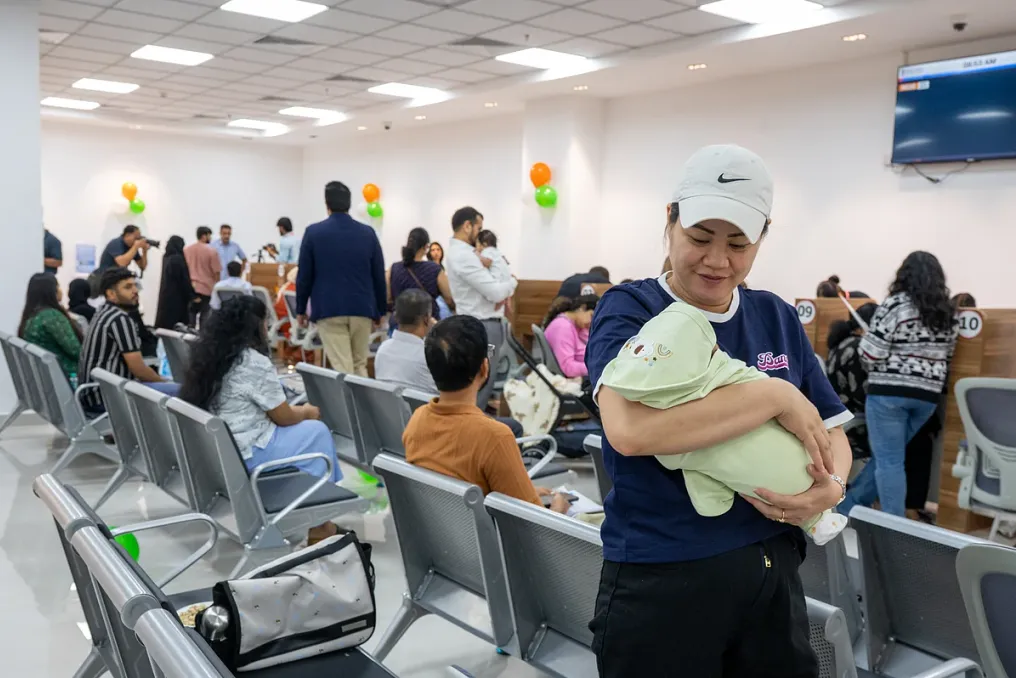
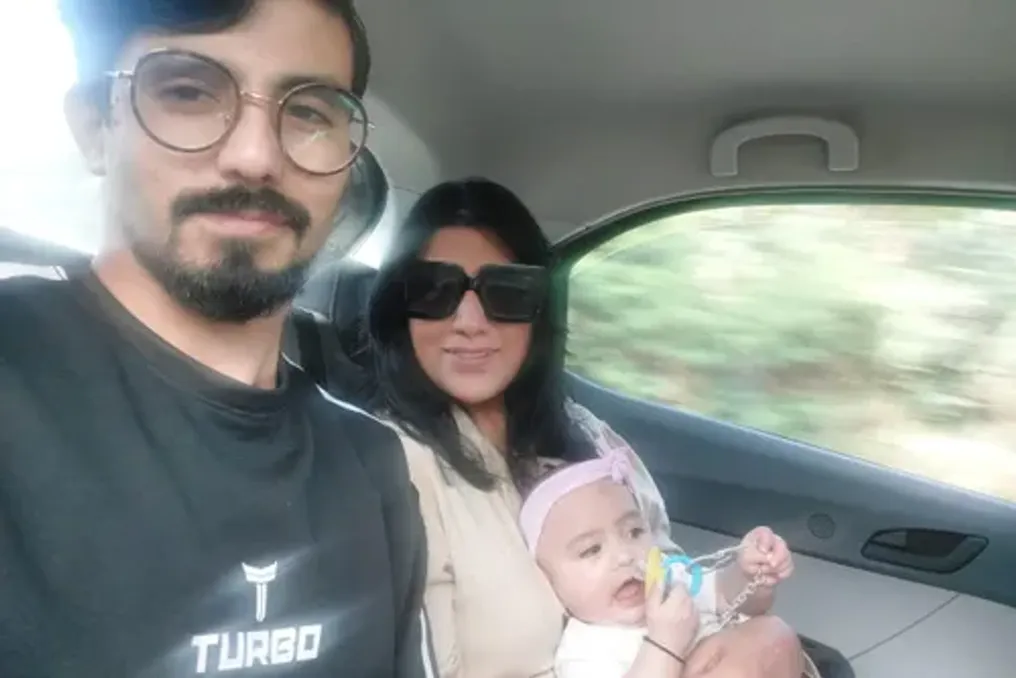
A mother from Durban shared her extremely difficult three-week experience of obtaining a passport for her seven-month-old daughter, who was born in Pakistan. She stated that she was constantly refused and ignored by the immigration department.
Document Application History
Rezwana Rishad Sher, a South African citizen, recounted marrying Malik Omar Sher, a Pakistani citizen. They lived in Pakistan until she returned to South Africa in March of this year. During her pregnancy, she experienced discomfort, and her husband, who is a doctor, advised her to move to Pakistan for her care. Their daughter, Sarish, was born there.
After the birth of the child, they obtained a Pakistani birth certificate and approached the South African embassy in Pakistan to apply for a Pakistani passport for their daughter. However, they were informed that the process would take time, and if they planned a trip to South Africa, they should obtain a visitor visa, which they secured for themselves and their husband for three months.
Problems at the Immigration Department
Upon arriving in South Africa, they immediately visited the immigration department to register the marriage and obtain the child's birth certificate. This stage proceeded without issues, and she received the document by May. After this, her husband mentioned that he needed to return to Pakistan for work, and she needed to return to work, although he allowed her to return when she was ready.
At the end of June, Sher went to the immigration department on uMgeni Road to submit documents for her daughter's passport. She decided to resolve the matter as she did not know when they could leave again. At the first visit, she clarified the required documentation. Her husband, while abroad, prepared all the necessary paperwork, including forms that were supposed to be filled out at the South African embassy in Pakistan, and also provided notarized consent for the child's passport application.
Refusals and Bureaucratic Obstacles
The embassy sent all documents to the immigration office via email to prevent fraud or corruption. Nevertheless, during a subsequent visit, she was told that the documents were unacceptable because they lacked the necessary stamps in certain sections of the forms that should have been placed at the embassy. Following this, they contacted the embassy, but were informed that the stamp could only be affixed in the applicant's personal presence before a commissioner. Since the child was with her in South Africa, the embassy sent back the document with an explanation on its letterhead as to why they could not affix the stamp. The immigration department staff refused even to consider this explanation, demanding that she return to the embassy. According to Sher, the embassy began to show irritation, even circling the relevant section in red and writing the reason for the inability to stamp it.
Despite her attempts to explain the situation, she was rejected again last week. She noted that she had visited the immigration department five times. She felt growing frustration trying to simultaneously care for her child, carry bags, and deal with paperwork. The employee who supposedly helped her simply said she could not help and that she needed to return to the embassy for the stamp. When she demanded to speak with management, the employee walked away and called security, who escorted her out. Sher felt intense shame.
Seeking Help and Resolution
While outside, one of the security guards, who had previously been kind to her, asked what happened. After she explained the situation to him, he gave her the contact details of the department director. However, this did not bring immediate relief. Subsequently, Sher wrote to the 'Democratic Alliance', the Immigration Department, and the High Commission of Pakistan in South Africa, and also shared her story on TikTok. On Monday, she received a response from the 'Democratic Alliance' stating that they would raise the issue with the Immigration Department. On the same day, she was contacted by an influential businessman who offered assistance, saying he would speak to the director personally. The next day after this, he asked her to come to the department, and she was able to submit the application. Nevertheless, she noted that the interaction with the staff remained very rude.
Sher expressed hope for change, emphasizing that no one should have to go through such an ordeal. She does not deny the diligence of the staff but believes some should realize that they are public servants whose duty is to assist citizens. She added that they should not decide whether or not to help them, and that they must behave professionally and politely, considering that their salaries are funded by citizen taxes.