In recent years, entrepreneurship in Uzbekistan has become not only an important direction of economic policy but also a key pillar for ensuring population employment and increasing incomes. In this process, the open dialogue of the President with entrepreneurs has taken a special place. These meetings have turned into a permanent platform where business representatives directly voice their problems, propose solutions, and the state develops new support measures based on them.
Similar stories
Popular
Results of the First Meetings
The first meeting, held in 2021, laid the foundation for a new format of cooperation between the state and entrepreneurs. It was particularly noted that the private sector provides almost 90% of jobs created annually, and over 5 million people work in this sector. Special attention was paid to how significantly the attitude of society and government bodies towards entrepreneurs has changed, as they have begun to recognize business as the driving force of the economy and an important element of the development of New Uzbekistan.
Before these meetings began, over 15 thousand questions, proposals, and initiatives were received from entrepreneurs, which indicated the high need of the business community for direct and practical interaction with the authorities. The first fruits of this format were visible already in 2022. In one year, entrepreneurs built more than 55 thousand business facilities. The number of business entities with an annual turnover exceeding 1 million dollars increased from 5 thousand to 26 thousand.
Financial Growth and Exports
Furthermore, another thousand entrepreneurs increased their turnover to the level of 1 to 10 million dollars, and the total turnover of 220 companies reached 100 million dollars. An important result was the growth in the foreign trade sector: the number of exporting enterprises reached 7.5 thousand, and the total export volume increased by 30%. In 2022, in addition to quantitative growth, a number of proposals for systemic reforms were put forward. One of the most important decisions was the division of business entities into micro, small, and medium businesses. This allowed for the abandonment of uniform standards of approach to all entrepreneurs and created the possibility of targeted support depending on the scale of activity and potential.
Changes in Tax Policy
Based on this decision, starting January 1, 2023, a single rate of 4% was established for micro-businesses, replacing the previous system of rates that varied from 4% to 25% depending on the turnover volume. In 2023, the open dialogue was assessed as an effective mechanism for solving problems in entrepreneurship. Following the meetings of 2021 and 2022, 57 and 55 initiatives were advanced, respectively, which led to significant results. Among them are the division of business entities into categories and the introduction of special tax, credit, and financial regimes in 60 districts. Entrepreneurs operating in these districts benefited from discounts totaling about 1 trillion sums over six months, and in 20 districts, entrepreneurs' incomes increased by 1.5–2 times.
There were also significant changes in the tax system. Over the year, 20 trillion sums of VAT were returned to 6 thousand enterprises. Additionally, more than 7 trillion sums were returned to over 2 thousand exporters who complied with tax obligations, without waiting for currency receipts. Reaching 184 thousand VAT payers indicates the transition of business entities from the 'shadow economy' to legal activities. Inspections were reduced, and financial fines applied as a result of desk audits and some reporting deficiencies were abolished. As a result, the number of small enterprises grew to 40 thousand, and then to 490 thousand; the number of medium enterprises increased by 2 thousand, reaching 10 thousand; and the number of large enterprises reached 1.5 thousand.
Prospects and Development in 2024–2025
The scope of the open dialogue is expanding in 2024. Work with entrepreneurs is conducted consistently almost year-round—from the President and Government to the khokimiyats, the Chamber of Commerce and Industry, and the Business Ombudsman. In addition to approved programs and plans, over 700 questions, initiatives, and new projects proposed by entrepreneurs have received support. To achieve these goals, an additional 8 trillion sums were allocated, and another 18 trillion sums were directed to infrastructure development in the fields of industry, agriculture, services, and entrepreneurship.
As a result, the sector is experiencing qualitative growth. The share of enterprises operating for more than three years reached 76%, and their number reached 300 thousand for the first time. The turnover of business entities for the year exceeded 25%, reaching 986 trillion sums. The number of medium enterprises with a turnover of 10 to 100 billion sums doubled, and the number of large enterprises with a turnover exceeding 100 billion sums exceeded 2,200. Moreover, 16 thousand enterprises that were previously operating at a loss transitioned to profitable activities within six months, generating a total income of 6.5 trillion sums.
Improving Relations and Employment
An important result was the improvement of relations between the state and business. The number of tax inspections decreased from 85 thousand to 48 thousand, and desk audits decreased from 38 thousand to 12 thousand. At the same time, tax revenues did not decrease but rather increased: by 10% from large taxpayers, by 25% among enterprises at the regional level, and by 40% among district-level entrepreneurs. This situation demonstrates that strengthening mutual trust, reducing administrative pressure, and stimulating legitimate entrepreneurial activity can yield more effective results than excessive control.
In 2025, the main focus is on transitioning to a new stage of entrepreneurial development. In the first half of the year, economic growth was 7.2%. Within this growth, thousands of micro and small enterprises began to develop actively. Over the year, 1,600 micro-enterprises with a turnover exceeding 10 billion sums transitioned to the category of medium-sized businesses. 143 micro-enterprises became large business entities, and another 122 small enterprises joined the ranks of large companies.
Indeed, the country is giving top priority to bringing business activities out of the 'shadow economy' and legalizing population employment. Thanks to the implemented new mechanisms, the number of jobs in 139 thousand enterprises increased to 811 thousand, and then to 3 million. The wage fund in 273 thousand enterprises increased by 22%, reaching 4.6 trillion sums. If the average monthly salary in the private sector in 2024 was about 4 million sums, in 2025 this figure approached 5 million sums. This highlights that entrepreneurship is not only a source of income but also an important factor in improving the welfare and standard of living of the population.
In conclusion, the open dialogues held from 2021 to 2025 have transformed into an effective feedback mechanism between the state and business entities. Systemic problems arising in the activities of entrepreneurs are identified and resolved promptly and practically. Simplifying the tax and administrative burden, expanding opportunities for using financial resources, and supporting export activities and investment projects have contributed to strengthening mutual trust between the state and entrepreneurs.
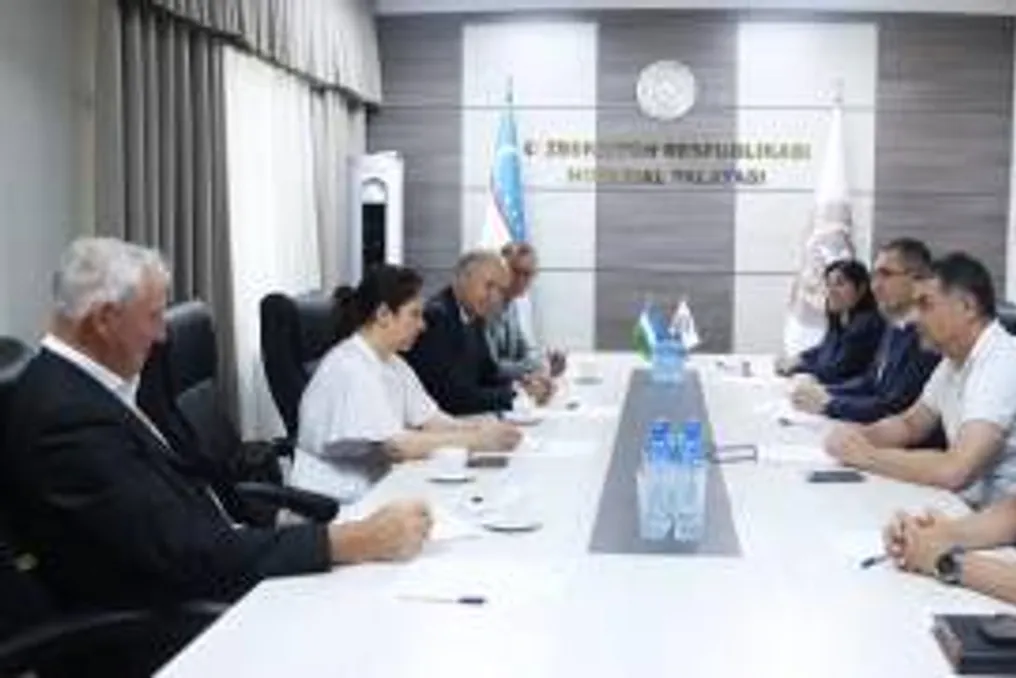
A meeting took place at the Notary Chamber of the Republic of Uzbekistan involving experts from the International Monetary Fund (IMF). The event was attended by the Chamber's leadership, headed by D. Ashurov, as well as IMF experts Jean-François Venn and William McClasky.
Discussion of Reforms in Notary Services
During the meeting, guests were provided with detailed information about the reforms implemented in the field of notary services in Uzbekistan over recent years. The parties also exchanged views on international experience regarding several issues.
Key Discussion Topics
Aspects such as the integration of the automated information system 'Notarius' with the information systems of state bodies, particularly data exchange with tax and cadastral authorities, were discussed. Furthermore, existing mechanisms for assessing the market value of real estate and the procedure for calculating personal income tax for individuals when buying and selling real estate were reviewed.
Format and Outcomes of the Meeting
The meeting proceeded in the format of active discussions and a 'question-and-answer' session. Participants exchanged opinions on practical issues related to the role and significance of notaries in documenting real estate transactions.
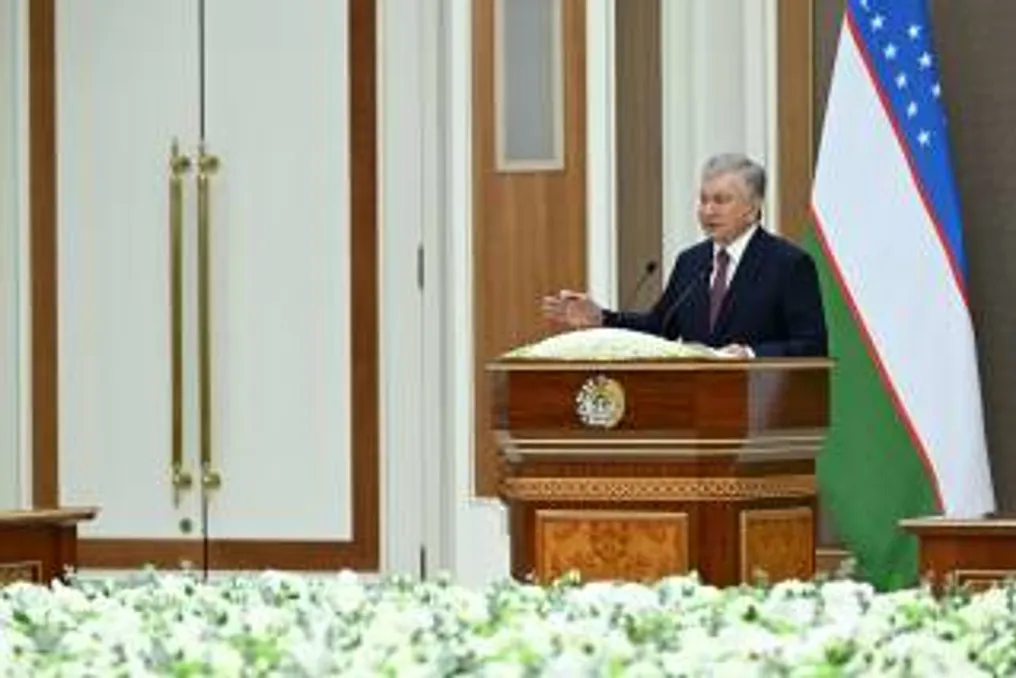
The head of state stressed that a change in the worldview and consciousness of leaders of organizations that apply sanctions is necessary. He also noted that all conditions are being created for people to start businesses and enter exports.
Financial Measures and Statistics
Currently, 51 ministries and departments have the authority to impose financial fines in 322 areas. Over the period 2024–2026, approximately three trillion sums in fines were applied.
Approach to Entrepreneurship
The President emphasized that leaders of organizations applying penalties must learn to provide opportunities for entrepreneurs and guide them correctly before imposing punishment.
Export and Trade Issues
The issue of reducing payments and fees for producers and exporters amid increased competition in external markets was also raised. An example was given where exporting one truckload of agricultural products requires spending up to 5 million sums on additional costs, including customs duties, fumigation, certification, and declarant services.
Instructions to Leaders
All ministers and sector heads have been instructed to submit proposals to the Presidential Administration for a sharp reduction in bureaucracy, fines, payments, and fees within one week, as well as for improving the business climate.
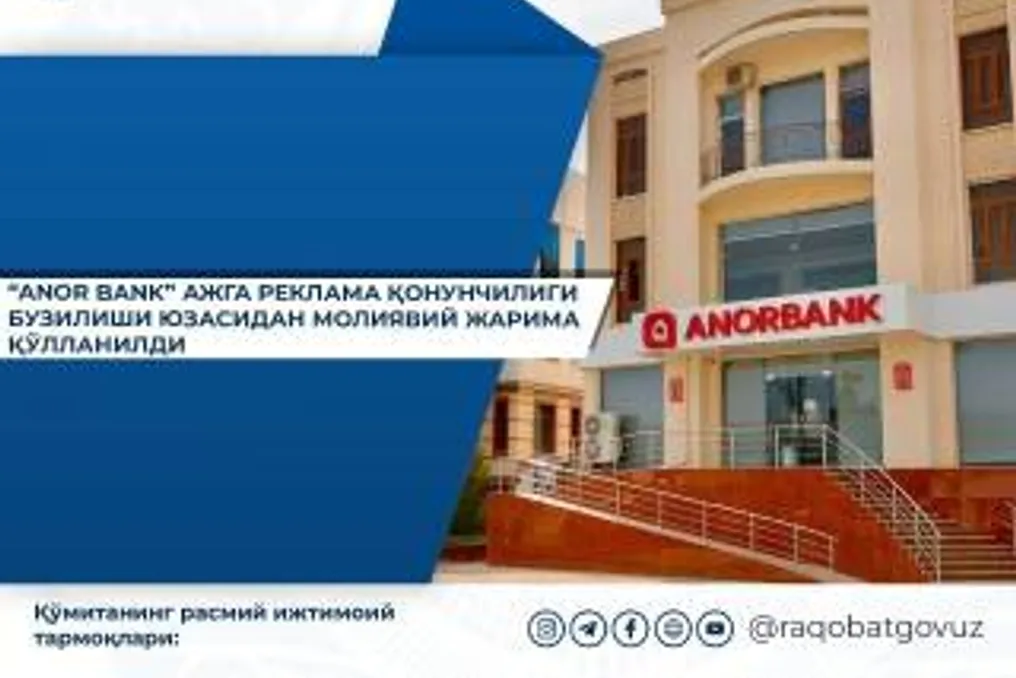
The Competition Committee learned about an advertisement posted by 'ANOR BANK' JSC on its Instagram social network based on a citizen's application from the Tashkent region.
Application and identified violations
The citizen's appeal noted that the advertisement regarding the promotion announced by the bank did not fully disclose the terms of the promotion. The investigation revealed that important information necessary for consumers to make decisions regarding financial services was not provided in the advertisement.
Violated laws and measures taken
The missing information includes the conditions for the promotion to be valid, the set limit, and information about the commission fee applied if the limit is exceeded. Therefore, the Committee's Special Commission initiated proceedings against 'ANOR BANK' JSC because the requirements of Articles 16, 21, and 43 of the Law of the Republic of Uzbekistan 'On Advertising' were violated.
As a result of reviewing the case, a financial fine was imposed on the bank. Additionally, the bank was issued an instruction that must be fulfilled to eliminate the violation and ensure that such situations do not recur in the future.