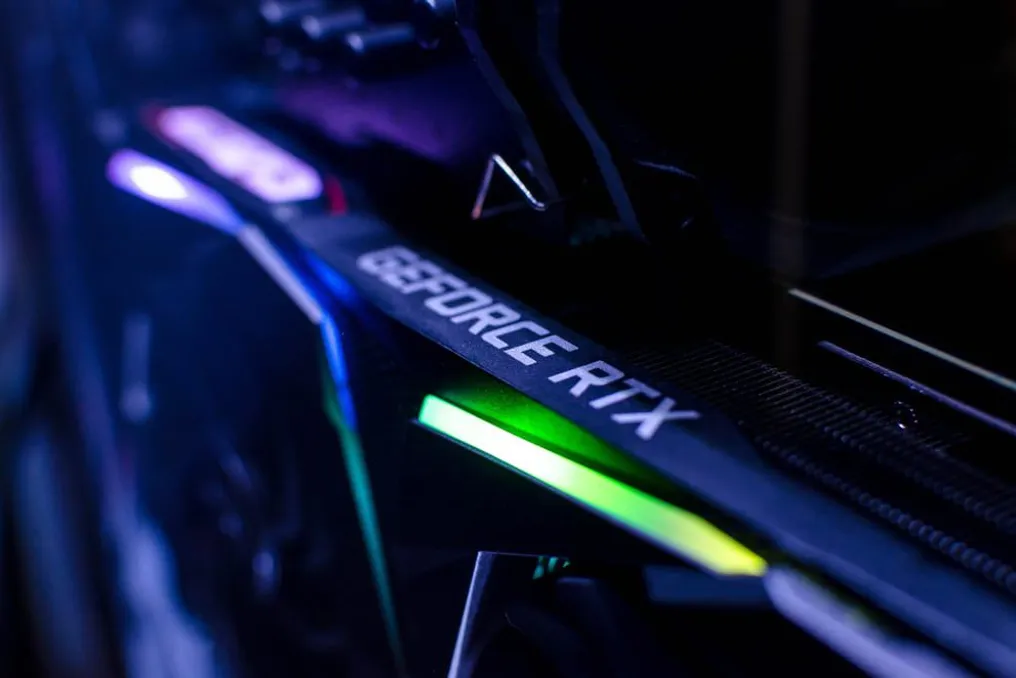
The space robotics company Lunar Outpost announced on Thursday, the 23rd, that it will incorporate Nvidia-developed Jetson chips into its next vehicle destined for the Moon. This project represents the likely introduction of graphics processing units (GPUs) onto the surface of Earth's natural satellite.
Technology and Lunar Mission
This robotic automobile will be transported in an Intuitive Machines landing module and propelled by a Falcon 9 rocket. It will utilize these electronic components to operate the laser detection system. The artificial intelligence architecture will work alongside conventional programs, allowing for autonomous interpretation of environmental data.
This initiative aligns with NASA's program, which provides funding to private companies to investigate the selenitic soil for strategic resources, such as water. The ultimate goal is to establish sustainable robotic infrastructure and operational conditions before the return of human crews, scheduled to begin in 2028.
Advantages of Artificial Intelligence
The focus on using these semiconductors lies in optimizing power consumption and their compact form factor. Justin Cyrus, CEO of Lunar Outpost, stated that the technical team is conducting comparisons between the Nvidia platform and traditional space flight systems to measure the benefits of graphics processing in critical scenarios.
The mission will take the robot to challenging areas, such as craters and the Reiner Gamma region, known for exhibiting magnetic anomalies. According to the company leader, combining deterministic algorithms with physical AI enables the fleet to make agile decisions in environments subject to cosmic radiation, severe lunar nights, and large temperature variations.
Technological Expansion and Timeline
In addition to terrestrial exploration, Nvidia technology will be used on a Firefly Aerospace satellite for image processing in orbit. The startup's leadership explained that the long-term goal includes building a permanent base, the realization of which depends on autonomous robots capable of executing large-scale tasks.
Deployments of smaller vehicles are scheduled for later this year. Justin Cyrus assessed that future plans include the Pegasus rover, designed for astronaut transport, but this awaits the release of the Blue Origin rocket, which recently faced technical issues, maintaining the goal of supporting human missions until 2028.