A series of materials from True South Africa questions common perceptions of the South African education system, demonstrating how it has managed to adapt and develop amidst significant population increase.
Scale of demographic changes
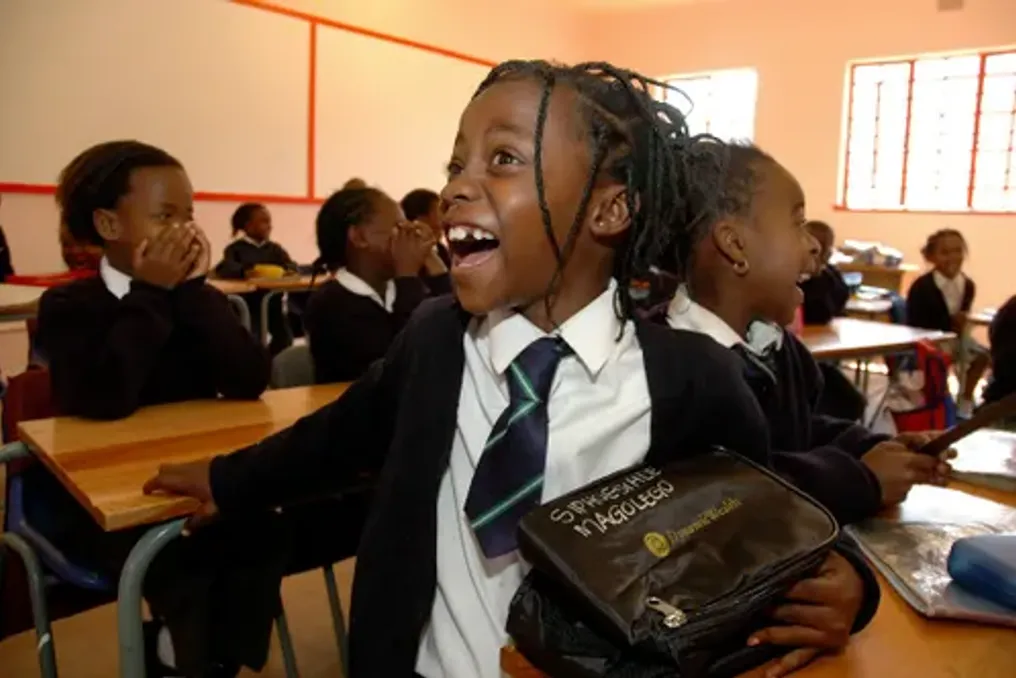
South Africans often assess the education system based on direct experiences, such as overcrowded classrooms, excessive teacher workload, or schools struggling to accommodate a growing number of students. These problems are real and should not be ignored. However, they raise a question of comparison: relative to what?
Since 1994, South Africa's population has increased by more than 50%, reaching over 63 million people from approximately 40 million. Each additional million required the creation of schools, classrooms, teachers, textbooks, and spaces in universities and colleges. Therefore, a serious assessment of education must consider not only the pressure on the system but also its ability to cope with one of the fastest surges in demand in the country's history.
Access and quality of education
Statistics indicate that while the system is undoubtedly under strain, it is performing significantly better than public perception often suggests. The initial task of democratic South Africa was ensuring children's access to schooling, and this issue has largely been resolved. Currently, only about 3% of children aged seven to eighteen do not attend school, and the vast majority complete compulsory years of education. Thus, the national focus has shifted from accessibility to quality.
When analyzing classroom capacity, critics often point to overcrowding as a sign of systemic collapse. However, the national student-to-teacher ratio paints a more complex picture. During the democratic period, it fluctuated within a relatively narrow range of 29 to 33 students per teacher. These figures reflect constant pressure, but not uncontrolled degradation. If the recruitment of teachers had failed to keep pace with the growth in student numbers, these ratios would have risen sharply, but this did not happen.
Institutional capacity and regional differences
Maintaining a generally stable student-to-teacher ratio while educating millions of additional children is proof of institutional strength. This means the government continued to appoint teachers, expand schools, and increase operational capacity solely to prevent further deterioration of conditions. Nevertheless, this does not mean every classroom is adequately staffed. National averages mask deep provincial disparities. The current student-to-teacher ratio varies from approximately 28 students per teacher in the Western Cape to around 33 in Limpopo, with several provinces falling in the 30 or 31 range. These differences are important because they directly affect the learning experience of students.
This principle applies to public spending as well. Contrary to the common belief that the government has abandoned education, the data suggests otherwise. Education continues to account for about one-fifth of total government expenditure, and basic education alone consumes approximately 14% of all government spending. This does not guarantee quality, as money itself does not ensure it, but it shows that education has remained one of the government's highest fiscal priorities throughout the democratic period.
Higher education and future reforms
Higher education shows a similar trend: more young South Africans now have access to university than ever before. This has inevitably intensified competition for places. Many applicants face rejection not because universities have become less accessible, but because demand has grown faster than capacity. Competition can feel like exclusion, but it is not the same thing.
The main takeaway from the available data is that the mandate of South African education has fundamentally changed. Thirty years ago, the priority was expanding access. Today, the priority is improving quality in a system that already covers almost every child. The report argues that reform must become more precise: strengthening teaching quality, eliminating provincial inequality, supporting weak schools, reducing pressure on students where it is greatest, and improving progression through the education system long before graduation.
Conclusion: choice between perception and facts
This is not a call for complacency. Many students still leave school without adequate literacy and numeracy skills. Many schools continue to face infrastructure, management, and teacher shortages. Educational opportunities remain deeply unequal, and these shortcomings require urgent reforms. However, reform begins with accurate diagnosis. Countries whose education systems have truly collapsed do not support near-universal school enrollment while simultaneously educating a population more than twice as large. They do not maintain a generally stable student-to-teacher ratio over three decades of rapid demographic growth, nor do they continue to allocate one-fifth of government spending to education.
The South African education system is not where it should be, but it is not where many South Africans portray it to be. It is a system under constant pressure, but it is a system that continues to function and retains the institutional capacity for improvement. Therefore, we face a choice not between complacency and despair, but between allowing perception to dictate policy, or allowing facts to determine it. The data shows that South Africa has not exhausted its educational potential; the current task is to realize it.