Employees of state kindergartens whose activities were temporarily suspended due to abnormal heat will retain their full salary. Furthermore, parents will not have to pay for the days when their children did not attend preschool institutions.
Employees of state kindergartens whose activities were temporarily suspended due to abnormal heat will retain their full salary. Furthermore, parents will not have to pay for the days when their children did not attend preschool institutions.
This information was provided by the publication Xalq ta’limi Info, citing the Ministry of Preschool and School Education. Previously, a decision was made in several regions of the country to temporarily suspend the operation of state preschool educational institutions due to extremely hot weather, which was done to ensure the safety and health of children.
When the issue of labor payment for staff of closed kindergartens arose, the Ministry of Preschool and School Education sent relevant directives to regional administrations. These instructions stipulate that employees must be paid their full salary for the period of forced downtime.
The department noted that according to Article 266 of the Labor Code, during downtime caused by reasons independent of either the employer or the employee, employees are entitled to at least two-thirds of the tariff rate. Nevertheless, in the current situation, the ministry has decided to ensure the preservation of full wages for employees.
It was also announced that parents will not be charged for the days when the child was absent from kindergarten due to the temporary suspension of work. If payment for this period has already been made, this amount will be deducted from the accruals for the following month.
It was previously reported on plans to introduce a Face ID system in state kindergartens in Uzbekistan, which is scheduled to come into force in 2027. This measure is aimed at strengthening control over how budget funds allocated for student nutrition are spent.
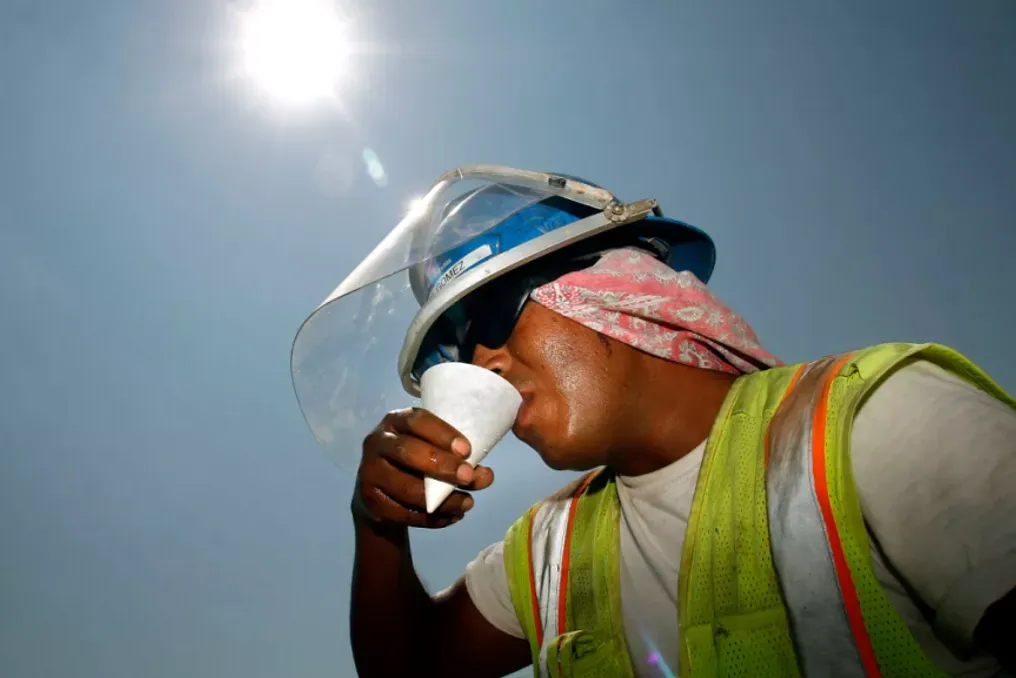
Uzbekistan authorities are urging a halt to mass work during the daytime due to extremely high air temperatures and require strict adherence to safety measures. Additional requirements have been introduced regarding how labor processes should be organized in open areas.
The State Labor Inspectorate warns that prolonged exposure to strong sunlight is dangerous and can lead to heatstroke, dehydration, and serious bodily function impairment. According to sanitary norms and Article 359 of the Labor Code, air temperatures exceeding 36 degrees Celsius are classified as hazardous for performing work outside.
For this reason, employers are strongly advised to avoid holding hashar events, as well as any other collective activities between 10:00 and 17:00. Instead, all necessary work tasks should be moved to safer hours—either early morning or evening after 17:00.
If postponing work is impossible, a special work regime must be implemented. This regime entails reducing working hours, alternating periods of work and rest, and ensuring personnel have drinking water, shade, necessary protective equipment, and first aid kits.
Particular attention must be paid to the health status of employees. If the first signs of discomfort appear, the employee must be immediately removed from work and receive qualified medical assistance. The Inspectorate also reminds that violating established labor protection standards and creating conditions that threaten people's lives and health will result in legal liability under Uzbekistan's legislation.
Furthermore, the critical importance of medical control is emphasized: employees who have not undergone a mandatory medical examination are not allowed to work in hot conditions. Employers are recommended to organize an additional check of their employees' health status.
Authorities in the Khorezm and Navoi regions of Uzbekistan have decided to temporarily suspend the operation of several state preschool educational institutions due to the ongoing abnormal heatwave.
According to data from regional departments of preschool and school education, all state kindergartens in the Khorezm region will be closed from July 14 to July 17, 2026. These institutions are scheduled to resume normal operations on July 20, 2026.
In the Navoi region, authorities have implemented selective closure measures. State kindergartens in the Uchkuduk and Nurata districts, as well as certain preschool institutions in the Tamdy and Kanimekh districts, will be closed until July 17, 2026. For the remaining districts of the Navoi region, officials are conducting inspections of preschool institutions to ensure they comply with sanitary and hygienic standards and have the necessary cooling conditions. Decisions regarding potential further closures will be made based on the results of these inspections.
The Ministry of Preschool and School Education clarified that decisions on the temporary suspension of kindergarten operations are made independently by each regional administration. These actions are based on assessments and recommendations provided by territorial units of Uzhydromet (the Hydrometeorological Service Agency), the Sanitary and Epidemiological Welfare and Public Health Service, and local Hokimiyats. The Ministry emphasized that there are currently no plans for a nationwide closure of all preschool institutions.
These regional closures follow emergency measures taken in the Republic of Karakalpakstan, where state and private kindergartens in Nukus and eight adjacent districts suspended operations starting July 13, 2026, due to extreme temperatures. According to Uzhydromet forecasts, an intense dry air mass from the south will move across Uzbekistan between July 13 and July 17, 2026. Daytime temperatures are expected to reach between +41°C and +43°C overall, with peaks of +44°C to +46°C possible in northern, southern, and desert areas.