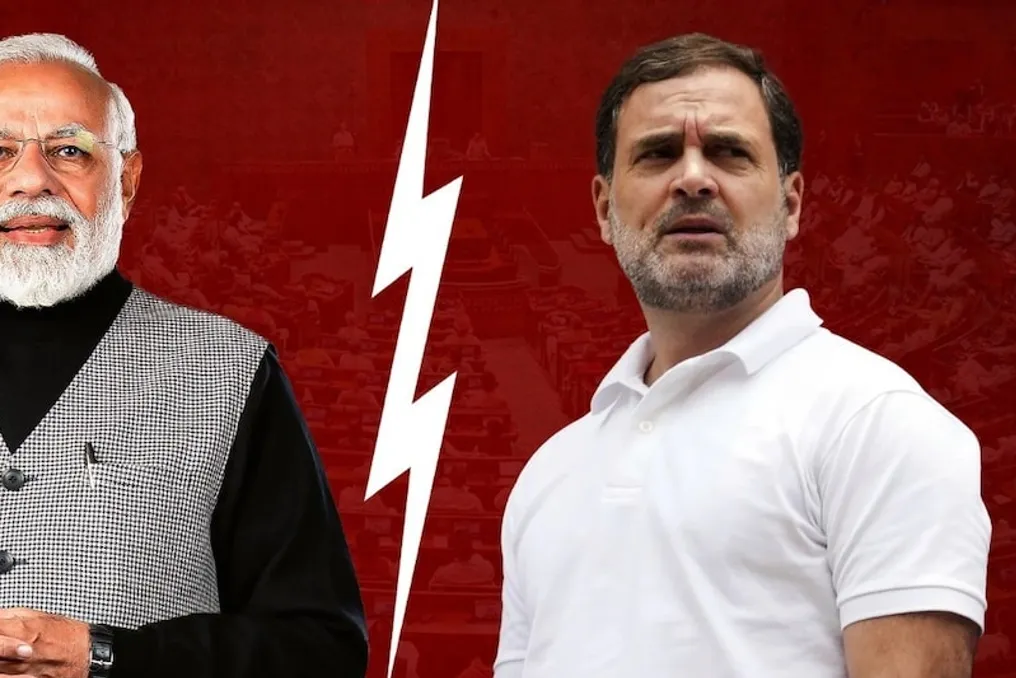
Issues such as exam leaks, improvements in testing, and employment have sparked political battles both on the streets and in parliament. While students protest at Jantar Mantar in Delhi, the opposition holds demonstrations at the Parliament building. The opposition's aggressive stance is hindering the autumn session. Although the opposition demands a discussion on the issue of exam leaks, the government is willing to discuss it, but it remains unclear why the discussion has not yet taken place in the chamber.
Demands for Discussion on Exam Leaks
The issue of exam leaks has caused strong outrage among the youth across the country, affecting the future of millions of young people and the credibility of years of effort. Both the ruling party (the government) and the opposition insist on an immediate and open discussion of this extremely serious topic, both in parliament and on the streets.
Position of the Government and Opposition
After opposition leaders, including Rahul Gandhi, the opposition leader in Lok Sabha, and Akhilesh Yadav, head of SP, staged a sit-in strike outside the Prime Minister's residence, the Modi government agreed to hold a discussion. Following the government's agreement, the opposition changed its position and now demands the discussion be held under Rule 267. Thus, the dispute between the ruling power and the opposition is stuck in a cat-and-mouse game.
Government's Readiness for Discussion
Due to the intensification of protests and the opposition's aggressive stance, the government is ready for a discussion in parliament. Bharatiya Janata Party (BJP) Chairman Nitin Arvind stated that the NDA government is fully prepared to discuss the future of the youth and answer any questions. He accused the Congress and Rahul Gandhi and the entire opposition of evading discussion because they know their double game will become apparent in the chamber. Nitin Arvind openly challenged them, inviting them to discuss issues concerning students, youth, and NEET in parliament, but added that Rahul Gandhi and his circle would never come forward for discussion because their history is linked to inciting the youth. He emphasized that the NDA government has steered the youth in the right direction by promoting the development of startups, unicorns, and the concept of 'Atmanirbhar' (self-reliant India), whereas the opposition views the youth merely as pawns, while the NDA government and Prime Minister Modi are determined to secure the future of the youth.
Opposition's Demands for Discussion
Regarding the exam leak issue, opposition party leaders, including Rahul Gandhi, the opposition leader in Lok Sabha, met with Lok Sabha Speaker Om Birla and demanded a discussion. Subsequently, Rahul Gandhi and the leaders of all opposition parties staged a sit-in strike outside the Prime Minister's residence. Union Home Minister Jitendra Singh met with them and informed them that the government was ready for a discussion. However, after the government's agreement, Rahul Gandhi put forth a condition: first, Education Minister Dharmendra Pradhan must resign, and then the discussion should take place under Rule 267. Judging by the government's stance, it does not intend to push for Dharmendra Pradhan's resignation, which is the reason for the deadlock. Consequently, the main reason for the paralysis in parliament is not the discussion itself, but the rule and time under which it should take place.
Reasons for Deadlock Between Government and Opposition
The opposition insists on a discussion under a 'Stagnation Motion' or special Rule 267. They believe this issue is extremely urgent for the youth and cannot be mixed with other topics, thus demanding an immediate, separate discussion that suspends the work of the rest of parliament. The government, conversely, is ready for a discussion under general rules. The government states that regardless of how long the opposition raises the issue under general rules, the government is ready to answer all questions. This divergence in intentions leads to the absence of a discussion, as both sides aim to establish a political narrative.
Positions of Leaders and Rule 267
In the Rajya Sabha, opposition leader Mallikarjun Kharge directly stated that the Education Minister must resign first, followed by the discussion. The opposition also specified that they demand the discussion under Rule 267. In the Rajya Sabha, faction leader J.P. Nadda called the opposition's behavior irresponsible. Parliamentary Affairs Minister Kiren Rijiju also put the opposition in an awkward position in Lok Sabha, stating that as soon as the opposition sets conditions, it becomes clear that they are avoiding the discussion. This entire situation has made Rule 267 the center of debate. Although the government is ready for a discussion and has alternative procedural options, the opposition insists on Rule 267 in the Rajya Sabha.
'Battle for Narrative' and Political Credit
The fight for a parliamentary discussion on exam leaks is a cat-and-mouse game. Behind this struggle over rules lies a battle to establish political credit and narrative. If the opposition forces the government to concede on 'Rule 267' or a special discussion, it will be considered a major moral and political victory for the opposition, sending a message that the opposition forced the central government to capitulate and brought the youth issue to the forefront by suspending parliament's work. The government does not want to convey the message that it is under pressure from the opposition or that control over the planned parliamentary agenda is weakening. Conversely, if the discussion proceeds separately, the entire focus will be solely on the administrative failures of the government and the Ministry of Education, whereas a discussion under general rules would allow the government to showcase its achievements and criticize previous Congress governments.
Opposition's Strategy with Rule 267
Senior journalist Arvind Kumar Singh noted that with a discussion under Rule 267, the opposition can successfully implement its strategy by labeling the beating of students during protests as 'one of a kind'. Furthermore, a discussion under this rule involves voting, which allows for clarification of each party's stance. According to him, one of the main reasons for the opposition's insistence on demanding a discussion under this rule is to convey to students and youth what position each party holds regarding their protests and the use of force. Arvind Singh also mentioned that such a discussion under Rule 267 took place during the currency demonetization under the NDA government, as well as during the UPA Manmohan Singh government when the government conceded to the opposition's demand. Overall, there have been six or seven instances where a discussion under Rule 267 was held in the Rajya Sabha.
Essence of Rule 267 in Rajya Sabha
Rule 267 of the Rajya Sabha rules collection is related to the Stagnation Motion. According to this rule, if the Chairman permits a discussion on a specific matter, all items included in the day's agenda are postponed. This means that all proceedings, including the motion and the zero hour, are postponed, and only the topic for which the Chairman granted permission for discussion under the Stagnation Motion is discussed in the chamber.