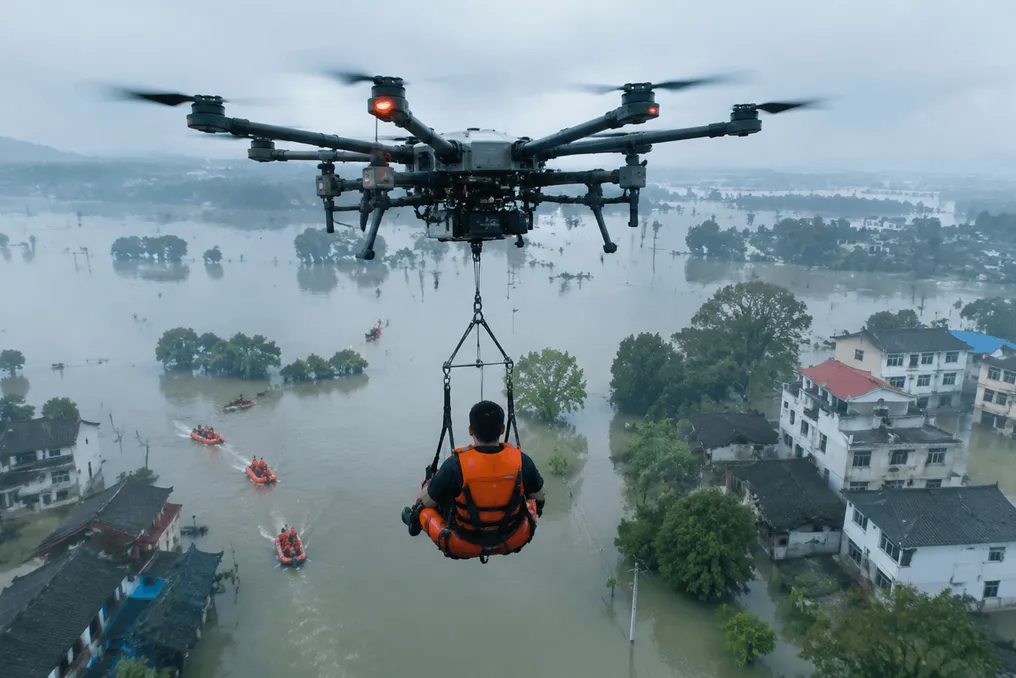
During severe flooding in Guangxi, heavy cargo drones violated standard safety protocols to evacuate stranded residents. These drones used ropes to lift people from rising floodwaters, which garnered widespread recognition on Chinese social media for prioritizing human life over established principles.
Rescue Operations and Drone Capabilities
The rescue operation in Guangxi served as an unprecedented real-world test of the capabilities of China's drone industry. The drones performed multiple functions: delivering essential supplies to isolated settlements, conducting aerial surveys to assess damage, restoring communication during emergencies, and, in the most dramatic cases, directly evacuating people using suspended safety lines.
According to civil aviation analyst Li Hanmin, this operation demonstrated that drone capabilities are being utilized much more broadly than in any previous natural disaster in China.
Scale of the Low Altitude Space Economy
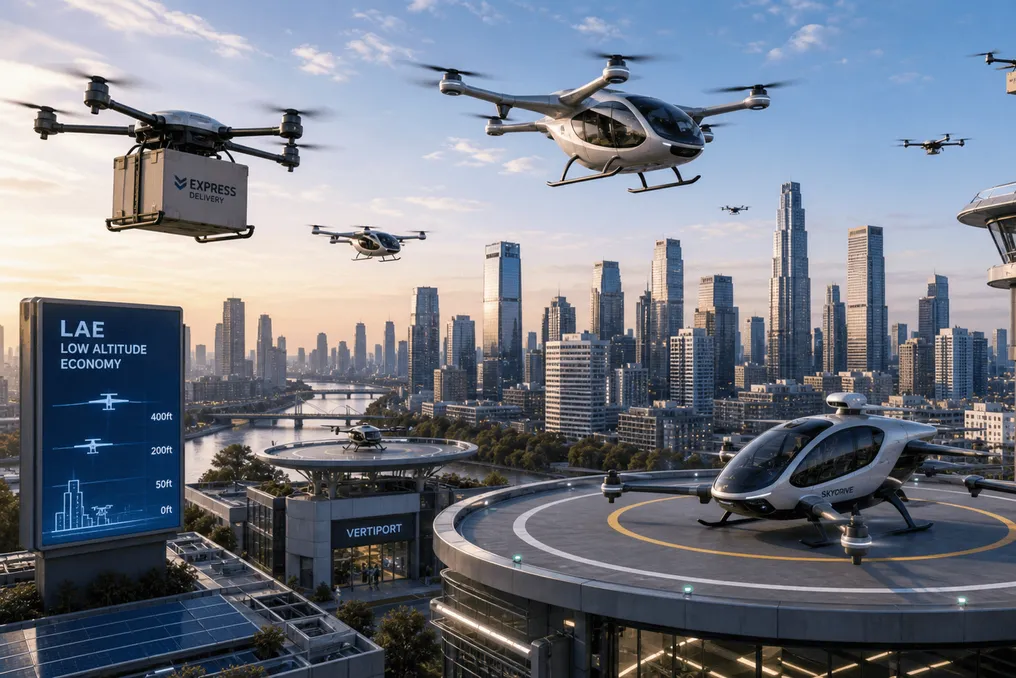
This operational readiness is built upon China's massive commercial drone ecosystem. By 2025, the low altitude space economy market in China is projected to reach $2.1 trillion (15 trillion yuan). Over 3.28 million civilian drones are registered in the country, with a total annual flight fund exceeding 45.3 million hours. The production value of civilian drones has reached $247 billion (1.761 trillion yuan).
China accounts for over 70% of global patents related to the low altitude space economy, making it a dominant technological nation. This deep industrial base ensured the availability of necessary equipment and trained personnel, enabling the disaster response.
Development of Regulatory Framework
As noted by Li Hanmin, the extensive fleet of commercial drones has shown its potential to rapidly transform into a public emergency response system. Heavy cargo drones capable of precise cargo delivery and even personnel transport represent a significant breakthrough in rescue capabilities in extremely isolated areas inaccessible to vehicles or boats.
The support system for these capabilities has evolved methodically. The low altitude space economy was first included in national planning in 2021, then declared a strategic developing industry in 2023, and has been featured in the Government Report for three consecutive years since 2024. Specialized government agencies, including the NDRC Low Altitude Space Economy Development Department and the CAAC Low Altitude Space Safety Department, have been established to coordinate strategy and regulation. This institutional structure creates conditions for technological flexibility, allowing drones designed for commercial logistics, agriculture, and surveying to be quickly redirected to humanitarian missions when lives are at stake.