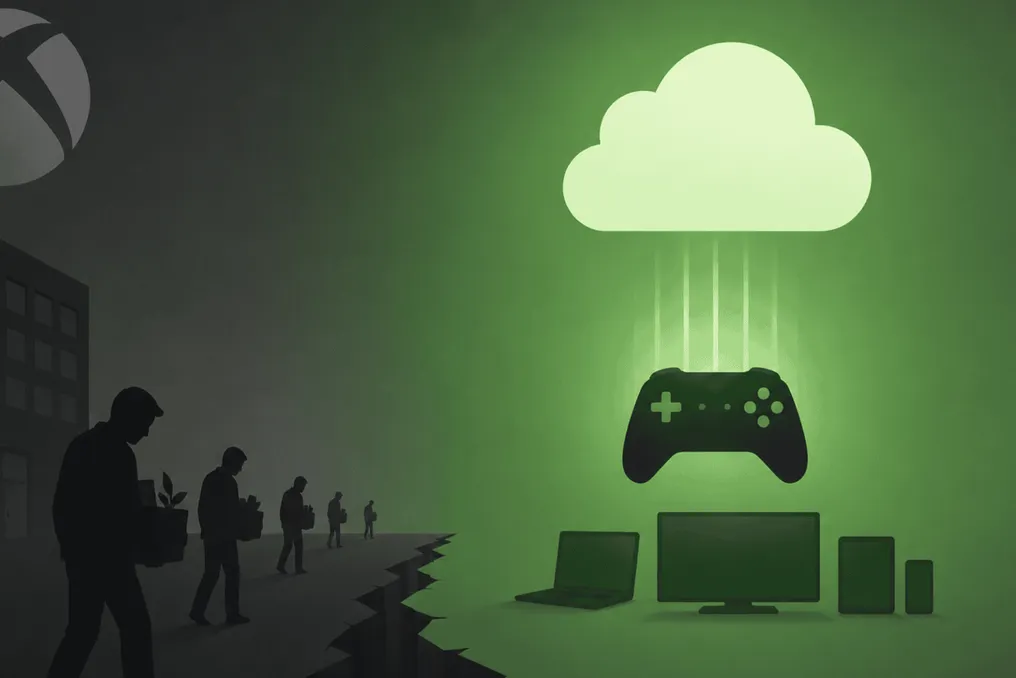
In early July 2026, the digital entertainment market was impacted by drastic changes in corporate approach, evidenced by the leak of a letter from Xbox's new CEO, Asha Sharma. This document revealed the layoff of 3,200 employees and the dismantling of studios, signaling that the company faces a deep crisis.
Business Model in Crisis
The chief executive publicly admitted that the company is losing 64 cents for every dollar invested. This demonstrates that the traditional model, based on subsidizing consoles and protecting ecosystems through exclusivity, has failed irreversibly.
The crisis has its roots in the mathematical exhaustion of the subscription format. Following a controversial price increase for Game Pass late last year, the service registered a significant user churn, indicating that the promise of an unlimited catalog reached an adoption limit. Concurrently, real industry growth has moved away from conventional hardware, migrating to user-generated content platforms, where companies like Roblox achieved an impressive 60% net revenue growth in the sector outside of China since 2021.
Operational and Financial Challenges
Additionally, operations faced an unprecedented scenario in the supply chain, intensified by the current global fervor for artificial intelligence. The uncontrolled demand for corporate chips drastically raised video game production costs, undermining operating margins and forcing an urgent shift towards efficiency.
As investigated by editor Lewis Packwood in specialized press, Sharma's new administration removed Xbox's cultural immunity, subjecting the division to the same financial rigor as any IT department. This justifies the historic decision to return entire studios to autonomy and distribute super franchises on competing platforms, aiming to stem immediate losses.
Implications for the Market
For those following the corporate landscape, the main lesson is to recognize that this is a unique moment. The choices made under such financial pressure will not only define the cash flow for the next quarter but also determine the health and survival capacity of the brands over the next five years. Prioritizing immediate profits over structural investments can cause severe damage to the future, creating a difficult-to-recover technological gap.
The constant increase in technological costs suggests that consumers will no longer be able to afford the high price of domestic premium hardware. The vision presented points to cloud gaming as the inevitable solution to balance this equation, a position actively defended since 2024, and which is consolidating as the only viable means to overcome manufacturing crises and ensure ecosystem sustainability, until a new technology emerges capable of changing the rules of the game.