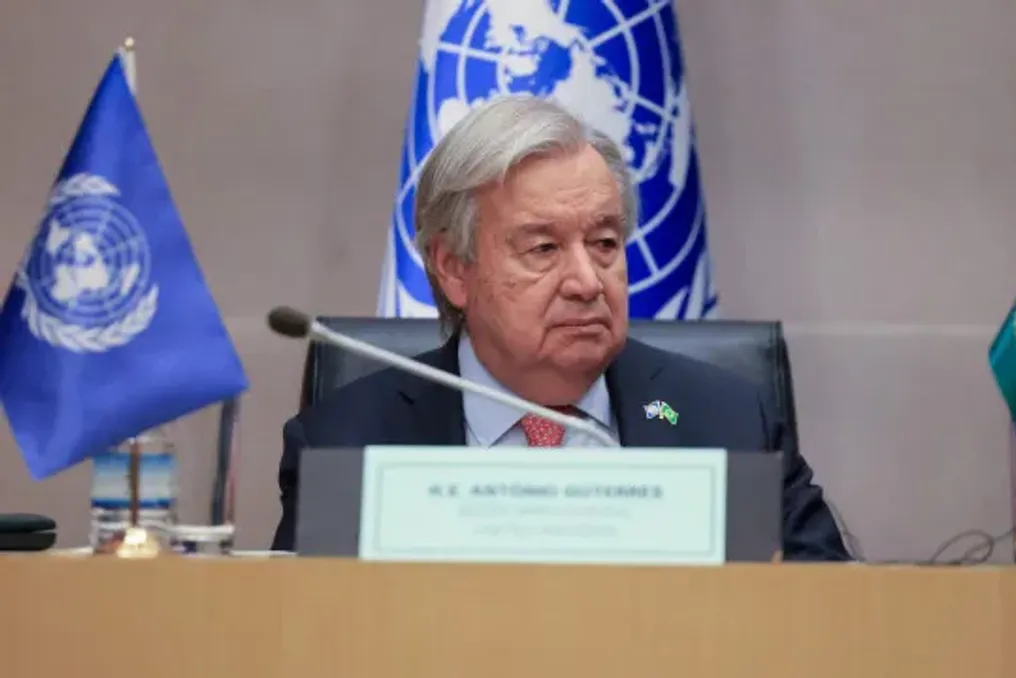
During a high-level discussion at the UN Security Council on the link between natural resources and conflicts, Guterres noted that the control and use of these resources globally are fundamentally changing the causes, dynamics, and outcomes of wars. He emphasized the growing strategic importance of critical minerals such as lithium, cobalt, nickel, and rare earth elements.
Geopolitical Competition and Humanitarian Consequences
The increasing demand from global markets opens vital opportunities to stimulate development in producing countries. However, according to Guterres, this also provokes intense geopolitical competition, intensifying pressure on concentrated supply chains and fueling conflicts, which leads to serious humanitarian consequences.
The UN leader explained that 'too often the revenues from illegal exploitation of natural resources make the world unattainable.' He stressed that such exploitation strengthens armed groups and criminals, links local violence to regional and international networks, and weakens incentives for political compromises.
Conflict Examples
As examples, Guterres cited eastern Democratic Republic of Congo (DRC), where armed groups benefited from illegal mining and smuggling of minerals, while civilians paid the price for the ongoing conflict. He also mentioned Sudan, where fierce struggle for political and territorial dominance was fueled by the exploitation of natural resources—mainly gold and gum arabic—leading to atrocities and the displacement of millions of people.
The UN Security Council has long recognized that the illegal trade and exploitation of natural resources play a significant role in financing armed groups. Measures adopted include sanctions regimes, particularly concerning the DRC, Libya, and the terrorist group Al-Shabaab, aimed at restricting illegal resource trade and preventing the use of revenues to finance violence.
Four Priorities for the Future
Looking ahead, Guterres outlined four urgent priorities in this area, starting with justice. He called for ensuring that mineral development brings fair and sustainable results to resource-rich countries and communities. He stated that it is time to break the 'age-old pattern where resources are extracted, value is captured elsewhere, and impoverished communities are left behind to deal with environmental and socio-economic damage.'
The former Prime Minister of Portugal emphasized that nowhere else is the deficit of sovereignty as great as in Africa. There, the long-term consequences of colonialism, coupled with governance challenges, place states in an extremely disadvantageous position when trying to extract or reinvest the value contained in their natural resources.
Secondly, Guterres advocated for prevention by curbing illegal flows and increasing transparency across all mineral supply chains. Thirdly, he pointed to the peaceful resolution of disputes, especially those concerning natural resources disagreements that affect peace prospects. And fourthly, he addressed the climate issue, demanding guarantees that preventive and political efforts take climate analysis into account. He concluded his remarks with the phrase: 'Enough exploitation. Enough plunder.'
The Role of the Democratic Republic of Congo
The session was chaired by the DRC Foreign Minister, Theresa Kaikambwe Wagner. The DRC holds a central place in the global energy transition, possessing some of the world's largest reserves of critical minerals, including coltan, cobalt, copper, lithium, and rare earth elements. According to World Bank data, the country holds approximately 60% of the world's coltan reserves, cementing its leadership as the largest individual producer. It supplies 50% to 70% of the world's cobalt and is the second-largest copper producer globally, while also having the largest reserves of lithium in Sub-Saharan Africa.
These raw materials are used in many sectors, from electric vehicles and renewable energy systems to advanced electronics and defense technologies. Despite the country generating billions of dollars in mineral wealth, the DRC remains one of the world's least developed countries, ranking 171st out of 193 in the Human Development Index, with over 70% of the population living in extreme poverty. The Minister appealed to the Security Council to 'share experience, impart conviction, and offer a way forward,' asserting that the situation in the country demonstrates a 'global imbalance that can only be addressed by collective action based on justice and responsibility.'