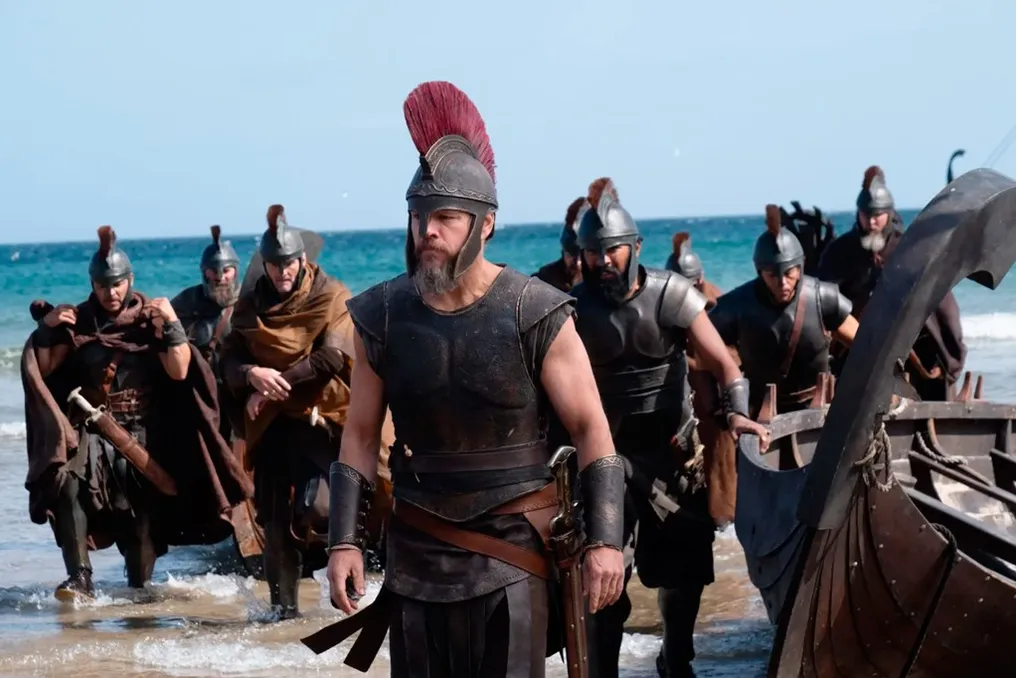
Approximately 3,200 years ago, the sudden collapse of several civilizations occurred in the Mediterranean, an event some attribute to enigmatic invaders.
Historical and Literary Reference
The new film The Odyssey, directed by Christopher Nolan and based on Homer's work, frequently mentions the dreaded 'Sea Peoples.' In the cinematic narrative, these invaders are presented as a mysterious threat arriving by sea, capable of devastating cities in the Mediterranean region, including Ithaca, home of Odysseus. The 'Sea Peoples' constitute a central element in Nolan's adaptation's final message, promoting reflection on the impacts of war on society.
The film also alludes to the notion of a 'collapsing civilization,' although this description may sound overly forced or anachronistic. This is because the movie clearly references a real historical event that occurred around the 12th century BCE, coinciding with the 'Bronze Age apocalypse.' Although the Trojan War is not historically confirmed, it is plausible that it was inspired by real conflicts of that era, whose narratives were preserved in oral tradition and later recorded in Homer's poems, The Odyssey and The Iliad, in the 8th century BCE.
The Decline of the Ancient Mediterranean
After the supposed conflict, the Mediterranean area, which previously housed complex, powerful, and highly interconnected societies, plunged into an intense process of decline. The destruction or abandonment of cities, a sharp reduction in population, the fall or cessation of artistic and literary production in various locations, and the disappearance of trade networks were observed. In just a few decades, the way of life known by these populations came to an end.
One possible factor cited is the action of the 'Sea Peoples,' mysterious attackers from the ocean, who could have contributed to the destruction of empires through violence. However, the exact identity of these sailors remains unknown to this day. Nevertheless, historians have challenged this simplistic view in the last decade, suggesting that the collapse was the result of a complex, multifactorial process, and that the 'Sea Peoples' may have been more victims than aggressors.
Characteristics of the Bronze Age
The Bronze Age covers the historical period of Eurasia between approximately 3300 BCE and 1200 BCE, characterized by the use of bronze, an alloy composed of copper and tin, in making tools and weapons. During this period, the Mediterranean and the Near East were the stage for great civilizations. Egypt stood out as one of the largest regional powers, with its New Kingdom representing a peak of pharaonic power.
In central-east Turkey today, the Hittite Empire flourished, a military and economic power. In contemporary Greece, there were the Mycenaeans, considered 'proto-Greeks,' organized into independent kingdoms such as Ithaca, Mycenae, and Thebes, a civilization depicted in The Odyssey. On the island of Crete, Minoan society held dominance, while in Mesopotamia (modern Iraq), Babylon and Assyria were the main powers. There were also the Canaanites in the Levant region and the Cypriots on the island of Cyprus.
It is noteworthy that these civilizations maintained direct contact, functioning as a kind of 'mini-globalization,' sustained by extensive trade networks, diplomatic and political relations, military alliances, and marriages between royal families. However, in the 12th century BCE, this structure underwent a drastic change. Important civilizations, such as the Hittite Empire and the Mycenaean kingdoms, disappeared, while others declined, with deserted cities and the adoption of more modest lifestyles for long periods. The economic and political interconnection of these societies was widely dismantled, marking the collapse of the Bronze Age.
The Question of the Sea Peoples
Historically, the 'Sea Peoples' were blamed for this event. Records indicate that attackers from the ocean invaded several kingdoms, resulting in massacres, looting, and urban destruction. The trail of chaos left by these enemies, whose identity was never certainly determined, contributed to the collapse. However, this perspective has been challenged by specialists in the last decade.
The best records on the subject come from Egypt, where pharaohs documented attacks by maritime enemies, which were eventually repelled. It is important to note that Egyptian records do not use the term 'Sea Peoples'; this concept was coined by 19th-century scholars. The original texts provide specific names for these invaders, such as Denyen, Peleset, Shekelesh, and Sherden.
Although the Egyptian names do not completely solve the mystery, there is a consensus that they were distinct peoples originating from various locations. The term 'Peleset' may correspond to the Philistines, mentioned in the Bible as adversaries of the Israelites, with the most accepted hypothesis being that they originated from Mycenaean or Cretan areas, migrating to the Mediterranean coast where Israel and Palestine are today. 'Sherden' may refer to Sardinia (Italy) and 'Shekelesh' to Sicily (Italy).
It appears that Egypt was invaded by groups originating from peripheral regions of the great Bronze Age empires. The pharaohs managed to ward off the threat, but these same peoples apparently caused damage to other Mediterranean societies, such as in Greece, Turkey, and the Levant, potentially leading to the end of some of them.
Modern Archaeological View
Currently, most experts agree that the collapse was a multifactorial phenomenon, and that the 'Sea Peoples' represented more of a consequence than the primary cause. Historian Eric Cline, a professor at George Washington University (USA) and author of '1177 BCE: The Year Civilization Collapsed,' supports this thesis.
Archaeological investigations have revealed evidence of severe drought, which may have lasted for years or decades, leading to a drastic decrease in food production and the spread of famine, causing mass deaths. Documents from different societies record this scarcity, including letters sent to Egyptian pharaohs by kings of other empires requesting grain to save their subjects. Egypt, being the largest economic power, provided assistance to other Mediterranean powers.
Agricultural failure may have forced populations from severely affected areas to migrate in search of more fertile land, constituting the 'Sea Peoples' who arrived in large maritime contingents. From this perspective, they resemble 'climate refugees' more than 'barbarian invaders,' although their arrival was met with conflict in most places, contributing to the violence of the time.
However, these incursions are not seen as the sole or main reason for the collapse. This interpretation considers the arrival of these peoples as a symptom of a complex framework. In addition to drought, famine, and invasions, epidemics and natural events, such as earthquakes, may also have contributed to this 'perfect storm' of factors, according to Eric Cline. Despite the collapse, humanity did not disappear; there was a profound reorganization. In the subsequent power vacuum, Phoenician civilization prospered as a prominent commercial and seafaring power in the region for centuries.