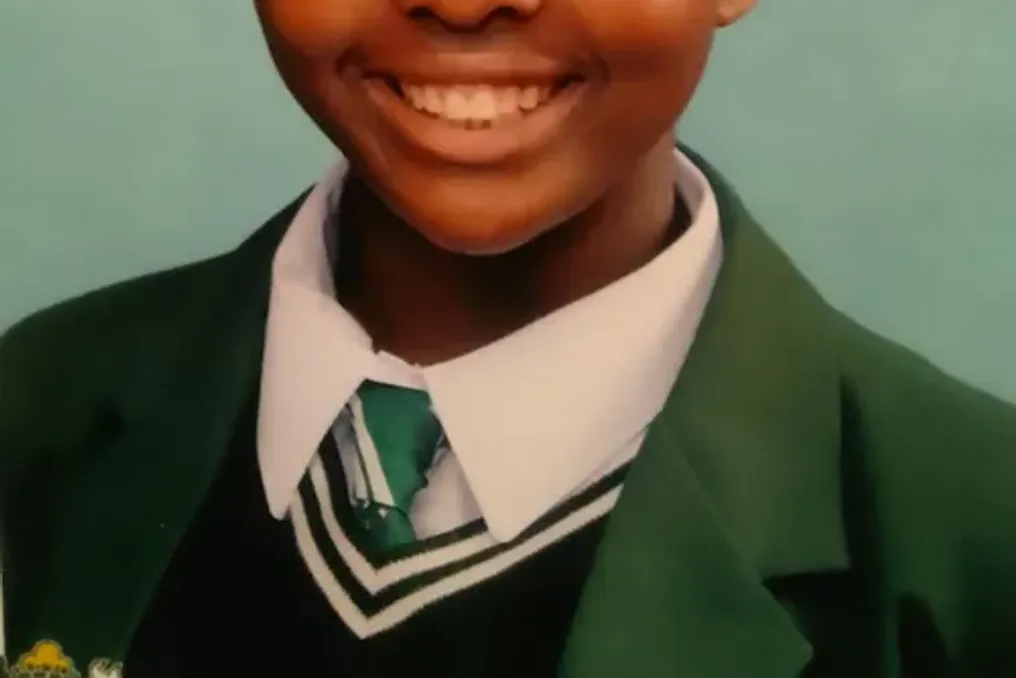
Ragini Bubble Pillai, a 14-year-old student from Midrand School, has been chosen as the sole representative of South Africa to participate in the historic international space mission ShakthiSAT, which will take place in Uttar Pradesh, India.
Ragini Bubble Pillai, a 14-year-old student from Midrand School, has been chosen as the sole representative of South Africa to participate in the historic international space mission ShakthiSAT, which will take place in Uttar Pradesh, India.
This achievement places her among an elite group of young women from around the world who are shaping the future of science, technology, and space exploration. The global initiative, led by Dr. Shrimati Kesan, founder and CEO of Space Kidz India, aims to inspire the next generation of young scientists, engineers, innovators, and global leaders. This is achieved through practical exposure to space science, satellite technology, leadership, innovation, and international collaboration.
For Ragini, a 9th-grade student aspiring to be either an astronaut engineer or a military engineer, this selection was the culmination of years of curiosity about the night sky, months of intensive preparation, and determination to build a career in STEM despite financial difficulties. She was informed of her selection after successfully completing 550 online tasks for the ShakthiSAT mission, which were designed to test the abilities, resilience, and dedication of applicants from around the world.
Ragini shared that her love for space developed long before she understood mathematics or engineering principles. She mentioned that with her family, they use apps and websites to track the movement of planets over the Johannesburg sky and observe the passage of the International Space Station from their garden. She was able to identify numerous constellations and planets, and noticed Orion's Belt from an early age. She greatly enjoys watching planetary movements, as well as lunar and solar eclipses, which sparked her interest in the structure of the universe and how satellites, rockets, and space stations are built. This curiosity eventually turned into a passion for aerospace engineering.
Ragini describes astronomy as something integrated into her family's daily life. She notes that observing the sky at night or early in the morning, wrapped in blankets with hot water bottles to watch meteor showers, is a common practice for her family. She recalls that her mother, Radesini Pillai, used to look at the sky, and she does the same thing, which brings her peace and relaxation. Ragini believes her ambitions developed naturally, rather than due to one defining moment, especially thanks to her parent's interest in engineering.
Despite her young age, Ragini has already begun encouraging other young people in South Africa to consider careers in science and engineering. Earlier this year, with the help of adults, she assisted in organizing outreach events for the South African National Space Agency (Sansa) at three schools: Midrand School, Halfway House Primary School, and Kurro Midrand School. This initiative introduced about 1000 students to South Africa's growing space industry and encouraged them to engage in mathematics, science, and STEM careers. Ragini emphasized that interacting with professionals helped her understand what she wants for the future.
Ragini thanks the strong women in her life for showing her that engineering has no gender barriers. She mentions that her mother is an engineer and a self-taught mother, and her Austrian godmother, Eleonora Lichteneker, is also an engineer. She says that independence is encouraged in the family: children do painting, lawn mowing, furniture assembly, and household repairs. Since they live in a single-parent household, everyone participates in chores, and the parents want them to be self-sufficient.
The selection process for the ShakthiSAT mission was rigorous. Candidates had to complete 550 educational tasks, many of which went beyond the school curriculum. Ragini learned about the mission through her older uncle, Pregi Pillai. She admitted that some topics, such as trigonometry and differential calculus, initially seemed insurmountable to her because she had never studied them before. However, she asked for help and tried her best, understanding that network support is crucial.
She noted that the experience showed her how much more there is to learn, including Python and C++ programming, as well as advanced mathematics. Upon receiving the acceptance letter, she felt mixed emotions—excitement, pride, and fear. Her mother's advice helped her change her perspective: success depends not only on IQ but also on perseverance, tenacity, and endurance. Among her main goals is helping to build a real satellite planned for launch in October 2026. Ragini believes that space travel will become as commonplace in the future as air travel is today. Although the ShakthiSAT mission sponsors Indian components of the program, Ragini and her family must raise funds independently for international travel, which was emotionally challenging, but she decided to focus on opportunities rather than fears.
Left-arm over-bowler Kwena Maphaka of Proteas is preparing for a new international season, aiming to regain his form. Arriving at the Rajasthan Royals camp before the last Indian Premier League (IPL) season, he found that he is no longer the youngest player in the squad, despite not yet turning 20.
A new young phenomenon has joined the team—fifteen-year-old powerful batter Vaibhav Suryavanshi. He demonstrated outstanding results in the IPL, becoming the tournament's top scorer. Maphaka shared his thoughts with Independent Media, noting: 'Yes, he makes me feel a bit older.' He added that interacting with Suryavanshi is enjoyable because he plays significantly above his age.
Maphaka highly praised Suryavanshi's talent, calling him a once-in-a-generation player. He noted the purity of his shots and immense potential, expressing hope that Suryavanshi will 'ignite the cricket world.' Previously, Maphaka himself was quickly promoted to the Proteas squad after his performance at the 2024 U-19 World Cup, becoming the youngest debutant in three formats (Tests, ODI, and T20I).
However, Maphaka's transition into international cricket has not been entirely smooth. Last season, a hamstring injury forced the left-arm over-bowler to miss tours in Pakistan and India in white-ball formats. Although he has fully recovered, the lack of playing time has lowered his standing in the national fast bowling queue, resulting in participation in only two matches during the T20 World Cup in India this year.
With the new international season approaching, Maphaka is determined to re-establish himself in the Proteas squad. He stated that he is looking forward to the season, as last year was interrupted by injury, preventing him from participating in many planned events. He emphasized the importance of maintaining the current pace over the summer to continue developing his bowling skills. Maphaka expressed a desire to always remain competitive and help the team return to winning ways if selected.
A crucial part of any young cricketer's journey is having strong role models nearby. Maphaka thanks senior Proteas players like Kagiso Rabada and Lungi Ngidi for their support during uncertain times. He acknowledged that the first seasons passed very quickly, and in the middle of the second season, he decided to slow down to assess his position and focus on personal growth as a player. He noted that KG (Rabada) and Lungi helped him in this process.
His natural talent has always been evident, but signs of maturity began to show during the Proteas tour of England as part of South Africa's 'A' selection last month. Maphaka took three wickets in two ODI matches against Lions, which could benefit Proteas in the anticipated highly competitive international season.