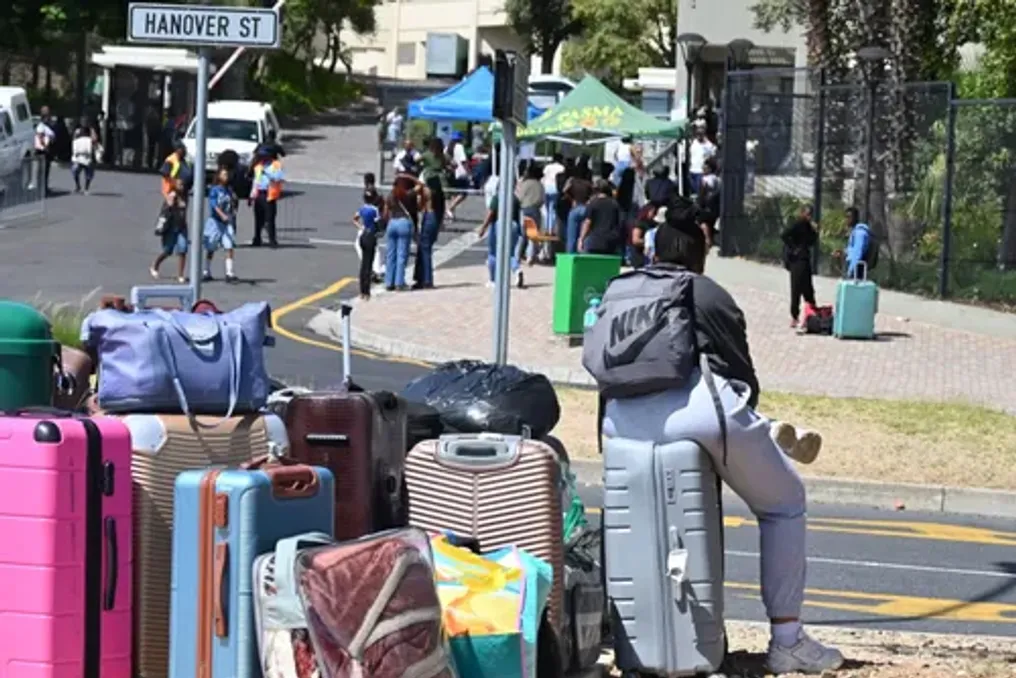
The Parliamentary Committee on Higher Education and Training is defending the controversial National Student Financial Aid Scheme (NSFAS) housing restriction. Simultaneously, student council representatives from ten universities are intensifying calls to abolish this limit.
Student Council Demands
Popular
The recent conflict arose after the student councils of the University of Cape Town (UCT), Wits University, the University of Johannesburg (UJ), and Stellenbosch University published a joint statement on Tuesday, July 21, demanding the immediate cancellation of the NSFAS housing cap. By Wednesday, six more institutions joined this statement: Fort Hare University, Tshwane University of Technology, Walter Sisulu University, University of Venda, Sol Plaatje University, and Nelson Mandela University, bringing the total number to ten institutions.
Student leaders stated that the lack of housing price regulation has created an 'unstable environment' for students from low-income and working-class backgrounds. This has led to housing debt accumulation, eviction threats, registration obstacles, and delays in academic progress. They insist on the immediate abolition of the limit, the introduction of student housing price regulation, and the urgent announcement of NSFAS housing rates for 2026.
Parliament's Stance
The Chairperson of the Parliamentary Committee on Higher Education and Training, Tebogo Letsie, rejected the notion that the crisis is linked to NSFAS. He argued that universities and housing providers should bear responsibility for charging excessive fees. Letsie stated that they have publicly announced a meeting with USAF, SAUS, SASVETSA, the Competition Commission, and real estate agents because they were not convinced that some institutional charges were justified.
He emphasized that student leaders should demand greater accountability from universities instead of criticizing the housing cap. Letsie noted that it is concerning when student leaders blame NSFAS while some universities continue to set fees significantly above the funding limit. He added that he is concerned that student leaders blame NSFAS when universities first impose exorbitant fees that often exceed the cost of accommodation near these student residences.
Examples of Violations and Plans
Letsie also pointed out that some universities continue to rent out housing exceeding the limit despite non-compliance with compliance requirements. As an example, he cited the Ekhaya residence rented by CPUT, noting that it charges significantly above the limit and does not meet requirements in many aspects. He reported that university reports indicated that students there should have been removed long ago, yet they remain, and the rent remains above the limit.
Furthermore, Letsie refuted claims that Parliament had not responded to student leaders' requests for a meeting. He stated that it is incorrect to say that any SRC invited them to a meeting with the Competition Commission. He recalled that during the meeting with UCT, a subsequent meeting with all stakeholders was mentioned for either the third or fourth semester.
Support for the Cap and Colloquium
In a statement released on Wednesday, Letsie announced that the majority of members of the Committee on Higher Education and Training support the implementation of the NSFAS housing cap, viewing it as a mechanism to regulate student housing prices and promote greater affordability and fairness. He also announced a Colloquium on student housing in Parliament on August 28, where national student organizations, including the South African Students Union (SAUS) and the South African Students' Association for Technical and Vocational Education (SASVETSA), will be invited to present their proposals on the cap and broader student housing issues.