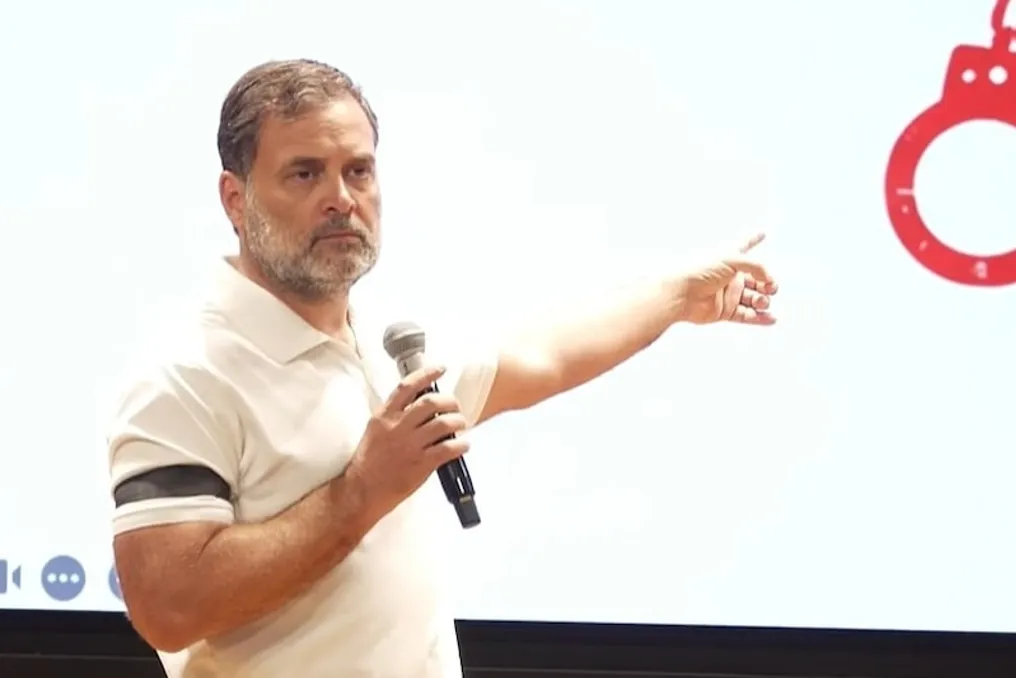
Amid the constant occurrence of examination material leaks and the general state of the country's testing system, the political climate is heating up. Opposition leader Rahul Gandhi spoke out against the government and the Ministry of Education during a press conference. He characterized the country's education system as being in a 'serious crisis,' asserting that approximately 152 incidents of exam leaks were identified over the last ten years, yet the government's report on bringing culprits to justice was 'zero.'
Popular
Major Leaks Over the Last Decade
Against the backdrop of claims regarding 152 leak cases, an analysis of the most significant and widely discussed incidents shows that the structure of national entrance exams and government vacancies is in a state of complete collapse. Below are ten major leak cases from the last decade that have severely damaged India's educational and employment system.
Incident Details
NEET-UG (2024): A leak occurred in the most prestigious medical entrance test, NEET-UG, at centers in Patna and Ghodra. 'Gangster groups involved in solving problems' managed to cram answers for students overnight before the exam. This affected over 2.4 million students, and the incident reached the Supreme Court, causing widespread public outrage.
UGC-NET (June 2024): Over 900,000 candidates were taking the exam for professor status and PhD degrees in June 2024. However, 24 hours after the exam concluded, the cyber team of the Ministry of Home Affairs (I4C) reported that the materials had been sold on the 'darknet.' The Ministry of Education was forced to cancel the entire exam the day after it was held for the first time.
UP Police Recruitment Exam (2024): In February 2024, the exam for over 60,000 constable positions took place in Uttar Pradesh. A few hours before the exam began, full answers started circulating in WhatsApp and Telegram groups. Following mass student protests, the state government canceled the exam. More than 4.8 million young people applied for this recruitment.
RO/ARO Exam in UP (2024): The ticket for the examiner and assistant examiner position exam was leaked from the examination centers and appeared on social media. After strong resistance from the youth, the Uttar Pradesh Public Service Commission (UPPSC) decided to cancel the exam.
Teacher Recruitment in Rajasthan (2021-2022): In Rajasthan, the teacher recruitment exam (REET Level 2) was stolen from a secure room in Jaipur even before the test was conducted. In 2022, candidates who were solving the leaked material in a moving bus were caught in the act. As a result, the REET 2021 exam was canceled, affecting over 1.5 million candidates.
SSC CGL (2017): During the online exam of the Staff Selection Commission (SSC CGL), computers in the examination centers were connected to external 'solvers' using remote access software. This led to months of 'SSC student movements' across the country, after which the case was handed over to the Central Bureau of Investigation (CBI) for investigation.
UKSSSC Recruitment in Uttarakhand (2022): Large-scale fraud occurred during the undergraduate level recruitment conducted by the Uttarakhand Staff Selection Commission (UKSSSC). The investigation led to the arrest of officials from the commission itself, employees, and several influential politicians. This caused administrative chaos across the state, and the exam was canceled.
Patwari Recruitment in MP (2023): After the results of the Patwari recruitment in Madhya Pradesh were announced, it was discovered that seven out of the top ten candidates came from a single examination center (NRI College, Bhind). Allegations of rigging surfaced, forcing the government to suspend the appointment process and form an inquiry committee.
Recruitment in Gujarat (2021-2023): In Gujarat, the tickets for the junior clerk and rural clerk exams were leaked on the morning of the test, and printed materials belonging to gang members were discovered. The future of about 950,000 participants was jeopardized, and the exam was canceled.
BPSC 67th Stage in Bihar (2022): Materials for the 67th preliminary exam of the Bihar Public Service Commission (BPSC) went viral on Telegram and WhatsApp groups just 15 minutes before the exam started. This marked the first instance where a high-level administrative exam like BPSC was canceled due to a leak, causing anxiety among over 600,000 candidates.
Reasons for Low Conviction Rate
Rahul Gandhi's assertion that 'there were no convictions' reflects a bitter truth about the testing and legal systems. In leak cases, minor local staff or 'solver groups' are often identified, but the primary responsibility held by chief organizers, educational magnates, and officials remains beyond the reach of investigation.
Before the recently enacted government law on public examinations (The Law on Prevention of Irregularities in Public Examinations) in 2024, there was no strong federal legislation in the country to combat leaks. Under old laws, accused individuals could easily obtain bail, and cases remained in court for years.
Conviction Status
Despite investigations by SIT and CBI being conducted in various states over the last decade, none of the major 'mafia leaks' have managed to secure a final severe punishment, such as life imprisonment, which could serve as an example to follow.