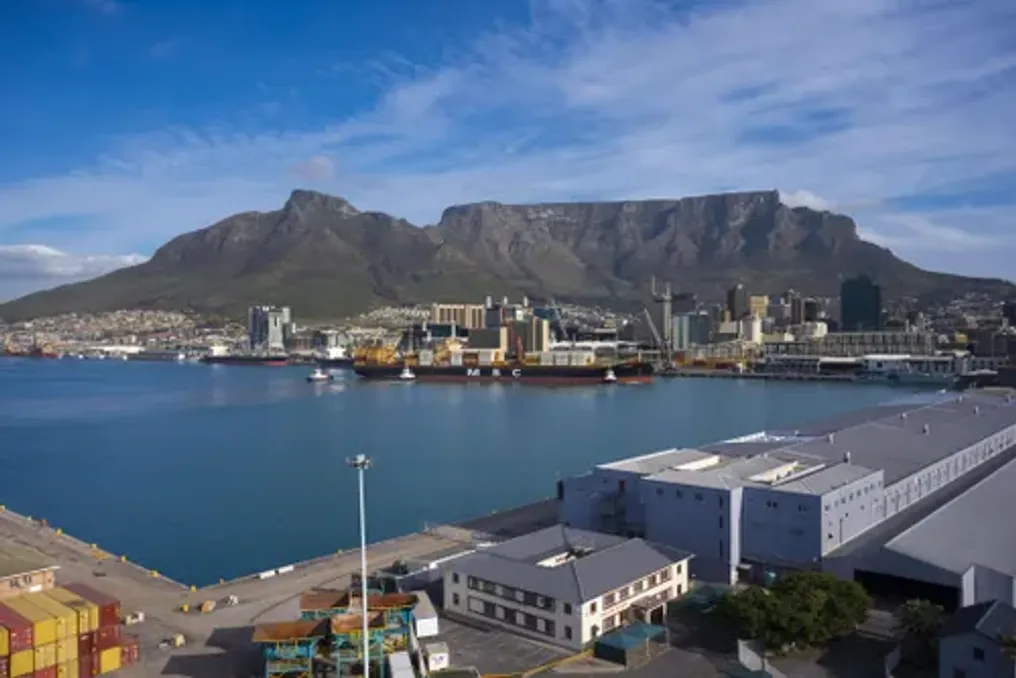
Transnet National Ports Authority has initiated a competitive tender for a 25-year concession to redevelop, finance, and operate a key multi-purpose terminal in the Port of Cape Town.
Project Details and Objectives
This long-awaited request for proposals, issued under Section 56 of the National Ports Act, concerns an extensive terminal spanning 119,849 square meters, located in the Duncan Dock area of the Port of Cape Town. This initiative marks a significant step in the country's effort to upgrade its freight network by engaging the private sector.
The strategic intervention occurs at a critical juncture for this maritime gateway, which has faced serious operational difficulties, accumulated maintenance issues, and wind-related disruptions, negatively impacting its global standing. Currently, the facility is managed by a private lessee whose contract expires in 2027, and it will be completely transformed following a successful tender.
Winner's Obligations and Improvements
The concessionaire winning the tender will be responsible for the design, financing, refurbishment, operation, maintenance, and subsequent handover of the modernized, energy-efficient terminal to the state at the end of the twenty-five-year agreement. Through the implementation of advanced digital systems, optimized terminal layouts, and modern handling equipment, the modernization aims to significantly increase throughput for containerized, dry bulk, and general cargo.
Reaction from Regional Authorities
Leaders of the Western Cape welcomed the announcement with unanimous praise, viewing the reform as an indispensable victory for regional economic growth and global competitiveness. Premier Alan Windey emphasized the direct link between port efficiency and job creation, noting the significant pressure logistical delays place on the province's export-oriented industries.
Premier Windey stated: 'Western Cape exporters depend on a fully functioning port. We have consistently called for reforms that enhance efficiency and strengthen South Africa's logistics network. I welcome Transnet's decision to invite private sector investment and expertise into the Port of Cape Town.' He added that 'improving port productivity goes far beyond logistics. A more efficient port helps businesses grow, attracts investment, expands exports, and creates jobs. This strengthens Western Cape's ability to compete globally and supports our goal of building a prosperous, growing economy.'
Economic Impact and Support
The Minister of Agriculture, Economic Development and Tourism for the Western Cape, Dr. Ivan Meyer, highlighted the vital dependence of local producers, manufacturers, and fishing industries on uninterrupted supply chains. Dr. Meyer noted that 'a more efficient Port of Cape Town ultimately affects jobs. When exporters can deliver their products to market faster and cheaper, businesses can scale up production, access new markets, and hire more people.'
He stressed that resolving terminal issues strengthens the entire value chain, starting from rural farms and manufacturing enterprises to logistics companies and retail stores. The need for reform is supported by an independent study commissioned by the Western Cape Government, which indicated that a fully efficient Cape Town port could unlock an additional 6 billion rand in exports, generate over 1.6 billion rand in tax revenue, and support approximately 20,000 jobs.
City Leadership Opinion and Current Metrics
Mayor Jordyn Hill-Lewis also supported the tender as a vital achievement for the port, which had previously ranked last in the World Bank's Container Port Performance Index. Hill-Lewis stated: 'We welcome Transnet's call to private sector partners to modernize and operate the multi-purpose terminal in the Port of Cape Town—this is precisely the major reform we have been demanding in the City for a long time.'
He pointed to the cumulative impact of private sector participation and Transnet's R3.4 billion capital investment initiative. TNPA's current manager, Ophelia Shabane, noted that the long-term concession will strengthen the terminal's overall capabilities, ensuring the port's flexibility and readiness for the future. She emphasized that the strategy is already yielding tangible results on the ground, aided by operational improvements and engineering solutions such as 10 permanently deployed shore tugs, which reduced downtime due to long swells by 92%. Shabane stated: 'The Port of Cape Town continues to achieve measurable progress in improving operational performance and service delivery. These achievements demonstrate the impact of targeted interventions, infrastructure investments, and close collaboration with terminal operators and industry stakeholders.'
Recent performance indicators show a stable recovery of operations. The turnaround time for the container terminal sharply decreased from 103 hours in 2023/24 to 74 hours in 2025/26, with current year averages reaching 58 hours. Concurrently, the average waiting time in anchorage dropped from 127 hours to 79 hours, accompanied by strong growth in container and bulk cargo segments. Potential tender participants can attend a non-mandatory briefing at the port on August 6, 2026, ahead of the official application deadline of November 20, 2026.
James Vos, a Mayco member for economic growth, noted that port reliability remains the biggest constraint to local business expansion, emphasizing that the harbour must leverage its location along leading global maritime trade routes to become a competitive advantage rather than a costly bottleneck. This shift is central to Transnet's broader 'Reinvent for Growth' strategy, aimed at expanding capacity along national logistics corridors. Private operators are already a cornerstone of the port system, managing 78% of all terminals handling bulk, general, liquid, and multi-purpose cargo across 82 leases nationwide. In the Port of Cape Town itself, nine out of eleven terminals are currently under private operation.