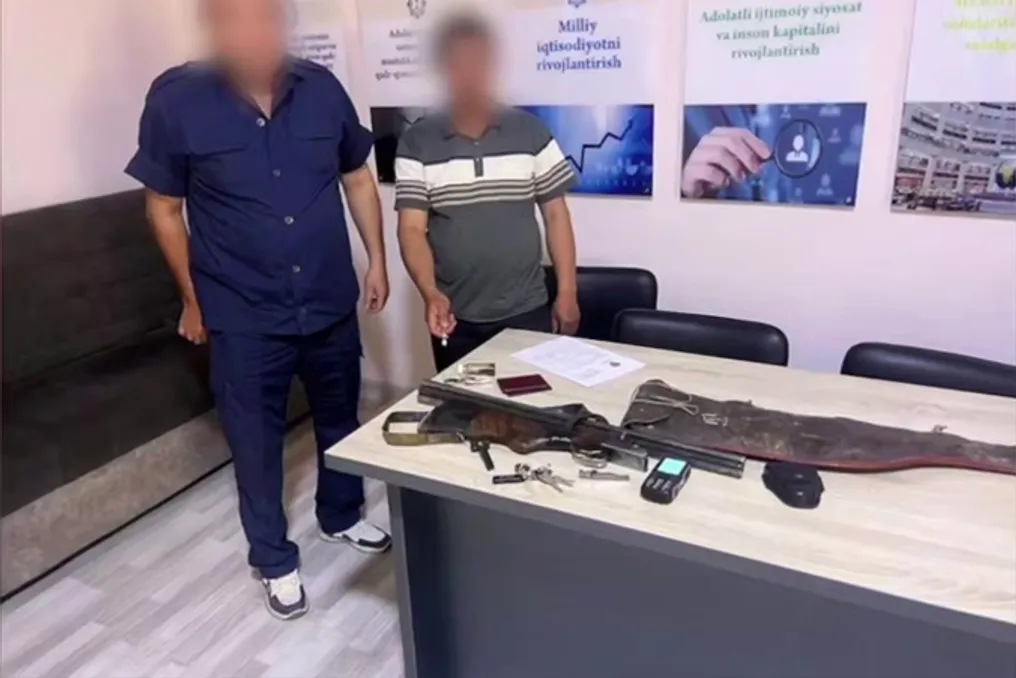
Illegal hunting of the Siberian mountain goat was recorded in the Akhangaran district of the Tashkent region. EcoPolice officers identified the violator after he attempted to sell parts of this rare animal's carcass.
Illegal hunting of the Siberian mountain goat was recorded in the Akhangaran district of the Tashkent region. EcoPolice officers identified the violator after he attempted to sell parts of this rare animal's carcass.
The raid was organized jointly by employees of the National Committee on Ecology and Climate Change and representatives of the district internal affairs department. Law enforcement agencies discovered the process of selling parts of the wild animal's carcass in the Kuksaray mahalla.
The investigation established that a local resident hunted the animal without the necessary permits, thereby violating the provisions of the laws 'On the Protection and Use of Wildlife' and 'On Hunting and Hunting Farming.' According to experts, the ecological damage caused to nature exceeds 6 million soms.
Currently, the case materials are being collected for submission to court, which will review the violator's actions and determine the appropriate measure of responsibility. It was also previously reported that two citizens of Uzbekistan are due to appear before a court in Latvia on charges of cruel treatment of a swan, which led to its death.
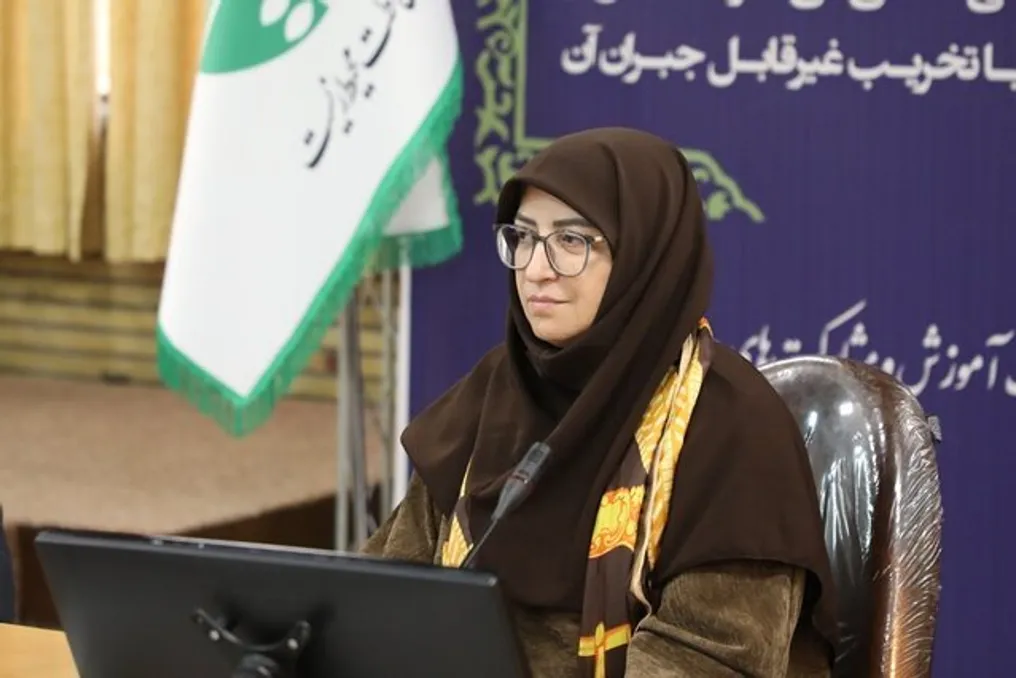
Shina Ansari, head of the Environmental Department, announced that Iran's main objective in participating in the 31st UN Climate Change Conference (COP31) will be to highlight the ecological consequences of military actions and call for increased international responsibility.
Speaking at a press conference on Iran's participation in COP31, Ansari emphasized that the annual UN Climate Change Conference is one of the most important global environmental forums. This forum provides the Islamic Republic of Iran with a valuable platform to present its position, capabilities, and challenges to the international community.
Ansari stated that Iran will provide documented reports based on factual data detailing the impact of military aggression on the environment, infrastructure, and public health. These findings will be presented to the international community to raise awareness and stimulate appropriate international measures.
According to Ansari, even before the start of hostilities with the US, the Environmental Department had warned international organizations and the United Nations about the escalation of military activity in the Persian Gulf region. Furthermore, the agency contacted the environment ministers of Persian Gulf countries, stressing that the region's fragile ecosystems cannot withstand the consequences of armed conflict.
Iran's reports will document a wide range of environmental damage. Such damages include explosions at fuel storage facilities, attacks on protected areas and ranger stations, destruction of oil and gas and petrochemical infrastructure, as well as impacts on nuclear facilities, destruction of natural habitats, wetlands, and biodiversity, and harm caused to civilian populations and critical national infrastructure.
Ansari further stressed that the ecological consequences of the war extend far beyond immediate damage. She warned that armed conflict leaves long-term and often irreversible marks on ecosystems, coastal habitats, wetlands, and biodiversity, the restoration of which will require significant time and resources.
It was also noted that the international community must recognize that the war has significantly disrupted Iran's efforts to reduce greenhouse gas emissions and decrease its carbon footprint. Ansari noted that the environmental consequences affect not only Iran but also neighboring countries and the global environment.
The transition to regenerative agriculture does not require an immediate, complete overhaul. In an episode for mentor farmers, researcher Lyane Erasmus explains how livestock management can be transformed starting with small steps, such as high-intensity grazing and adaptive methods.
For Lyane Erasmus, regenerative agriculture is not a passing trend or an imported concept. It is based on experience she gained living on a farm near Rustenburg in North West. There, managing pastures, livestock, and grazing throughout the seasons was a normal part of farm life.
Now, working in regenerative agriculture research, Erasmus is convinced that farmers can run a profitable business while simultaneously restoring the natural resources upon which agriculture depends. After studying animal husbandry and pasture science at the Free State University, she returned to her family farm and later joined a regenerative agriculture research team.
She recalls: 'I grew up on a farm and had the privilege of working with my parents and grandparents. When working with livestock, you had to plan for winter, manage camps, and think about how the animals moved across the land. This became the foundation of my understanding of farming.'
When she began working with the research group, her understanding of the farming system deepened. Although she first encountered the term 'regenerative agriculture' during her research work, she realized that many of its principles had always been part of good farming practice. In her view, regenerative farming involves studying nature's workings and attempting to imitate them in one's own system. The essence is building up, not destroying. Nature provides many things for free, and farmers must figure out how to use these natural processes to their advantage.'
Although regenerative agriculture is often associated with crop production and soil health, Erasmus notes that livestock farmers can also benefit from improved grazing management and more efficient use of pastures. However, she emphasizes the lack of a universal plan. 'There is no recipe that suits everyone,' she says. 'Every farmer has their own problems, climate, and environment. You need to look at your own farm and decide how to implement regenerative practices so that it matches your situation.'
At the Riger Boerderd in North West, implementing high-density grazing faced practical difficulties. The complex landscape hindered livestock movement, and additional fencing, watering points, pipelines, and pumps required careful planning and investment. Erasmus notes that supplying water on flat terrain is simple, but lifting it up a hill presents a different problem, requiring more powerful pumps, pipelines, and reservoirs.
The transition also required staff to learn and adopt the new grazing system. While both workers and livestock needed time to adapt, concentrating the herd in smaller paddocks improved herd management, reducing inspection time from half a day to one or two hours. Implementing a new way of farming also meant convincing family members of the viability of these investments. 'There was a family issue too. You need to communicate openly and ensure everyone understands the vision and the reason for the changes.'
For farmers interested in regenerative agriculture, Erasmus advises moving gradually instead of trying to transform the entire farm at once. She insists: 'If financial resources are limited, act step by step. Money won't bring itself. You have to work at it.' She considers patience and adaptability to be among the most important qualities for farmers adopting regenerative practices. 'It won't happen overnight. Tomorrow you might not have everything perfect, but you can do what you can using the resources you currently have. Don't despair if the process seems slow.'
Erasmus urges farmers to focus on long-term goals rather than the opinions of others. She believes that significant changes occur gradually, achieving improvements in farming methods and financial sustainability incrementally. For her, regenerative agriculture ultimately means making today's farming decisions that will make the land healthier and more productive for future generations.
The World Bank Group Executive Directors' Council has approved an initiative aimed at strengthening cross-border cooperation in water resource management in Central Asia. Grant funding of $20 million will be provided to the Executive Committee of the International Fund for the Saving of the Aral Sea (IFAS).
The Central Asia Water and Energy Cooperation (CAWEC) project is designed to enhance regional interaction, develop new investment areas, and improve mechanisms for joint management of transboundary water resources. It is estimated that approximately 40 million people in the region will benefit directly or indirectly from this project.
According to the World Bank, Central Asian countries face a number of systemic problems. These include outdated water infrastructure, limited institutional capacity in the energy and water supply sectors, and insufficient data exchange between states in the Amu Darya and Syr Darya river basins.
Climate change is placing additional pressure on the region's water sector. Over the past six decades, the area of glaciers in Central Asia has decreased by approximately 30%, negatively affecting water availability. The World Bank estimates that annual economic losses due to weak coordination of national water management systems exceed $4.5 billion.
Tatyana Proskuryakova, World Bank Regional Director for Central Asia, emphasized that sustainable management of shared water resources will be one of the key factors for economic growth and job creation in the medium and long term. She noted that the new project will help Central Asian countries intensify joint efforts to solve common water problems and strengthen regional partnership.
The project will be coordinated by the Executive Committee of the International Fund for the Saving of the Aral Sea in close cooperation with the fund's member states. By 2031, the project is expected to prepare up to six transboundary infrastructure projects affecting two or more Central Asian countries. These projects will focus on modernizing irrigation systems, improving water conservation and storage efficiency, and strengthening joint management of water infrastructure.
Furthermore, the project includes the digitalization of water accounting systems and the updating of information systems in the Amu Darya and Syr Darya river basins. Training for up to 100 specialists from regional water resource management organizations is also planned, along with conducting activities to build professional capacity, facilitate knowledge exchange, and support joint research in the region.