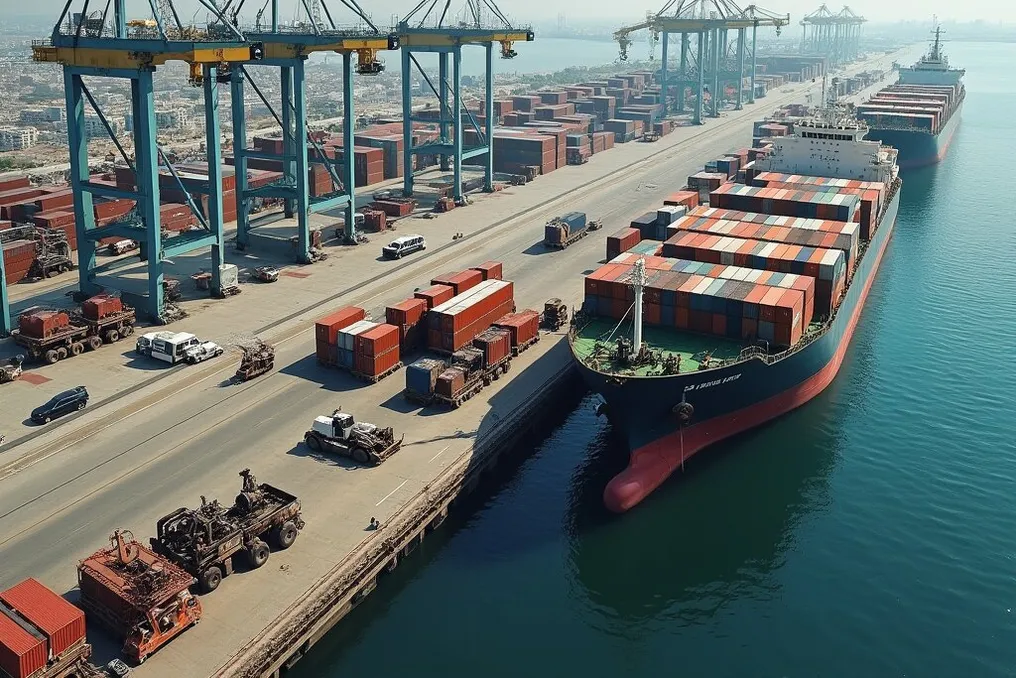
The Deputy Minister of Agriculture for the Development of Agricultural Trade reported that following the agreement in Islamabad and the lifting of the sea blockade, the pace of importing essential goods into the country has significantly accelerated.
Bypassing the Threat of Blockade
It was noted that by changing logistics routes from the Indian Ocean to routes through Russia and the Caspian Sea, it was possible to counter the threat of both maritime and economic blockade. Mohammad Reza Talaei commented in an interview with IRNA on the reserves of necessary goods in the country against the backdrop of recent aggression, which he called the actions of the 'American terrorist army' against the territory of the Islamic Republic of Iran, especially in the southern coastal regions.
State of Reserves and Market Stability
According to Talaei, the reserves of essential goods are in a favorable state, and the supply chain is successfully managing the market and maintaining price stability. Regarding changes in the import situation through southern and northern ports, the deputy minister explained that previously the southern ports served as the main entry point for raw materials, consumer goods, and necessities. However, under current military conditions, the volume of operations in the southern ports has decreased, and they have transitioned from open trade to a defensive regime.
Role of Northern Ports in the Economy
Currently, the northern ports have become a key element of the economy, and part of the import pressure has been redirected from the south to the north. The share of northern ports in the total import volume has increased as they actively utilize the potential of the North-South Corridor, accepting more containerized and bulk cargo. The deputy minister specified that the share of northern ports in the country's total imports exceeds 30 percent, which allowed bypassing the risk of complete economic isolation by shifting routes from the Indian Ocean to Russian routes and the Caspian Sea.
Import Priorities and Logistics
The most significant volume of imports from the northern ports concerns grain and oilseeds, as ensuring food security and production sustainability is a priority under these conditions. Among the most demanded products are barley for animal feed, corn for animal feed, and wheat, much of which comes from Eurasian countries. It was mentioned that before the war, the Imam Khomeini port was the main center for importing grain and livestock feed. Changes in corridors and routes have led to an increase in transport costs, insurance premiums, and the final cost of products.
Port Situation and Response
As part of the 'storage at sea' strategy, vessels acting as strategic floating warehouses were offloaded earlier than planned due to the prevailing circumstances. Regarding attacks on Chabahar port, which handled part of the imports, Talaei emphasized that the port plays an important role not only for domestic needs but also as a major transit hub for delivering goods from India to Afghanistan and Central Asia. Most of the goods unloaded before the new attacks are stored safely in modern silos and covered warehouses. Work is currently underway to safely unload and quickly transfer these goods to other regions of the country. Vessels awaiting berthing have been directed to safe routes for emergency departure to alternative ports in coordination with Army and IRGC forces.
Damage Minimization and Prospects
Regarding infrastructure damage after the recent attacks, assessments are in the final stages, after which documents will be prepared for insurance companies. The Ministry of Agriculture, fulfilling its duties, sent an official letter to competent authorities listing the proposed and implemented measures to minimize losses. The deputy minister assured that even during the previous sea blockade, there were no problems with the supply and distribution of essential goods. He stressed that thanks to the determination of all interested parties, the new sea blockade will not disrupt supplies. Approximately 25 million tons of agricultural products are imported into the country annually via sea, rail, and road. Since Iran borders 15 countries by land and water, this has contributed to the diversification of supply sources. Talaei added that in addition to diversifying sources, entry points are expanding, and the development of railway transport will significantly help in importing necessary goods.