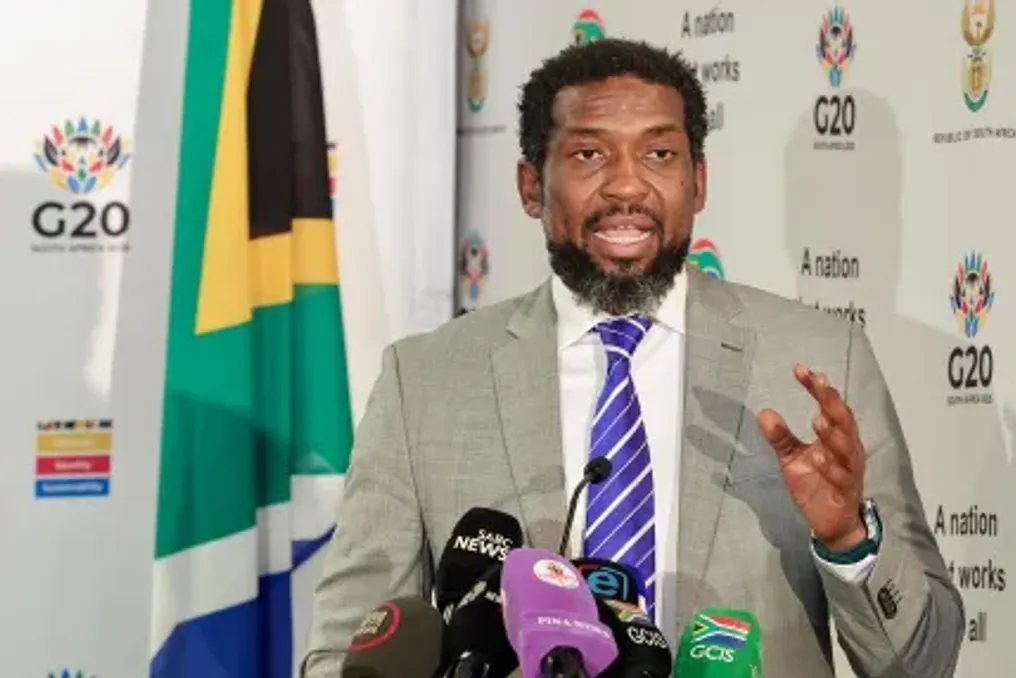
The Minister of Higher Education, Buti Manamela, reported that no minutes were taken during a meeting he held with some members of the National Student Financial Aid Scheme (NSFAS) council three weeks before their dismissal.
The Minister of Higher Education, Buti Manamela, reported that no minutes were taken during a meeting he held with some members of the National Student Financial Aid Scheme (NSFAS) council three weeks before their dismissal.
Manamela was responding to a written question from a Member of Parliament from the EFF party, Sihlwe Lonzi, who asked why the minister met only with a portion of the council members on an issue that should have been decided by the entire council.
This meeting sparked accusations that Manamela was interfering in political processes, which occurred three weeks before he dissolved the NSFAS council and handed over the scheme to May 4.
Manamela confirmed: 'Yes. On April 13, I participated in an urgent informal meeting with members of the National Student Financial Aid Scheme Council.'
He specified that the meeting was organized through his office after council members raised issues concerning governance and procedural problems in the process of appointing the chief executive director.
He emphasized that it was not a formal or legally established council meeting, nor was it conducted to resolve council business matters or make decisions falling under the collective competence of the council. Manamela stated: 'No council decision was made during this meeting.'
The minister confirmed that one council member was absent from the meeting, adding that 'there was no deliberate intention to exclude this member or any other council member.'
He explained that this meeting fell within his responsibility for overseeing NSFAS.
Despite the central accusation that he ordered the council to suspend the appointment, Manamela was categorical: 'No. I did not instruct the council or any of its members to delay, suspend, refuse, or withhold the continuation of the chief executive director appointment process.'
He clarified that he advised them to properly consider and resolve the issues raised regarding the hiring process before the council finally approved the candidate. He noted, however: 'This was not an instruction to stop the process indefinitely.'
Manamela also denied giving political advice regarding who should receive the position. He stated: 'I did not provide political consultation aimed at selecting, approving, or determining who should be appointed as the NSFAS chief executive director.'
He clarified that any broader consultations related to governance, maintaining NSFAS stability, and public interest, not candidate selection. The minister stressed: 'No political structure or external political forum was requested for the selection, approval, or support of a candidate.'
When asked about records of the meeting, Manamela replied that no protocols were drawn up because 'this meeting was an informal briefing, not a legally established NSFAS Council meeting.'
He added that emails and other documentation related to the organization of the meeting, as well as subsequent correspondence between the ministry and the council, might exist and form part of the official record.
This response followed a heated appearance before the Parliamentary Higher Education Committee in May. There, former council members told MPs that they had been summoned to an informal meeting without minutes and that their mobile phones were confiscated upon arrival. Manamela acknowledged the error that led to one member not being included in the invitation and apologized to the committee.
The council subsequently named Vassim Karim as the head of financial director and acting chief executive director of NSFAS as its choice for the permanent position, just days before Manamela dissolved it and appointed Khlengani Matebulu as administrator. Members of the dissolved council decided to review the situation.