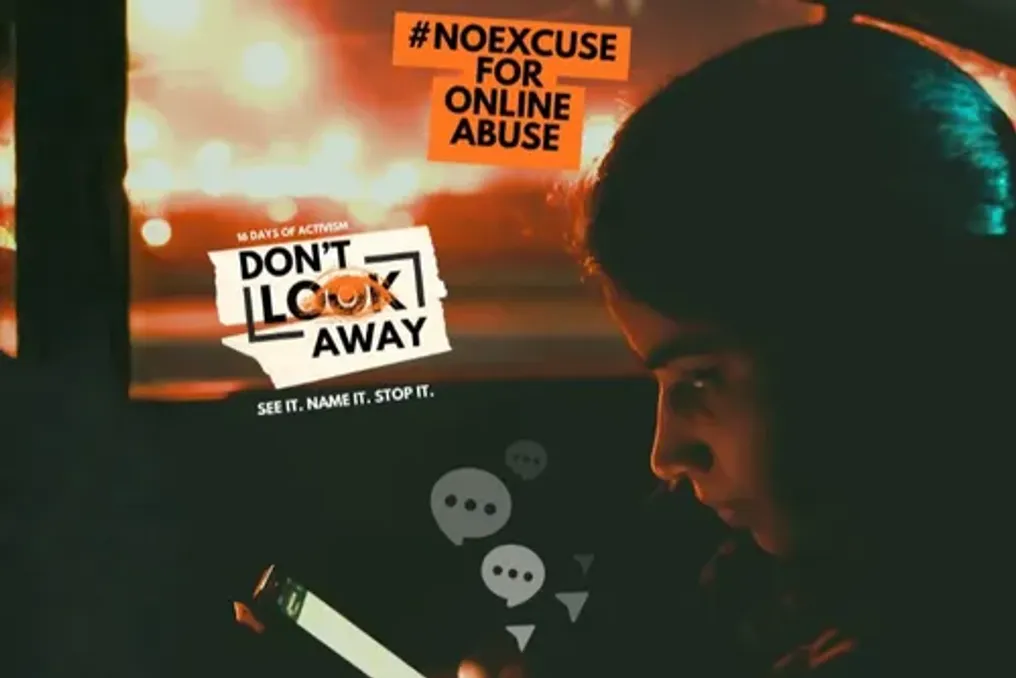
On all social media platforms, fertile ground easily forms for racists, homophobes, sexists, sexual predators, misogynists, Islamophobes, xenophobes, and bullies. A natural question arises: who are these people in real life?
The Influence of Online Culture
Social media users may experience disappointment, anger, confusion, and irritation. In the context of online culture, where algorithms and anonymity combine with toxicity that destroys rational discussions, there is a clear trend toward an outburst of fierce hatred in comments on sometimes harmless posts.
An example is given of a mother facing a barrage of accusations and hatred after her children died at the hands of their father, as well as a young girl whose swimsuit photos provoke mockery and comments degrading her appearance.
Screen Safety and Effect
On the vast highway of the internet, ordinary people transform into aggressive animals. The safety provided by the screen acts as a kind of protective barrier. Any mention of the world, humanity, compassion, inclusivity, anti-racism, anti-xenophobia, or gender violence provokes a negative reaction. Online abuses, from crude profanity to personal attacks, aim for one goal—to silence and humiliate a person.
Psychologists call this phenomenon the 'online disinhibition effect,' which arises due to physical distance and the illusion of no consequences. People say things they would never dare to say face-to-face. Perhaps in this bullying lies a sense of bravado they do not receive in everyday life.
The Nature of Haters' Behavior
The author notes that trying to understand the psychology of this dangerous behavior may lead more to disappointment than enlightenment. However, it can be objectively concluded that without common sense and with moral and intellectual bankruptcy, online bullies and haters are incapable of logical debate. Their standard mode of communication becomes sarcasm, to which readers are accustomed in the comments on news and personal pages.
The author, having personally encountered online hatred, comes to the understanding that the truth often elicits a strong emotional reaction. Going beyond what is permissible and calls for unity and compassion have their price. At the same time, the author sees something greater than hatred and bullying.
Algorithms and Social Reality
The author testifies to people from different parts of the community and country who stood up against online hatred when necessary. Loud voices do not reflect the opinion of the majority in the community or the country. Social media algorithms feed on outrage, amplifying division and creating the appearance that the country is drowning in xenophobia, racism, sexism, Islamophobia, and other forms of prejudice.
Some people benefit from this situation. The reality is that online culture skillfully distorts rather than reflects society. When platform creators and other structures monetize profiles, morality and humanity become financially unviable, while hatred brings greater profit.
Contrast with South Africa's Reality
The author emphasizes that the residents of South Africa continue to live daily in multi-confessional and multi-racial harmony with greater tact and dignity than suggested by social media comments. This is not an attempt to oversimplify the problem, but a way to understand the origin of the madness.
People prone to humiliating others and suppressing constructive conversations are generally insecure, unnoticed, or suffering from pain, seeking fleeting fame and pleasure. This demonstrates the worst impulses of a small segment of users, not the soul of the entire community or country.
Consequences of Hatred and Call to Action
However, distortions have real consequences: online hatred and harassment undermine mental health, especially among young people. In the local community, this exacerbates external racism with internal mechanisms such as colorism, religious intolerance, and marginalization of people. Conservative groups quickly become judgmental towards those who express their opinions, especially women challenging the status quo. These disagreements are not localized; they weaken solidarity and penetrate the national landscape, deepening distrust at a critical moment.
There is an obvious fact: behind every hateful comment is a real person targeted by that hatred. Cases of suicide due to social media bullying have been documented, which in itself should awaken conscience. Therefore, it is crucial that decent people refuse to remain silent or afraid, standing up for justice.
Changing frequency or algorithms may not ensure popularity on social media, but it can be decisive in the effort to restore humanity. This is the moral battle of our time: keyboard warriors versus the unity of the community and the country. Neutrality is not an option here.