During the World Congress of Architects of the UIA 2026, held in Barcelona, the central theme was 'Becoming. Architectures for a Transitioning Planet'. This theme positioned architecture as an area of practice directly linked to environmental, social, and political changes, rather than something peripheral to them.
Andrés Jaque's View on Architecture
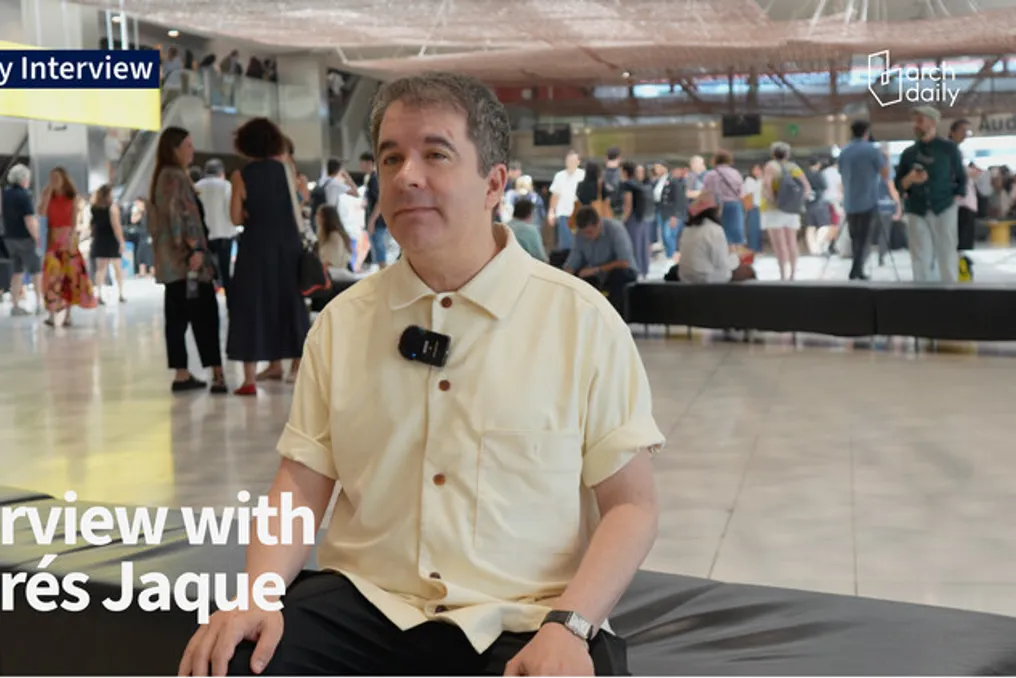
Among the participants of this congress was architect Andrés Jaque, founder of the Office for Political Innovation and dean of the Graduate School of Architecture, Planning and Preservation (GSAPP) at Columbia University. ArchDaily interviewed Jaque to discuss architecture's capacity to propose solutions, the importance of experimentation in academic training, and the need to view transition as a continuous state, not a final point.
For Jaque, the current relevance of architecture stems from the fact that many of the structures defining contemporary society are being questioned. Instead of seeing the current scenario as a moment of collapse, he interprets it as an opportunity where architects can help plan new ways of organizing community life. Thus, issues such as ecology, social equity, and alternative models of coexistence are not secondary topics, but rather an integral part of the discipline's operational foundations.
Design as a Process of Action
This perspective directly influences the definition of design presented by Jaque. He argues that design transcends the mere creation of forms; it is a process that demands investigation, reasoning, and deep engagement with broader issues. Architecture, in this sense, functions as a mode of action through design, where choices made about buildings and spaces are simultaneously decisions about how collective life will be structured.
Case Studies and Collaboration
When addressing the role of architectural projects, Jaque exemplified how buildings can highlight different possibilities. Referring to the Reggio School project, he clarified that this initiative challenged the notion that schools should protect children from the complexity of the world. On the contrary, the project focused on education as a process that occurs through exposure to variety, constant dynamics, and still developing conditions.
The development of this project also illustrated Jaque's view of architecture as a collaborative effort. He detailed the participation of teachers, families, tutors, and students, while also taking into account the environmental history of the area, including problems such as pollution and loss of biodiversity in the surroundings. In this context, he believes that the architect's role is not just to generate ideas in isolation, but to create the necessary circumstances for diverse views to contribute to the project's conception.
Relevant Issues for the Future
When asked which topics the Congress should prioritize, Jaque indicated concerns already present in modern life. Instead of suggesting a single missing issue, he mentioned themes such as economic accessibility, justice, alternatives to violence and militarism, and lifestyles based on diversity. For him, these debates already permeate daily conversations, activism, and public discourse, giving them great relevance for architects.