Smartphones with 128 GB capacity are ideal for average users, as they allow storing photos, videos, and essential daily applications with good space reserve. In 2026, it is possible to find economical models from manufacturers such as Samsung, Xiaomi, and Motorola that offer this internal memory, along with features like high-definition screens and long-lasting batteries.
List of 9 smartphone options
This compilation presents nine suggestions of devices with 128 GB, aimed at those who prioritize economy, functionality, and balanced specifications, catering to various budgets and usage profiles.
Analysis of recommended models
The Galaxy A36 is a notable mid-range device, equipped with the Snapdragon 6 Gen 3 processor and 6 GB of RAM in the 128 GB version. Although it uses the UFS 2.2 memory standard, which does not offer ultra-fast read speeds, it ensures smooth performance for daily tasks. This device features a Super AMOLED screen with a 120 Hz refresh rate, rear cameras with a 50 MP main sensor and optical stabilization (OIS), capable of recording in 4K at 30 fps. Samsung guarantees six years of Android updates support, extending it until 2031.
The Redmi Note 15 is a mid-range device focused on social media, streaming, and gaming. Its 128 GB version comes with 6 GB of RAM and uses the UFS 2.2 standard, allowing expansion via microSD card. The main camera features a 108-megapixel sensor and f/1.7 aperture, providing good images within the price range, although videos are limited to 1080p at 60 fps. A strong point of this model is its 6,000 mAh battery and 33W fast charging.
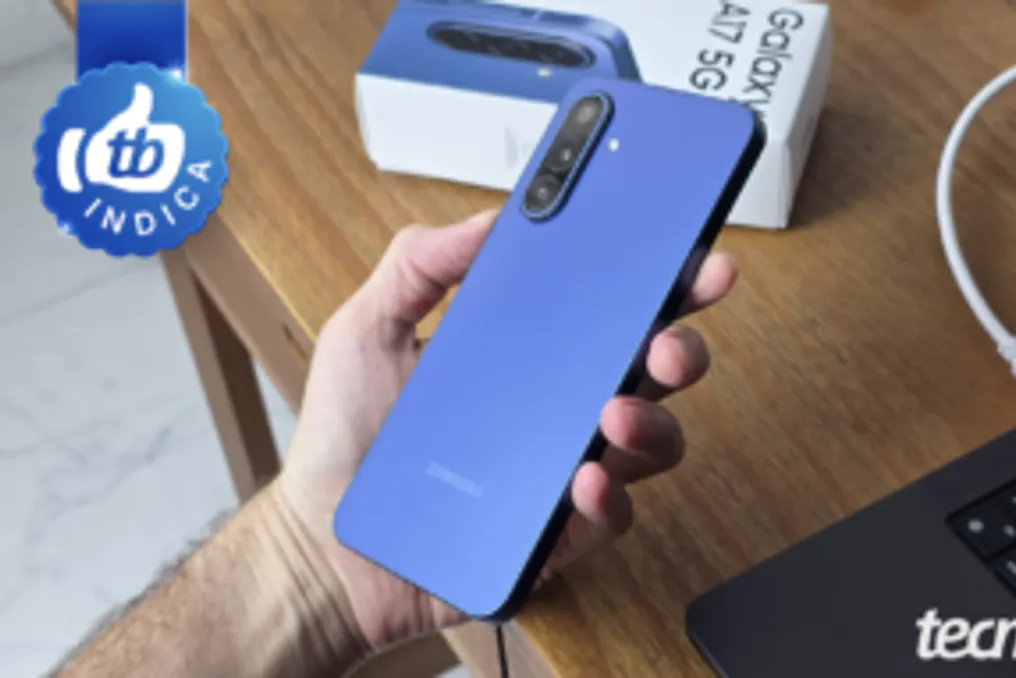
For basic tasks, the Galaxy A17 5G is an entry-level phone priced under R$ 1 thousand. It features a large Super AMOLED screen with a 90 Hz refresh rate, ideal for watching videos. With 128 GB of storage in the UFS 2.2 standard and microSD expansion capability, it has the Exynos 1330 processor, efficient at 5 nm, and a 5,000 mAh battery, offering autonomy for a day of moderate use.
The Galaxy A07 5G has a basic 6 nm processor but with good energy efficiency for calls and browsing. It offers 128 GB of UFS 2.2 internal memory and 4 GB of RAM, expandable via microSD. Its 6.7-inch PLS LCD screen facilitates content viewing but presents less vibrant colors than AMOLED screens. It stands out with a robust 6,000 mAh battery, which can last more than a day with common use.
The Galaxy A06 5G is a more economical alternative, presenting camera, screen, and processor specifications similar to the A07 5G, but at a lower cost. The difference lies in the battery, which has 5,000 mAh and shorter autonomy, and the update policy, which will only reach Android 19 in 2029.
Among Xiaomi models, the Redmi 15C 5G is one of the most affordable with 128 GB in 2026. It uses an efficient 6 nm processor and 4 GB of RAM, ensuring basic performance without freezing during daily use. The UFS 2.2 storage is expandable via microSD. Additionally, it has a 6,000 mAh battery and supports 33W fast charging.
The Poco C85 shares similarities with the Redmi 15C, using the MediaTek Dimensity 6300 processor (6 nm). However, this model is often found with 6 GB of RAM in the 128 GB version, which improves multitasking fluidity. It also has UFS 2.2 memory, a microSD slot, a 6,000 mAh battery, and 33W fast charging.
Motorola presents the Moto G35, an entry-level phone with a Unisoc T760 (6 nm) processor and 4 GB of RAM in the 128 GB version, using UFS 2.2 and a memory card slot. Its 6.72-inch IPS LCD screen offers high resolution, and the audio with Dolby Atmos certification contributes to immersion. The cameras include 50 MP (wide) and 8 MP (ultrawide) sensors, capable of recording videos in 4K at 30 fps. It is important to note that it was launched with Android 14 and will no longer receive system version updates, only security patches until 2027.
Motorola's cheapest option is the Moto G06, which has a less efficient processor (12 nm) and 4 GB of RAM. Although the company does not specify the storage standard, the MediaTek Helio G81 Ultra processor suggests it is eMMC 5.1, slower than UFS. This device is recommended only for simple activities, such as messaging and social browsing, as performance may be compromised in more demanding applications.
Criteria for choosing a phone
When deciding which 128 GB smartphone to purchase, it is crucial to analyze several components. The storage standard (UFS or eMMC) defines data transfer speed and app startup time. For gaming and heavy applications, it is recommended to prioritize models with at least 6 GB of RAM and efficient processors (6 nm lithography or lower). Media consumers should opt for AMOLED panels due to their superiority in color and contrast over LCD. Finally, batteries above 5,000 mAh and support for charging over 25 W ensure greater autonomy and faster recharging.
Advantages of 128 GB storage
128 GB of space is sufficient for most users, supporting hundreds of applications, photos, and videos without overloading the system. However, the overall quality of the device depends on other factors such as the processor, RAM, cameras, and battery. Generally, after installing the operating system and pre-installed apps, the user will have between 100 GB and 112 GB free. Memory expansion via microSD card is common in entry-level and mid-range models, allowing media storage without filling up the main space. Meanwhile, the 256 GB version is advised for those who record in 4K or use very heavy games, but 128 GB models offer a great balance between price and usability.