The 2026 FIFA World Cup officially debunked the myth that sport and politics exist separately. When FIFA expanded the tournament to 48 teams, the official narrative emphasized unity, inclusivity, and the celebration of global football.
The 2026 FIFA World Cup officially debunked the myth that sport and politics exist separately. When FIFA expanded the tournament to 48 teams, the official narrative emphasized unity, inclusivity, and the celebration of global football.
However, as the intense North American tournament concluded, the 2026 edition will be remembered not so much for tactical innovations or the form of top players, but for how politics brazenly invaded the football pitch.
From the very first week, geopolitical tension cast a shadow over the sporting events. The Iranian national team found itself at the center of a diplomatic issue due to internal political difficulties and tightening foreign policy, leading to severe travel restrictions. The team could not remain on American soil between matches and was forced to return to its base in Mexico shortly after the games; however, they handled the situation with such grace and modesty that they won the affection of the football community.
The administrative chaos was not limited to the players. Omar Artan, the chief referee from Somalia, who was expected at key playoff matches, was denied entry into the United States. U.S. Customs and Border Protection deemed him 'inadmissible' due to verification and national security concerns. Despite holding a valid visa and diplomatic passport, he was not allowed into Miami International Airport.
Perhaps the most striking moment of political interference occurred not at border control, but in the disciplinary corridors of football authorities. Key US forward Folarin Balogun received a straight red card during the Round of 32 match against Bosnia and Herzegovina and was scheduled to miss the Round of 16 game against Belgium. This was followed by an unprecedented display of executive pressure: former US President Donald Trump publicly lobbied and used political leverage to persuade FIFA to review and ultimately suspend the ban on the forward, which caused dissatisfaction among the Belgian team.
This move was astonishing and violated FIFA's long-standing rule against state interference. The decision stunned teams, experts, and fans, raising serious questions about the integrity of the tournament.
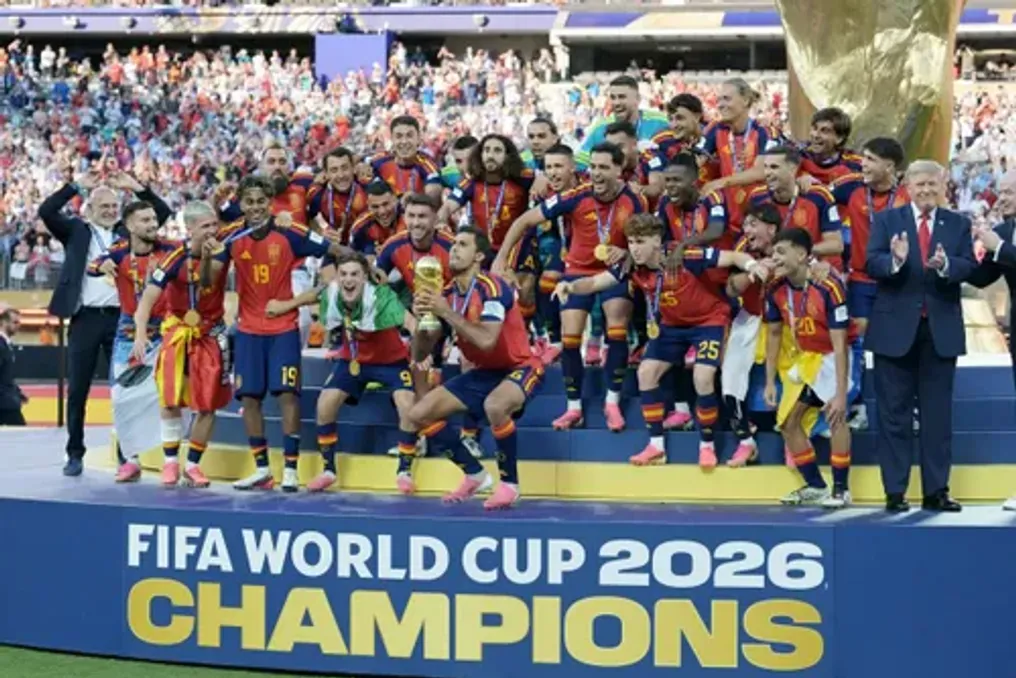
By the time the final took place at MetLife Stadium, the political shadows had shifted from behind-the-scenes lobbying to a global cultural movement. The final match between Argentina and Spain turned into a proxy battle of global ideologies. Many neutral fans worldwide supported Spain not only because of their magnificent, possession-based football but also as a direct protest against the Argentine administration.
Argentina's right-wing government, led by President Javier Milei, faced harsh international criticism for its staunch support of Israel amid ongoing global conflicts, such as the genocide of the Palestinian people. For millions of viewers worldwide, football provided a rare visible platform to express moral disapproval. Support for Spain became an act of solidarity against a political regime many considered divisive and destructive.
When Spain lifted the trophy, the roar of approval that swept the stadium felt less like a triumph of Spanish superiority and more like a collective sigh of relief from a global audience desperately wishing to overcome grim political realities. The 2026 World Cup undeniably proved one truth: the romantic notion of separating sport from politics has officially ended. Football does not exist in a vacuum; it is a mirror reflecting the struggle for power, prejudices, and passions of the society that created it. As the dust settles after this chaotic spectacle, FIFA must acknowledge a harsh reality: when you open the biggest football stage to the world, you cannot decide who has the right to participate and who does not.
The Football World Cup is approaching its climax, but it is overshadowed by numerous contradictions. Among these issues are accusations of political interference and questionable refereeing decisions that threaten to overshadow the true spirit of the game.
Despite all the shadows cast upon the tournament, the final match remains resilient. It demands to be remembered not as a spectacle controlled by hidden forces, but as a triumph of pure football. Here, the roar of the crowd drowns out the noise of power, and the field turns into an arena of truth, skill, and unwavering passion.
The author calls for this final to be a confrontation with everything that seeks to divide the world; it is a decisive refusal to submit to prejudices and a reminder that beautiful play belongs to the people. In this decisive hour, football must inspire such powerful unity that cynicism falls silent and faith is restored in all countries, creating a moment when humanity chooses solidarity over division, and the game transcends those who try to control it.
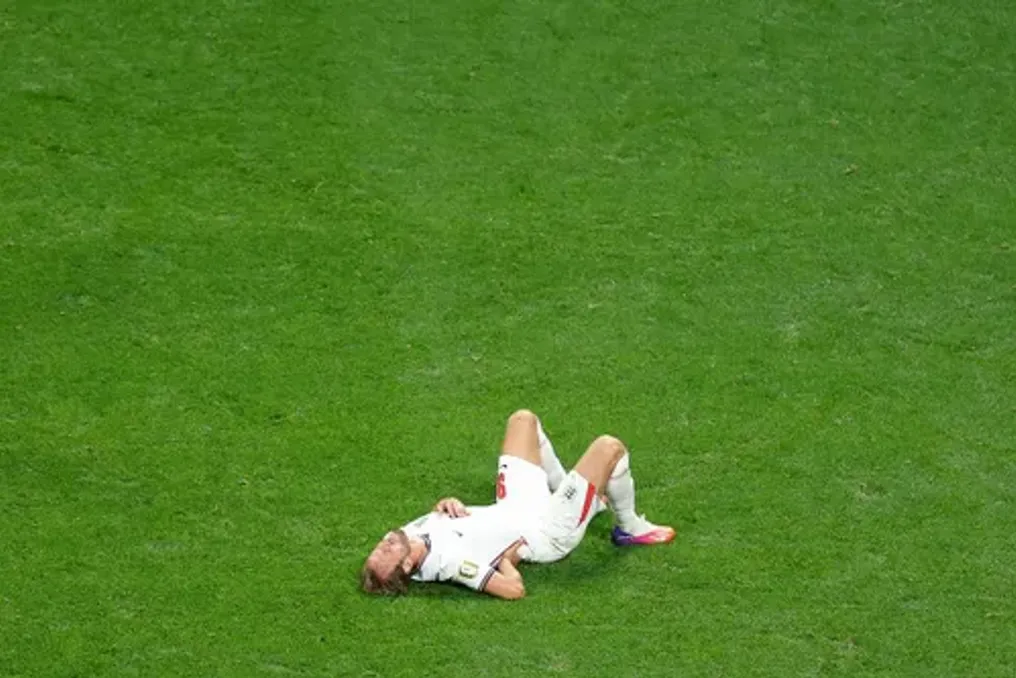
One nation obsessed with football failed to reach the main stage of sport—the FIFA World Cup 2026. England lost to reigning champion Argentina with a score of 2:1. England took the lead in the 55th minute but could not hold onto it. Critics note that the team's tactics seemed to falter after the goal was scored, allowing Argentina to take control and increase pressure. The hosts equalized the score and then scored another goal in extra time, leaving England in shock.
For Argentina, it was joy, and for England, it was sorrow. England's captain Harry Kane could not have a significant impact in the semi-final, while Argentine captain Lionel Messi, although he did not score, provided two key assists, which helped send England home. England's last World Cup triumph was achieved 60 years ago, in 1966, on home soil. After 15 tournaments, the long and difficult wait for a new title continues.
One column expresses the opinion that England should be glad to be eliminated from the FIFA World Cup on Wednesday, as they are called the most unbearable football nation on Earth. It is asserted that England has only won the World Cup once, in 1966, and this is constantly reminded. The author wonders why other football powers, such as France, Germany, Brazil, Argentina, Spain, and Uruguay, do not remind the world of their victories. It is noted, however, that France, a great rival of England, has won the tournament more often.
It is suggested that if England had reached this year's final but lost, it would be talked about endlessly, and if they had won, it might last another 70 years. The only virtue of the British is cited as their rich league and focused press, which convinces naive spectators of the superiority of English football, even though there are teams around the world playing just as well or better. English fans are advised to accept the defeat, as they proved weaker than their opponent.
In response to the article about the case of a man's murder over an alleged sexual assault on a friend's girlfriend, the author addresses Trevor Singh and Tyson Chatty, as well as the accused, questioning how people would react if a stronger person committed such an act. The question is also raised whether attitudes would change if a famous athlete or actor with influential connections were involved.
It is emphasized that the correct approach to accusations of sexual violence is to report the fact and allow the legal system to act. Violence and revenge cannot replace justice. As a father of a daughter, the author believes that young people should learn to handle complex situations responsibly: to speak up, seek help, and involve the appropriate authorities. People who feel the need for confrontation due to unwanted advances should ask themselves how they would want to be treated in such a situation if the roles were reversed. No accusation, no matter how serious, should lead to a public trial or unnecessary violence; a society governed by the rule of law must allow courts to determine guilt or innocence.