The water crisis in South Africa has become one of the most pressing issues facing municipalities today. Across the country, towns and settlements are grappling with rising demand, climate instability, aging infrastructure, and shrinking financial resources. These factors have placed local authorities at the center of a national emergency. However, despite the enormous scale of the difficulties, the crisis presents significant opportunities for collaboration and shared responsibility.
Causes and Scale of the Problem
The crisis is viewed not as a failure of municipalities, but as a symptom of pressure on the entire nation. Experts believe the solution lies in updating the social contract between municipalities, the public, industry, youth, and national partners, which is reflected in the WRC campaign 'A WaterWise Nation.'
South Africa loses 37 percent of treated water due to leaks, pipe bursts, vandalism, and illegal connections. This volume of water was obtained, treated, and pumped at great cost, yet it disappears before reaching consumers. For municipalities, already struggling with budget shortages, such losses are catastrophic.
Infrastructure and Regional Challenges
According to the Department of Water and Sanitation, 105 municipalities face a combined water infrastructure deficit of approximately 400 billion rand. Many treatment plants and pipelines have reached or exceeded their service life, while accelerated urbanization and climate change intensify the strain on fragile systems. Despite investments of nearly 100 billion rand over the past five years, repair and modernization efforts are not keeping pace with growing demand.
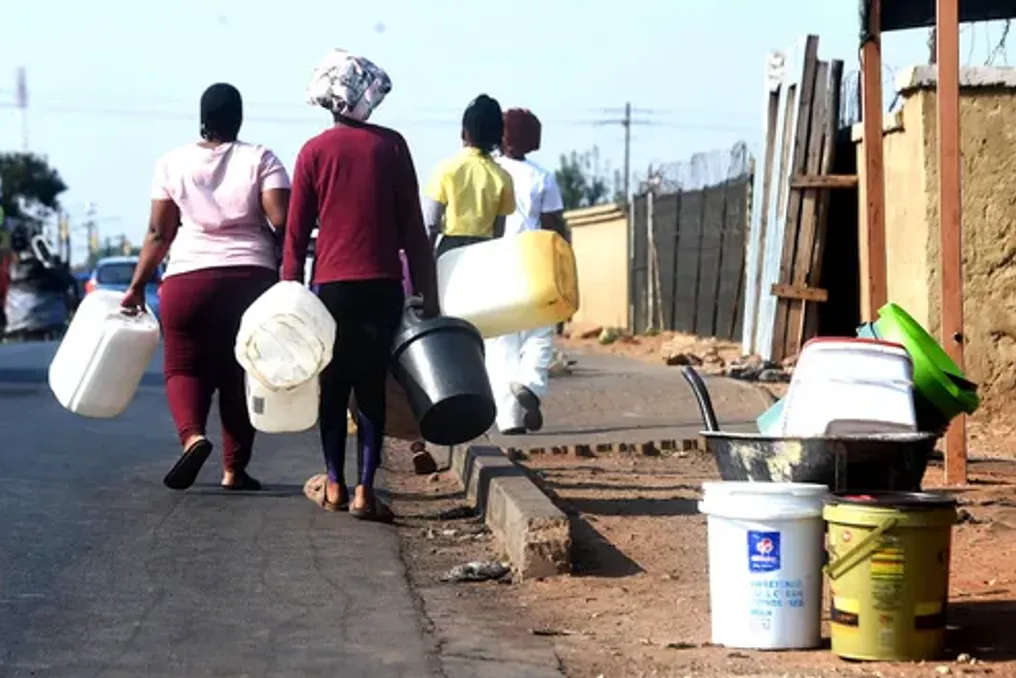
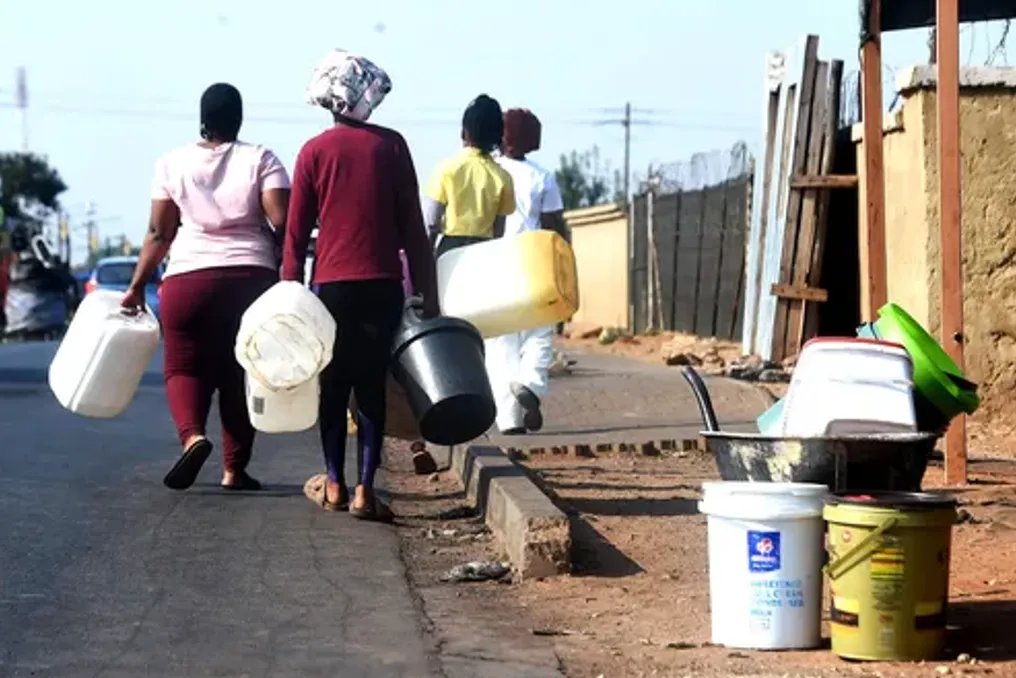
Tension is felt across all provinces. In Gauteng, residents of Mogale City, Westber, Ebony Park, Tsakana, and Johannesburg South have experienced prolonged outages due to dwindling reservoirs during periods of intense heat. In the eThekwini region of KwaZulu-Natal, more than fifty districts continue to face instability due to infrastructure failures and power interruptions. In the Eastern Cape, Nelson Mandela Bay is caught in cycles of drought, with reservoir levels frequently dropping below 20 percent.
Free State continues to battle multi-day water supply disruptions in towns such as QwaQwa, Welkom, and parts of Mangaung, often linked to pump failures and aging main pipelines. Limpopo and North West face similar issues, as frequent breakdowns occur in Polokwane, Mahikeng, and Clerksdorp due to the collapse of old networks under pressure.
A New Social Contract for Water Security
Given the circumstances, municipalities must take the lead, but they cannot do so alone. South Africa requires an updated municipal social contract where responsibility is shared, not delegated. Civil society organizations, businesses, and government must act as partners in safeguarding the water future.
Municipal leadership remains a key element. Local governments are responsible for water distribution and treatment, planning infrastructure investments, and initial response to system failures. Their ability to communicate transparently, interact constructively with communities, and collaborate across sectors lays the foundation of trust that is critical for joint action.
Communities also play an increasingly vital role. When residents promptly report leaks, conserve water during peak hours, protect infrastructure from vandalism, and understand municipal limitations, water supply systems become more stable and manageable. Community forums on water issues, volunteer groups, and neighborhood patrols have already demonstrated their effectiveness in supporting municipalities in several regions.
The private sector is also a crucial part of this partnership. Local industries can implement water-efficient processes, invest in on-site reuse systems, and collaborate with municipalities on smart metering and network monitoring. These measures reduce the burden on municipal supply and support economic sustainability.
The A WaterWise Nation Campaign
The WRC campaign 'A WaterWise Nation' provides municipalities, communities, industries, and educators with a unified framework for building a water future. The campaign emphasizes behavioral change as one of the most powerful tools for reducing demand and protecting supply. It offers municipalities informational materials, data, case studies, and tools to mobilize households and businesses. It supports communities with accessible knowledge about responsible water use, encourages industry to adopt efficient and sustainable methods, and provides young people with information and inspiration to become stewards of water resources.
Furthermore, 'A WaterWise Nation' reinforces a fundamental principle: water security is not just a government task. It is a collective responsibility shaped by the daily decisions of millions of South Africans. If every household, business, school, and community adopts even small water-saving habits, the cumulative national effect will be immense.
Call to Action and the Future
South African municipalities are navigating some of the most challenging conditions in democratic history, yet they remain the bedrock of local resilience. Their work deserves recognition, and their challenges require partnership, not criticism. This is a moment for collective responsibility, where residents, businesses, and government unite to protect the systems that sustain us.
The path forward will require honesty, innovation, and collective commitment. But it is a path they are fully capable of taking. If they align their goals, support local leadership, and embed water-saving behavior in society, they can change the trajectory of the crisis and create cities that are both sustainable and future-ready. South Africa's water future will be determined not only by built infrastructure but by the choices made today. Urgent action is needed, in partnership and with the understanding that water security belongs to all of us.