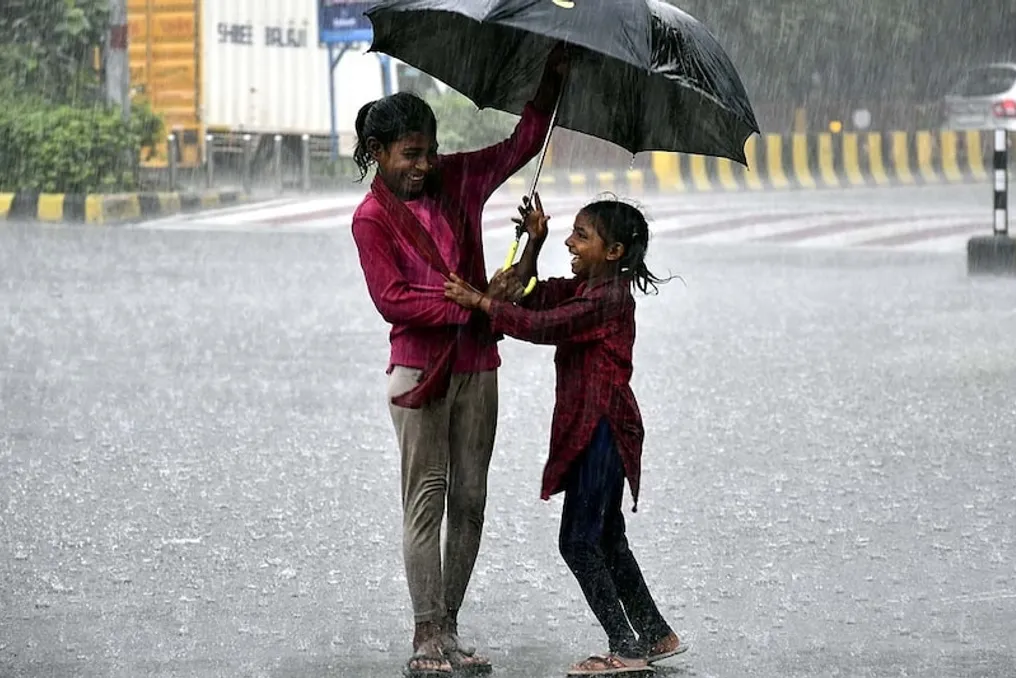
Significant changes are expected in the weather of India. According to meteorologists, El Niño is showing its most dangerous form. Currently, the monsoon zone has shifted from the north to the south, moving across central India. This change will affect the weather across the country, and the coming days will be crucial in determining the character of August.
Popular
Impact of Monsoon Shift on North India
When the monsoon track shifts from the north towards the plains of North India and Central India, moist easterly winds intensify their influence on the plains of North India. This leads to the onset of rainfall in regions such as Uttar Pradesh, Delhi, Haryana, Punjab, Chandigarh, and northern Rajasthan.
Forecasts for North India
The plains of North India are now under the influence of moist easterly winds, meaning a moderately active monsoon regime is expected soon. Episodic rains are anticipated in Uttar Pradesh, Delhi, Haryana, Punjab, Chandigarh, and northern Rajasthan, which may reach moderate or heavy intensity (10–40 millimeters). However, the rains will be intermittent, affecting only 30–50 percent of the territory, and the probability of prolonged precipitation is low. Farmers in Delhi, Punjab, and Haryana will be able to conduct light field work, but no serious rainfall is foreseen.
Situation in Central and West India
In Odisha, Jharkhand, Chhattisgarh, and Maharashtra, an active monsoon situation persists for the next 24 hours, with heavy rains continuing there. From Thursday to Sunday, this squall will shift towards Madhya Pradesh, Gujarat, and southern Rajasthan, where extensive heavy or very heavy rain is expected. These downpours will be continuous, potentially leading to flooding in these states.
Dry Conditions in South India
Rainfall remains weak in the coastal parts of South India. Several areas in Kerala, Karnataka, Tamil Nadu, and Andhra Pradesh are experiencing a clear deficit of precipitation. The increased influence of El Niño raises concerns about a weakening of monsoon activity in the southern regions.
European Meteorological Centre Forecast
According to forecasts from the European Meteorological Centre (ECMWF), good rainfall is likely in Rajasthan, Kerala, northern Gujarat, southern Bengal, Odisha, and Chhattisgarh, while precipitation may be lower elsewhere. The monsoon track is expected to shift north in the second half of the month, which could bring heavy rains to Uttar Pradesh, Bihar, Nepal, Uttarakhand, Assam, Meghalaya, and Sikkim. Good rains are also predicted in Delhi, Haryana, Himachal Pradesh, Punjab, West Bengal, Jharkhand, and Odisha. During the third and fourth weeks of August, East and Northeast India will benefit from abundant rainfall. Good rains are also expected in southern Kerala and adjacent areas of Karnataka. Meanwhile, monitoring the situation in Rajasthan, Maharashtra, and Gujarat for drought is recommended; if the monsoon does not shift north in the coming weeks, these regions may face a sharp decrease in precipitation, negatively impacting agriculture and water resources.
Dangerous Side of El Niño
El Niño is usually associated with a weak monsoon in India. Its most dangerous form manifests when Pacific Ocean temperatures rise abnormally. Scientists note that El Niño is currently reaching its peak, causing fluctuations in the monsoon—the alternation between heavy rains and drought is the most dangerous characteristic of this phenomenon. The shift in the monsoon is considered part of this El Niño impact. If the monsoon track does not strengthen within the next 7–10 days, there may be an average decrease in rainfall across India in August. The coming days will determine the future of the Indian monsoon 2026: the southward shift brings moderate rains to the North, while Central India is subject to heavy precipitation. ECMWF forecasts are favorable for East and Northeast India, but the threat of drought remains in the western and central parts.