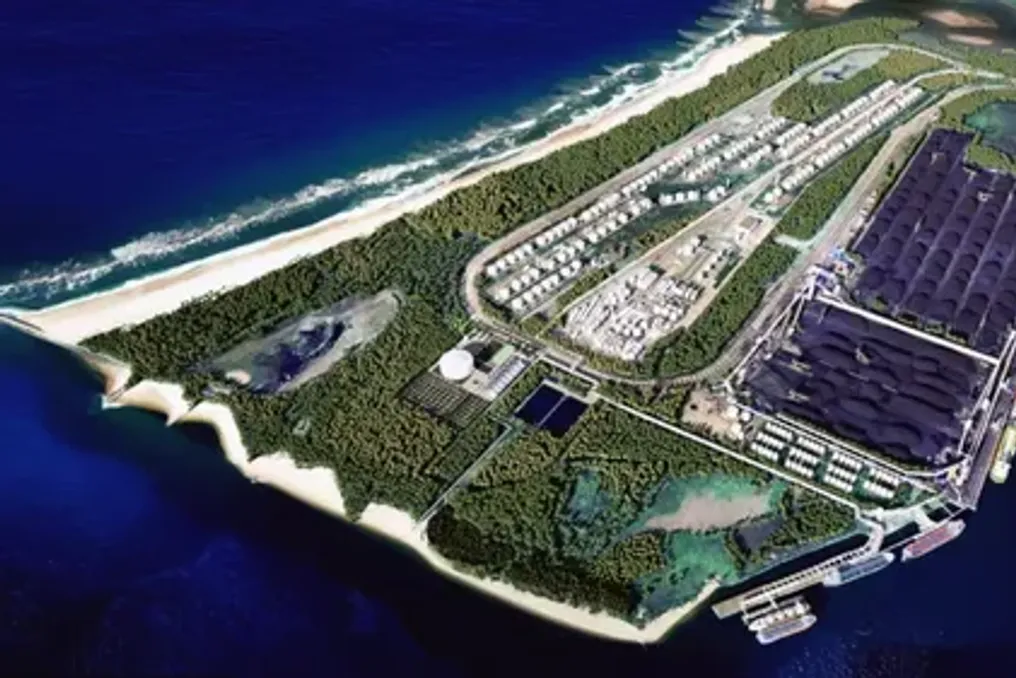
Large-scale gas projects planned for the Richards Bay area are intended to fundamentally change the situation in the province and ensure its energy security. Experts note that KwaZulu-Natal is one of the least energy-secure provinces in the country, as a significant portion of its energy supplies comes from other regions. However, the situation is expected to change after these plans are implemented.
Popular
Overview of the Zululand Energy Terminal project
Experts presented their findings at a meeting in Durban dedicated to the plans for the Zululand Energy Terminal (ZET) project and related work in the Richards Bay area. The total cost of the entire complex of works, including infrastructure and power stations, is estimated at nearly 100 billion rand. It was emphasized that the energy landscape of KwaZulu-Natal is rapidly transforming, opening up new business opportunities in various sectors.
Involvement of Banks and Partners
During an exclusive breakfast organized by Standard Bank, key participants in the energy market discussed the opportunities in the gas sector in Sub-Saharan Africa, examined the impact of new developments in Richards Bay and Mozambique, and considered how businesses can benefit from the evolving market. Standard Bank acts as a consultant to the ZET consortium and continues to play an important role in supporting the growth of the South African energy sector.
Investments and Infrastructure Development
Recently, ZET signed Letters of Intent with major clients such as Eskom and ExxonMobil. Paul Earlie-Taylor, Head of Gas Infrastructure at Standard Bank, stated that the project will transform the energy sector and create jobs in the province. He specified that Zululand will become the first terminal in South Africa for LNG imports, where uMhlathuze will be the point of arrival and conversion of LNG into natural gas. The first phase of the project may cost around 1 billion US dollars (equivalent to 16.52 billion rand).
According to Earlie-Taylor, a power station will be established in Richards Bay: one proposed as an Independent Power Producer (IPP) scheme, and another presented by Eskom. He predicts that two gigawatts of Combined Cycle Gas Turbine (CCGT) units will be installed in Richards Bay by 2030. These investments, combined with other projects, such as the repurposing of the Transnet pipeline, could raise the total investment in the gas value chain in KwaZulu-Natal to approximately 98.6 billion rand.
Impact on Economy and Timelines
He noted that direct investments will have a significant impact on the KwaZulu-Natal region in sectors such as construction and employment. It was also mentioned that the projects are not only in the planning stage but that implementation work has been underway for the last two or three years. The final investment decision (FID) is expected by the end of next year, when shareholders will invest funds and banks will finance them.
Earlie-Taylor expressed hope that the FID would take place in 2027, and the projects would launch sequentially. He stressed that this will be a serious stimulus for the energy security of KwaZulu-Natal. The province, which has always faced energy limitations, will transition from deficit to self-sufficiency in LNG, natural gas, and self-generated gas power. The availability of small volumes of LNG will allow it to replace diesel fuel imports, ensuring stable energy supply and creating conditions for economic growth.
Company Representatives' Views
Alfred Sima from Eskom emphasized that this project will serve as a foundation for renewable generation, significantly increasing the stability of electricity supply in the country. Khone Lekalake, also representing Standard Bank, highlighted that the future of South African energy will be determined by actions and investments, not just talk, adding that KwaZulu-Natal plays a significant role in this future.