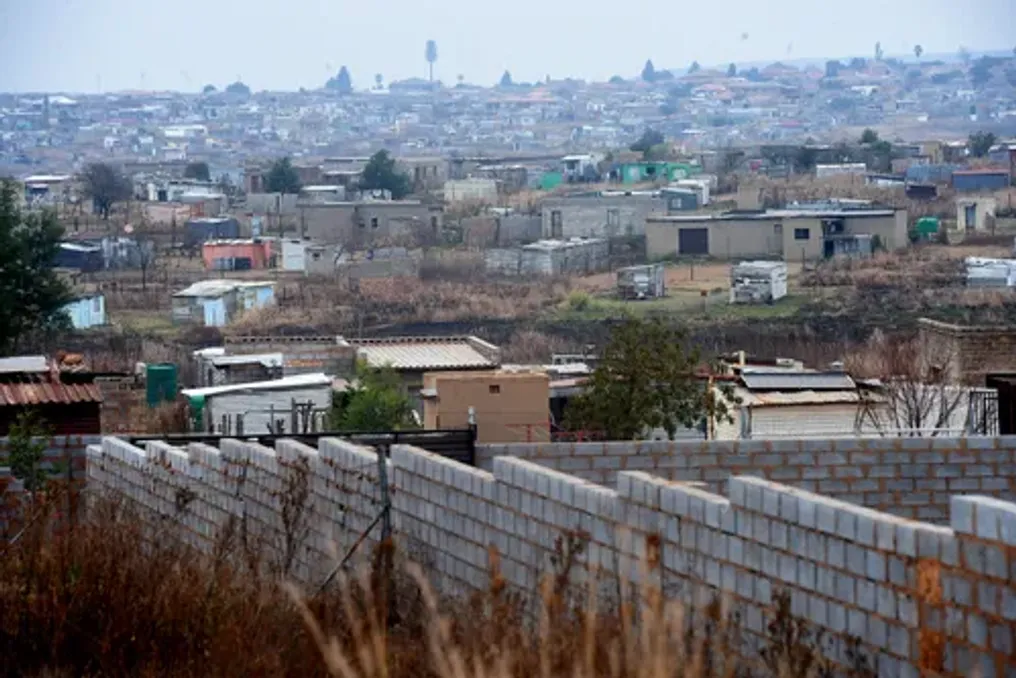
The recovery of the housing stock in South Africa will face difficulties if the country's largest economic center continues to approve very few new residential construction projects.
Economic Significance of Johannesburg
Johannesburg is an economic powerhouse of South Africa and a magnet for people seeking opportunities. According to independent economist Sandra Gordon, the city contributes about 15% to the national GDP and is home to approximately 10% of the country's population.
Low Percentage of Approved Plans
However, over the past five years, Johannesburg has accounted for only 3.8% of all approved housing development plans nationwide. This figure is only slightly higher than that of the Nelson Mandela district, which accounts for just 2% of South Africa's population and constitutes about 2.6% of its economy.
State of the Local Housing Market
Homebuyers in South Africa could enter the second quarter of 2026 with increased caution due to geopolitical tensions, but the local property market remained resilient. Data from ooba Home Loans for the second quarter of 2026 reflects positive growth in average purchase prices, approved loan amounts, and bank willingness to lend, despite the challenging economic backdrop.
This quarter coincided with a sharp rise in fuel prices, increasing inflationary pressure, and the first interest rate hike in several years, after the South African Reserve Bank raised the base rate by 25 basis points in May. Although pressure on household budgets suggested some slowdown in activity, the data indicates more of a pause than a reversal.
Loan Data Analysis
Rhys Dyer, CEO of ooba Group, noted that while the volume of applications decreased by 1.5% compared to the previous year, the total value of applications grew by 4.7% over the same period. This suggests that even if demand slightly decreased, the prices of acquired properties remain unchanged.
The long-term trend highlights a close relationship between borrowing costs and mortgage activity: application volumes usually weaken when the base rate rises and strengthen when rates stabilize and begin to fall. In Dyer's view, the slowdown in the second quarter of 2026 reflects increased sensitivity to affordability rather than a loss of desire to own a home. He predicts that confidence among buyers and application activity will increase after inflationary pressures ease and interest rate prospects become clearer.
Price and Credit Line Growth
Despite the moderation in mortgage activity during the quarter, data from ooba Home Loans for the second quarter of 2026 demonstrates the continued strength of property prices. The average purchase price increased by 4.2% year-on-year and 1.6% quarter-on-quarter, reaching R1,766,796, meaning property prices are outpacing consumer inflation. First-time buyers also paid more: the average purchase price rose by 6.1% year-on-year and 3.9% quarter-on-quarter, amounting to R1,315,396.
The annual growth in the average approved loan size followed a similar pattern, increasing by 5% across all approved mortgage applications in the second quarter of 2026. Meanwhile, first-time buyer applications showed an impressive 7.9% year-on-year growth in average loan size. Dyer emphasized that the growth in approved loan size outpaces the growth in property prices, signaling that banks continue to support qualified buyers with more attractive lending terms amid rising asset values.
Regional Trends and Macroeconomics
Among regional trends, Johannesburg demonstrated the strongest overall housing price growth—10.1%, followed by Limpopo with a 9.6% increase in the first half of the year. Free State, being one of the most affordable markets in the country, deviated from the general trend: prices for first-time buyers rose by 6.7% compared to the overall growth of 0.4%. The Gauteng South and East regions showed similar growth for both first-time buyers and the overall category.
According to the FNB Commercial Property Insight report for Q2 2026, the domestic macroeconomic environment remains complex in the short term. However, the situation is expected to become more favorable in the medium term as inflation slows, borrowing decreases, and business confidence and investment gradually increase due to structural reforms.
Real GDP growth is projected to improve moderately from 1.1% in 2025 to approximately 1.2% in 2026, then accelerate to 1.3% in 2027, and approach 2.0% by 2028/29. Siphamandala Mkhwanazi, an FNB economist, noted that although the economic consequences of the Middle East conflict have weakened short-term forecasts relative to pre-war expectations, he considers this shock temporary and largely external.
He added that declining borrowing costs, slowing inflation, and ongoing structural reforms should support a gradual recovery in business confidence, investment, and employment in the medium term, creating a stronger foundation for the gradual strengthening of economic activity. However, he stated that the investment fund remains a key weakness, as fixed investments in both residential and non-residential property remain significantly below pre-pandemic levels, indicating that confidence has not yet recovered sufficiently to support broad development expansion.