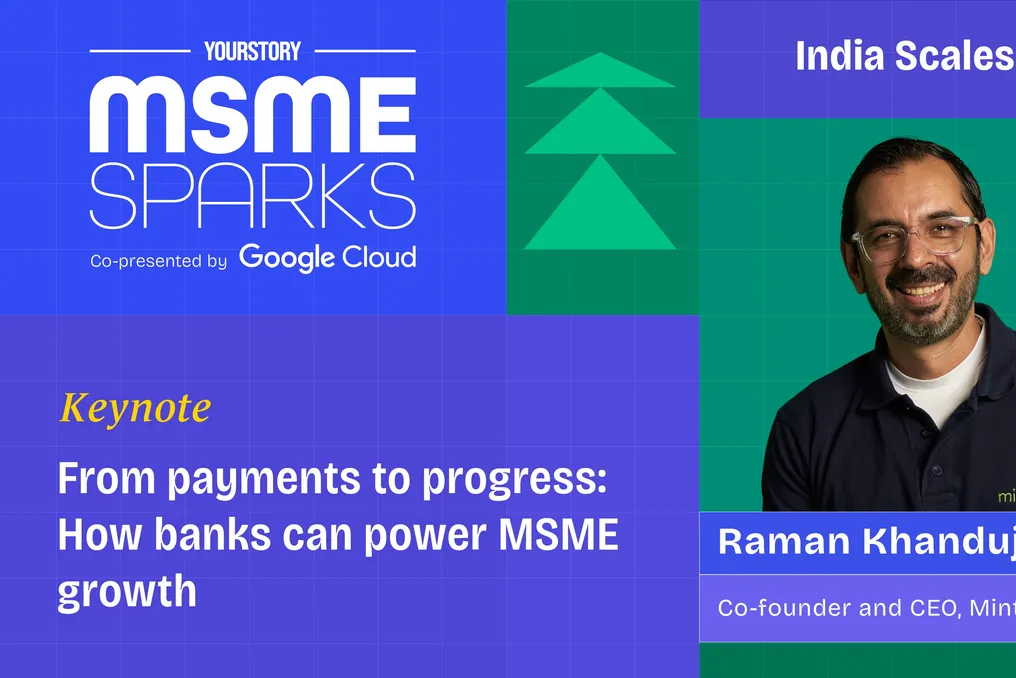
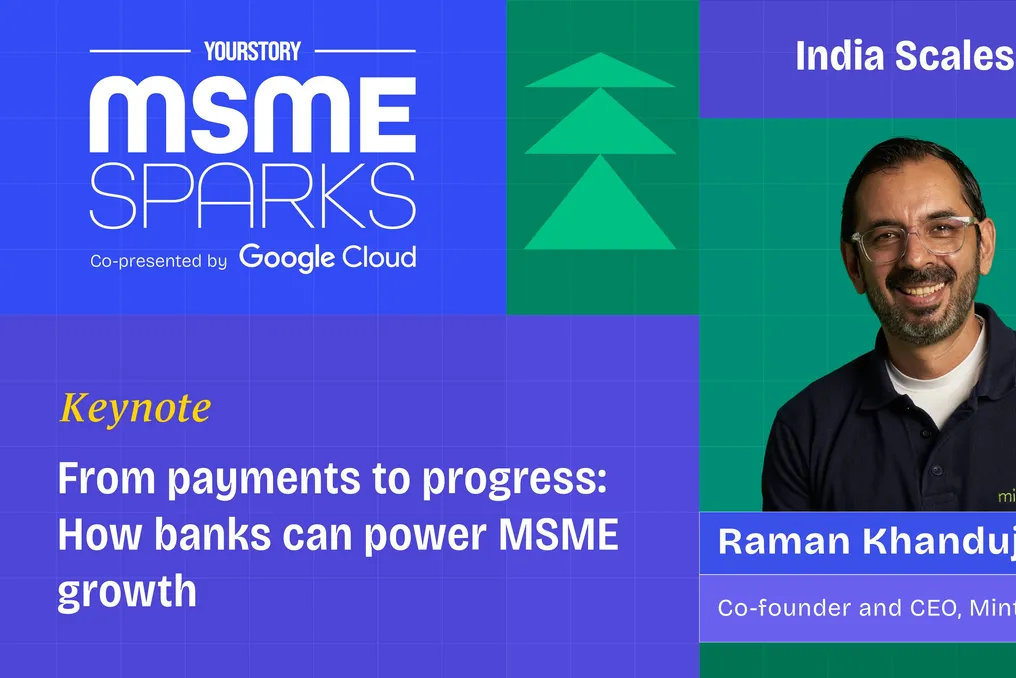
According to Raman Khanduja, co-founder and CEO of Mintoak, the digital transformation in India based on QR codes is only an initial stage for small and medium enterprises (SMEs).
The Evolution of Digital Payments in India
Over the last decade, India has become a global benchmark in digital payments due to the widespread adoption of UPI, data accessibility, and ubiquitous smartphone usage. However, Khanduja believes that QR codes are merely the first step. Speaking at the MSME Sparks 2026 event, which was held virtually from June 22 to 25 and concluded on June 26 at ITC Gardenia in Bengaluru, he stated that the next phase of digital transactions must focus on transforming transactions into visibility, creditworthiness, and long-term growth for SMEs.
Drawing on nearly two decades of experience working with banks, American Express, and Visa, Khanduja noted that India has progressed from one of the largest markets with cash replacement potential to a place other countries look to for lessons. He expressed concern that celebrating the start of this journey is being perceived as its conclusion.
From Inaccessibility to Transparency
For a long time, SMEs faced difficulties obtaining formal credit because banks relied on traditional financial documents such as salary slips, Income Tax Returns (ITR), and Form 16. Khanduja emphasized that while SMEs needed capital, banks did not always understand their needs, and most small businesses lacked the required documentation, leading to their classification as underbanked.
Digital payments began to change this situation. When SMEs started using point-of-sale terminals and QR codes, every payment began to record business activity. According to Khanduja, a bank can now see, for example, a restaurant's peak demand, a pharmacy's repeat customers, or a wholesaler's inventory cycle. This data represents not just transactions but economic signals, allowing millions of SMEs to generate information reflecting real cash flow for the first time.
Finance Embedded in Business Processes
The current task, according to the speaker, is no longer about counting transactions but about using this data to support business growth. Khanduja is convinced that the bank of the future will be integrated into the daily operations of SMEs, rather than being confined to physical branches. Small business owners are more concerned with cash flow, inventory, salaries, and receivables than with banking products, and often work with small teams, making even an hour away from the business costly.
He explained that this is where embedded finance and contextual lending concepts come into play. Financial services should be provided where business decisions are made, not just inside branches. As an example, he cited the story of Priya, a clothing seller in Surat. Initially, her relationship with the bank was limited to a current account, but after implementing QR payments and a merchant app, the bank gained insight into her daily cash flows, seasonal demand, and large orders. Using these signals, the bank pre-approved a credit line of 10 lakh rupees, which appeared in the same app she used to collect payments. When a large order came in, she accepted the offer through the app and received the funds in just a few clicks.
Khanduja added that the same application allows her to automatically generate invoices, send payment links, and reconcile payments. Mintoak provides platforms for HDFC Bank, Axis Bank, SBI Payments, as well as for banks in Africa, the Middle East, and Southeast Asia. Its platform processes around 400 million transactions monthly. The founder believes that these 400 million are 'economic signals' that can be transformed into higher-quality products, smarter lending, and real support for SMEs. He urged banks to focus not on the number of QR codes, but on the businesses behind them, asserting that India needs more successful SMEs, not just more QR codes for counting. The biggest opportunity for banks is not processing transactions, but helping small businesses secure timely working capital, manage cash flow, and utilize future opportunities.