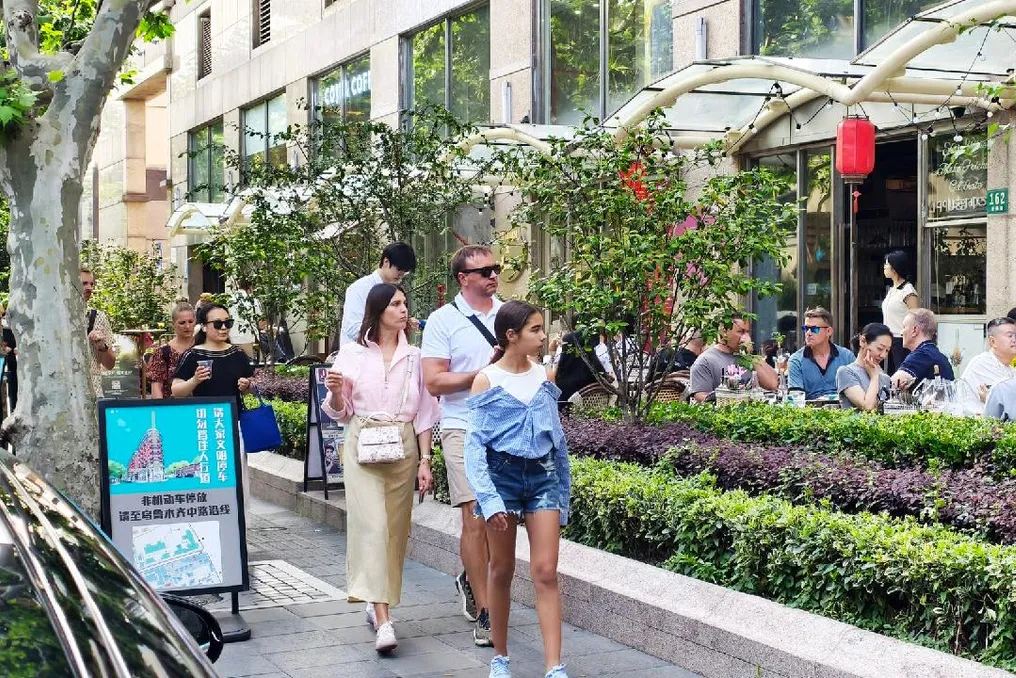
China's inbound tourism market is showing significant growth this summer, supported by expanding visa-free entry policies. According to the National Immigration Administration, 22.91 million foreign nationals arrived in China in the first half of 2026, a 20.4% increase compared to the previous year. Of these arrivals, 17.82 million utilized the visa-free regime, accounting for 77.7% of all foreign entries.
Popular
A New Approach to Travel
Although iconic attractions such as the Great Wall, ancient temples, and giant panda breeding bases remain part of classic itineraries, modern international travelers, especially younger generations, are actively using digital technologies and social media to explore the country. Influenced by viral trends on social networks, artificial intelligence tools, and simplified visa access, foreign tourists are increasingly preferring deep experiences of the lifestyle, visiting modern technology centers, and active shopping.
Immersing in Local Culture
Thanks to viral posts with hashtags like #ChinaTravel on TikTok, Instagram, and YouTube, the number of digital tourists who forgo fixed group tours in favor of individual trips is growing. Armed with navigation apps featuring real-time translation, they avoid rushed sightseeing, immersing themselves in daily urban life through spontaneous walks through historic residential alleys, bustling markets, and creative districts. Tourists try local bubble tea, visit traditional Shanghai public baths, or view the neon vertical landscape of Chongqing.
This shift from passive sightseeing to full immersion in the lifestyle extends to cultural experiences. Instead of merely viewing exhibits in museums, international guests now participate in practical activities: they rent Hanfu for photoshoots in ancient cities like Xi'an and Luoyang, attend Gongfu tea ceremonies, participate in culinary workshops, and try street food with locals.
Growth in Tourism and Shopping
Official and industry data for the summer peak season confirm this trend acceleration. According to the Shenzhen Airport Border Station, the number of foreign nationals entering through the southern Chinese hub increased by 20.6% in mid-July compared to June of last year. Furthermore, over 45.2% of arrivals were leisure and sightseeing tourists, which is 25.7% higher year-on-year. Data from the short-term rental platform Tujia shows that this summer foreign guests stayed in accommodations in 123 cities across China, with an average stay of 4.7 days, longer than local residents, as they opt for a more relaxed, community-oriented itinerary.
Beyond sightseeing, retail purchases have become a primary reason for travel. Official data from the State Taxation Administration indicates that one year after the optimized tax refund policy was introduced in April 2025, the number of visitors claiming refunds grew by 367% compared to the previous year, and sales of tax-refundable goods increased by 90%.
New Shopping Destinations
This interest in 'shopping in China' is prompting visitors to head to unconventional retail points across the country. Yiwu, located in the eastern province of Zhejiang and long known as a global wholesale center, has unexpectedly become a popular spot for individual foreign tourists seeking viral household items, affordable bags, and small electronics. Local official statistics note that Yiwu hosted 681,000 business and tourist visitors in 2025, and travel agencies offer personalized shopping tours for international guests.
Meanwhile, at Huachengbei electronics market in Shenzhen, known as China's main hardware district, it has gained popularity as a selfie destination. Foreign travelers flock to stalls to test wearable technology, AI-powered smart glasses, personal drones, and innovative cooling devices such as spray fans. Data from the travel platform Qunar highlights this geographical diversification: while major metropolises like Shanghai, Beijing, Guangzhou, and Shenzhen remain primary transport hubs, flight bookings to smaller commercial and cultural centers like Yiwu, Datong, Dunhuang, and Niangzi have doubled or multiplied.
Removing Barriers for Travelers
The foundation of this trend lies in systematic efforts by government bodies and private companies to reduce difficulties for international travelers. China has provided unilateral visa-free entry for holders of ordinary passports from 50 countries. Navigation at major transport hubs and tourist sites has been significantly simplified through multilingual terminals, AI-based translation tools, and multi-currency ATMs. Moreover, barriers in digital payments have largely been removed, allowing foreign credit cards to directly link to local mobile payment applications such as Alipay and WeChat Pay for daily purchases.
Thus, the changing profile of foreign tourists—from viral food spots to high-tech markets—reflects a broader transformation of global tourism: international guests are no longer just observing China's historical past but are actively participating in its contemporary daily life.