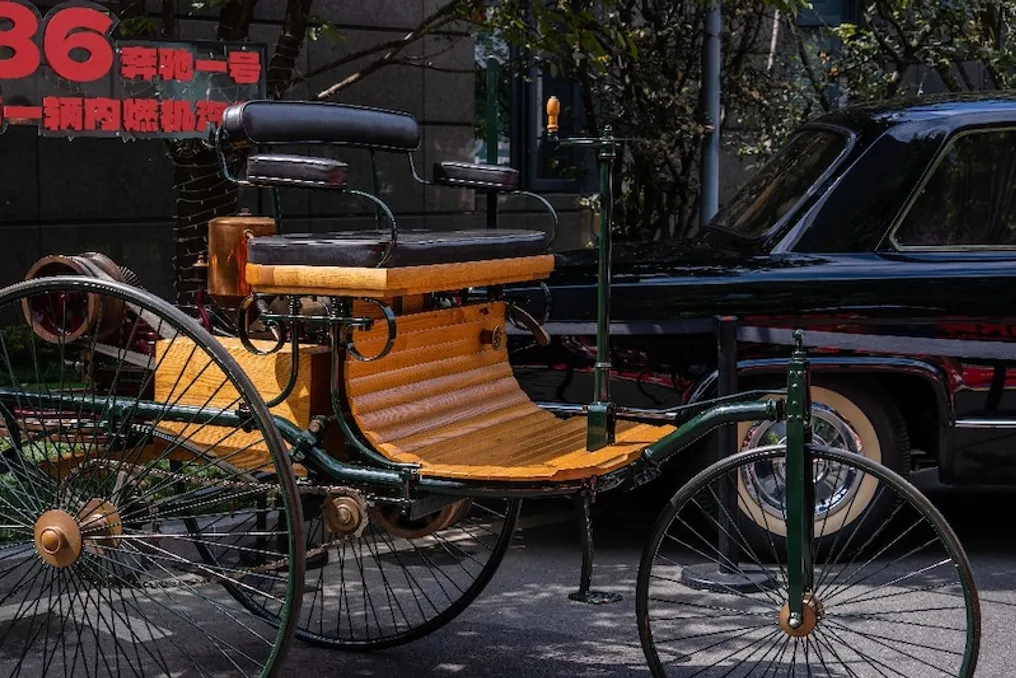
The first automobile race in the world took place on July 22, 1894. Seventeen out of 21 registered participants took part, covering a distance of 126 kilometers (78.3 miles) from Paris to Rouen. This competition, also known as the Paris-Rouen Test, not only paved the way for races like Le Mans and the Indianapolis 500 but also marked the beginning of the automotive era by demonstrating the reliability of automobiles.
Premises of the Competition
The idea of holding such a contest was proposed by Pierre Gifford, editor of 'Le Petit Journal', in December 1893 under the pseudonym Jean Sans Terre. He suggested the competition for 'wireless carriages' (Whiteurs Sans Chevaux), emphasizing not speed, but that the cars should be 'safe, easy to drive, and economical to operate.'
Preparation and Course of the Race
More than 100 applications were received before the deadline in April 1894, showcasing various modes of movement, including steam and gas engines, as well as gravity and pendulums. However, only 23 vehicles were ready for the final tests scheduled for July 19 and 20, 1894, and 19 of them successfully completed their route. Two more vehicles were recognized on July 21, bringing the total number of official participants to 21.
The competition started at Port Malot in Paris at 8 am to a large crowd of spectators. The vehicles ran either on steam or internal combustion engines. While one car had a steering wheel, the others were controlled by a tiller. Considering stops, including a lunch break in Montese, the average speed of the cars was 11.6 miles per hour.
Results and Recognition of Winners
Count Albert De Dion, co-founder of the French automobile manufacturer De Dion-Bouton, maintained a constant advantage throughout the race using his 20 horsepower steam tractor, which towed an open carriage, even after making a wrong turn in a potato field in Igouville. Nevertheless, despite finishing first at 17:40 in Champ-de-Mars in Rouen in 6 hours and 48 minutes, all judges concluded that De Dion's tractor and trailer combination did not meet the competition's requirements.
As a result, the main prize of 5000 francs (equivalent to approximately $40,000 by today's standards) was divided equally between the French manufacturers Panhard & Levassor and Les Fils de Peugeot Frères, as they most closely adhered to the ideals of the competition. The Paris-Rouen Test itself became a true victory for the automotive industry, laying the foundation for the acceptance of the automobile as a reliable means of transport and awakening the public's imagination. Approximately a year later, in June 1895, the Paris-Bordeaux-Paris race took place, where participants covered a distance of 732 miles.