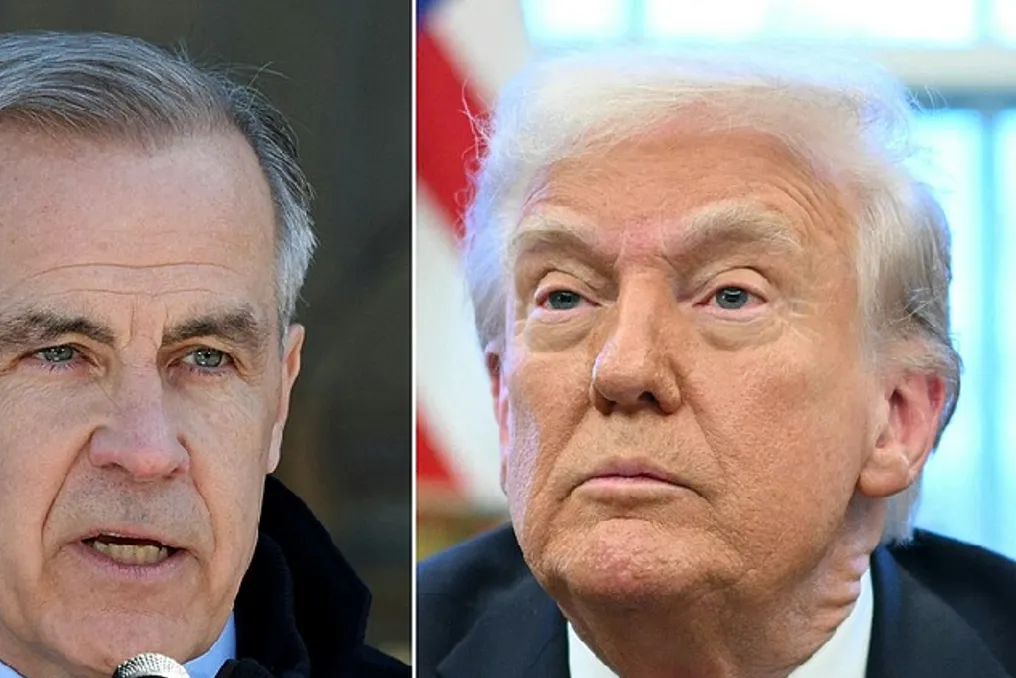
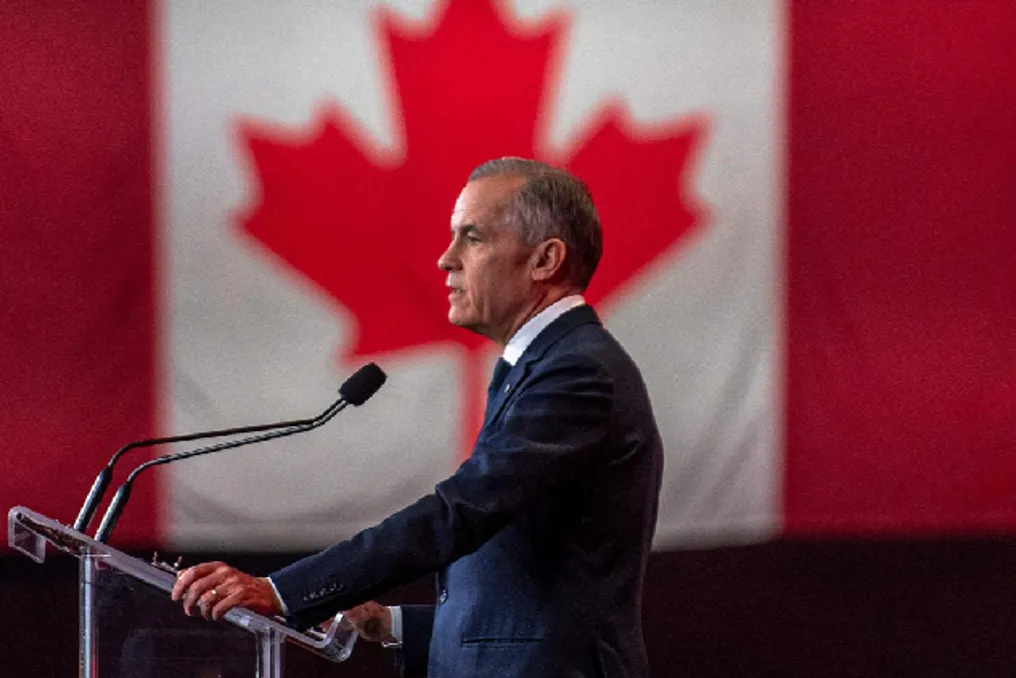
Canadian Prime Minister Mark Carney announced that following a conversation with US President Donald Trump, they reached an agreement to revitalize trade negotiations. However, Carney warned that he would consider any options if the tariffs threatened by Trump were imposed.
Similar stories
Popular
Trump's Imposition of Tariffs
On Monday, Trump presented plans to impose 50% duties on a wide range of imports from Canada. These measures are a reaction to what he called discriminatory treatment of American automobiles, alcohol, and dairy products. Relations between Canada and its largest trading partner are under pressure due to Trump's repeated remarks about turning Canada into the 51st state, disagreements over a new bridge, and sharp comments about wildfire smoke.
Context of Negotiations and Leaders' Positions
The imposition of these tariffs occurred shortly before US and Mexican negotiators met for the third time for bilateral discussions aimed at revising the USMCA without Canadian participation. This situation deepens the rift that has long kept Canada sidelined from USMCA negotiations.
Carney told reporters: 'I spoke with the President, we agree to activate discussions. We will start this immediately, and it is part of the negotiations. So, the first goal is to reach a comprehensive agreement.'
Trump's Stance and Concerns
Speaking from the Oval Office on Tuesday, Trump defended the administration's tariff policy, emphasizing Canada's dependence on the United States. The US President stated: 'They need us to survive. Without us, they cannot survive.'
He also mentioned considering separate tariffs against Canada due to wildfire smoke, claiming that Canada does not manage its forests effectively enough. Following last week's threats regarding cross-border fire smoke, the US President noted: 'A lot of damage has been done. They are mismanaging their forests.'
Reaction of Canadian Provinces
Leaders of Canadian provinces, gathered this week in Prince Edward Island, sharply condemned the new tariffs. Ontario Premier Doug Ford stated that Canada must respond to the new duties 'on equal footing,' while Alberta Premier Danielle Smith believes the tariffs will harm both Canadian and American workers.
Saskatchewan Premier Scott Moe urged the government to intensify dialogue with the US, stating that relations with Canada's largest trading partner are 'more important than any president or prime minister.'
Carney clarified that Canadian provinces should only lift bans on American alcohol within the framework of a broader trade agreement with the US. Almost all Canadian provinces, except Alberta and Saskatchewan, had previously restricted or completely banned the sale of American beer, wine, and spirits in response to previous US tariffs.
British Columbia Premier David Eby took the strongest stance, stating: 'There is no chance whatsoever that American alcohol will reappear on shelves in British Columbia.'
Opposition Protest and Tariff Details
Even the opposition Conservative party called on the Canadian Prime Minister to firmly resist Trump. The party stated in a release: 'President Trump's latest tariffs are another unacceptable and unjustified attack on Canadian workers and our business' and added that the tariffs must be lifted immediately because 'Canadians are not the target.'
By imposing import taxes on symbolic goods, ranging from wine to hockey gear, Trump used Section 338 of the Tariff Act of 1930. This section allows the president to impose punitive tariffs of up to 50% against trading partners deemed to be discriminating against American goods. This marked the first known application of this law in nearly a century.
The new tariffs, expected to take effect in 30 days, will also apply to dairy products, pools, furniture, fishing tackle, seeds, clothing, and wigs. The U.S. Trade Representative's office reported that the tariffs will affect nearly $20 billion in imports from Canada. According to U.S. Census Bureau data, this accounts for about 5.2% of the $382 billion worth of goods the U.S. imported from Canada in 2025.
Expert and Business Opinions
Vermont State Senator Peter Welch, a member of the Senate Finance Committee, called the new tariffs 'the extreme escalation of President Trump's reckless and irresponsible trade war.' Welch stated that the White House attacks on Canada have caused 'undeniable damage' to Vermont and demanded an immediate halt to the new threats.
Candice Lang, President and CEO of the Canadian Chamber of Commerce, reported that the group had previously expressed concerns to the Canadian government and worried about the possible imposition of additional tariffs. She noted: 'We knew there would be more unrest before the arrival.'
Canadian Prime Minister Mark Carney stated on Monday that the intention of the US administration to introduce a new 50% tariff on a wide range of Canadian goods is part of a series of unilateral US trade measures that directly contradict the Canada-United States-Mexico Agreement (CUSMA).
Canada's Stance on Trade Relations
In his statement, Carney noted that over the past year and a half, the United States has been transforming all its trade relations, including those governed by CUSMA. Meanwhile, Canada has presented a number of detailed and comprehensive proposals to resolve this dispute and modernize CUSMA.
Willingness to Dialogue
Carney emphasized Canada's readiness to intensify discussions in the coming weeks. The Prime Minister also expressed Canada's conviction in the benefits of free and fair trade, noting that this trade dispute has increased costs for families, especially in the United States. He confirmed Canada's readiness for intensive engagement to resolve 'unresolved issues with the United States for the mutual benefit of our citizens.'