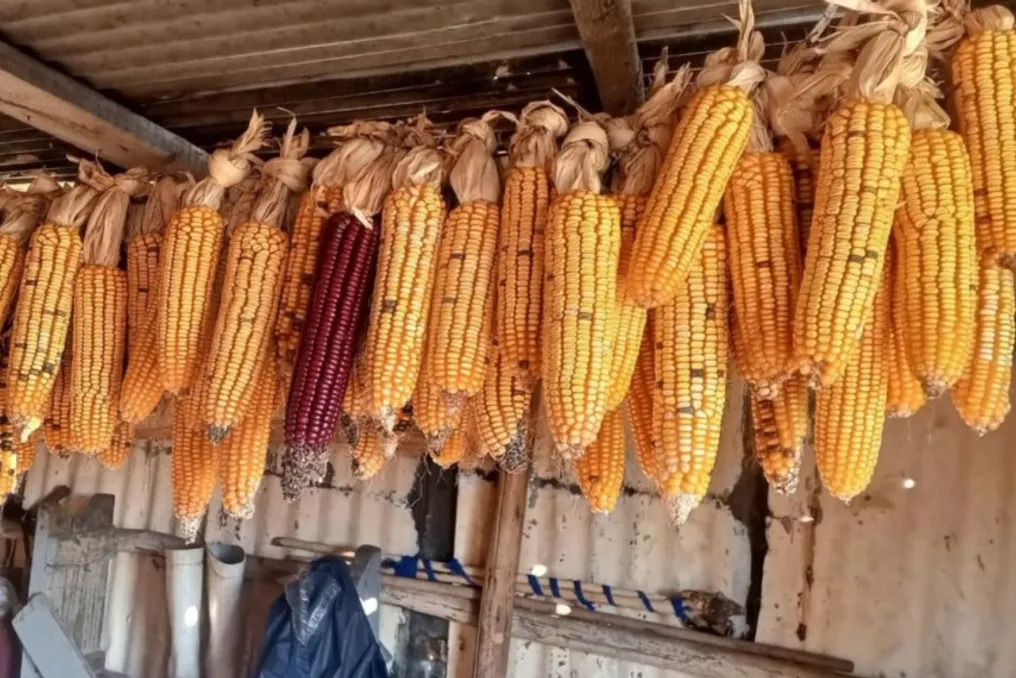
Residents of South Africa employ two different approaches to protect their food heritage. High-tech seed banks use deep-freeze storage to preserve rare varieties, while community seed libraries pass on heirloom seeds to local farmers.
The Common Goal of Crop Preservation
Despite external differences, both strategies pursue one urgent goal—maintaining the viability of local crops. One method provides a seed reserve for future emergencies, while the other supports their current growth in local soil. Together, they safeguard food security, helping to combat hunger in subsequent generations.
The Work of the Seed Library
Zaiyan Khan, head of the seed library at SEED (Seed Biblioteek of Schools Environmental Education and Development), works to preserve the country's agricultural heritage. This volunteer-run initiative has permanent branches in Muizenberg and Mowbray, as well as a mobile point in Mitchells Plain. It operates solely on a unique barter system: instead of money, farmers contribute compost, worms, or collected seeds to support the library.
According to Khan, preserving traditional varieties in urban settings is a complex task. 'The main problem is access to land for growing seeds,' she notes. 'We connect with people who have space in gardens or on farms, creating such guardian gardens.'
Methods of Natural Conservation
Because they categorically reject commercial, pesticide-treated seeds, proper natural conservation is critical. Khan explains that they rely on traditional methods, such as wood ash and diatomaceous earth, to protect stocks from pests, such as weevils. She emphasizes that seeds must be thoroughly dried before storage. 'Drying means it is dry, with one molecule of water, so it doesn't die and can maintain that vitality much longer.'
Despite spatial difficulties, the growing interest in local seed preservation demonstrates that this movement resonates within communities. For Khan, every seed has value, even those that do not germinate. 'We do not discard a seed,' she adds. 'Seeds that are non-viable can be used to make musical instruments or works of art, so nothing is ever lost.'
The Role of the Farmer and Seed Banks
For Cholelwa Honkkoshe, an agroecology farmer in Nsera village in Gugongqo town (East London), the seed bank is as important as the financial one. She explains that the seed bank is a place to store seeds in dark, airtight containers. This ancient practice, passed down by ancestors who selected and dried the best harvest, ensures a constant food supply.
Today, she considers it a vital shield against climate change. During an extremely dry summer in the Eastern Cape, her maize died, but her local sorghum thrived. 'Sorghum is resilient, very nutritious, and for me, it is the best choice for planting instead of maize,' she says. She also notes that despite heavy bird damage, she managed to harvest a plentiful yield and save seeds for the next season.
However, Honkkoshe points out that commercial hybrid and patented GMO seeds threaten this independence because they cannot be saved. While the National Agroecological Framework of South Africa offers hope to community seed banks, she argues that true transformation must start at home to fix the complex healthcare system. 'Even if we restore sorghum as our staple crop instead of maize, malnutrition will stop being a problem,' she explains. She adds that poor nutrition directly affects school attendance rates and contributes to the rise of lifestyle diseases.
Synergy of Seed Networks
Experts emphasize the crucial interaction between different systems. Dr. Tsudufhadzo Chikhala, a gardener and postdoctoral researcher at Tshwane University of Technology, notes that while community initiatives and conservation institutions protect food systems, their functions are entirely different. 'Seed libraries focus exclusively on localized, short-term rotation,' Chikhala explains. 'They borrow seeds, grow them, and save the best seeds. They do not freeze seeds or store them for decades; it is strictly local.'
Meanwhile, Dr. Maanea Rampinhwa, a lecturer in the Department of Plant and Soil Sciences at the University of Venda, notes that these local collections directly contribute to community gardening development. 'You take seeds to plant, and you are expected to return them for future use,' says Rampinhwa.
Regarding seed banks, Chikhala indicates that they function as long-term repositories managed by governments, universities, and large organizations such as the South African National Biodiversity Institute (SANBI). 'They have a long-term preservation system; they preserve rare, heirloom, or endangered crop varieties,' says Chikhala. 'Some seeds are stored at temperatures of -18°C or below and can last over 100 years.'
Rampinhwa adds that this high-tech setup serves deeply scientific purposes. 'Seed banks store seeds under controlled conditions to preserve their genetic makeup, protect endangered species, and support research,' she concludes.